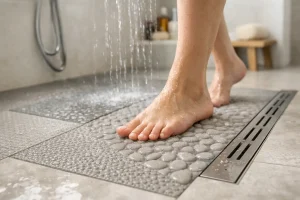

A shower floor has to cope with far more than splashes. It is walked on with wet feet, cleaned regularly, exposed to soap residue and expected to look good for years. The best non slip shower flooring is therefore not simply the roughest surface available. It is a practical combination of grip, comfort, drainage, maintenance and a finish that suits the rest of your bathroom.
For a family bathroom, an en suite or a mobility-focused space, the right choice can make daily routines feel safer without making the room look clinical. The answer will depend on how the shower is used, who uses it and whether you are planning a conventional tray or a level-access wet room.
What makes shower flooring genuinely slip resistant?
A floor can feel textured in a showroom yet become slippery once water, shower gel and conditioner are involved. This is why surface performance matters more than appearance alone. Small tiles with plenty of grout lines can offer good grip, while purpose-made anti-slip porcelain and safety vinyl use their own texture to help wet feet stay secure.
In the UK, manufacturers may refer to slip ratings such as R ratings or Pendulum Test Values (PTV). These are useful guides, but they should not be treated as a guarantee that a floor is impossible to slip on. No bathroom floor can remove all risk, particularly where poor drainage leaves standing water or cleaning products build up. A well-designed shower area needs the right falls towards the waste, professional installation and a surface that is appropriate for wet, barefoot use.
It is also worth thinking about bare feet rather than shoes. A sharply abrasive tile may sound reassuring, but it can feel unpleasant underfoot and be harder to keep clean. The most successful bathrooms balance reliable traction with everyday comfort.
The best non slip shower flooring options
Anti-slip porcelain tiles
Porcelain is often the first choice for homeowners who want a premium, long-lasting shower floor. It is dense, hardwearing and available in an enormous range of colours and finishes, from soft stone effects to contemporary concrete looks. Choose a porcelain tile specifically rated for wet areas, rather than assuming that any matt tile will provide enough grip.
Smaller formats are particularly useful inside a shower or wet room. Mosaic tiles, for example, create more grout joints underfoot, which can improve traction and help the installer form the gentle slopes needed for drainage. They also make it easier to carry a feature colour or texture from the shower floor onto an adjacent wall.
The trade-off is maintenance. Grout needs regular cleaning, and pale grout can show discolouration over time. A good quality grout, proper sealing where required and realistic colour choices make a significant difference. Larger anti-slip porcelain tiles create fewer grout lines and a calmer visual finish, but they require careful cutting and installation when used on a sloping wet-room floor.
Safety vinyl flooring
Safety vinyl is a strong option where comfort, easy cleaning and dependable wet grip are priorities. Unlike standard bathroom vinyl, it is designed with a textured surface and can be installed with welded joins to form a hygienic, water-resistant floor. It is warmer and softer than tile, which can be especially welcome first thing in the morning.
For accessible and mobility bathrooms, safety vinyl is often one of the most sensible choices. It works well in level-access showers, can accommodate gentle falls to a drain and reduces the severity of a fall compared with a hard tiled surface. Modern designs have moved well beyond the institutional appearance many people remember. Wood, stone and contemporary neutral finishes can look smart in a carefully planned room.
Vinyl does need a sound, level subfloor and experienced fitting. Poor preparation can lead to visible imperfections, lifted edges or water getting where it should not. It can also be more vulnerable than porcelain to damage from sharp objects, although a quality product installed properly will stand up well to normal household use.
Textured shower trays
If you are fitting an enclosed shower rather than a full wet room, a low-profile shower tray with a textured anti-slip finish is a straightforward solution. These trays are commonly made from stone resin, acrylic-capped resin or reinforced composite materials. They are easy to pair with shower panels, are generally simple to clean and avoid the grout maintenance associated with a tiled shower base.
Low-level trays are particularly useful when creating a bathroom that is easier to use for the long term. Reducing or removing the step into the shower supports independence and gives the room a more streamlined look. However, a tray must still be installed at the correct level with suitable waste access below. The best result is planned as part of the room, not added as an afterthought.
Texture varies considerably between products. Very heavily patterned finishes can collect limescale and soap residue, while smooth trays may offer less grip. Viewing samples and discussing how easy they are to clean is worthwhile before making a decision.
Natural stone and stone-effect finishes
Natural stone can create a beautiful, characterful bathroom, but it is not automatically the safest or simplest flooring for a shower. Some stones are porous, need sealing and can be affected by the wrong cleaning products. Polished stone is generally a poor choice for a wet shower floor.
Honed or naturally textured stone may be suitable when selected carefully, but it comes with a maintenance commitment. For many households, stone-effect anti-slip porcelain achieves a similar look with better consistency, easier upkeep and more predictable slip resistance. It is often the more practical route for a bathroom that needs to work hard every day.
Match the floor to the shower design
The type of shower matters as much as the material. A shower enclosure with a tray gives clear containment and can be the easiest option in a smaller bathroom. A wet room floor offers a more open, luxurious feel and can be excellent for accessibility, but it demands precise waterproofing, falls and drainage. The flooring has to be compatible with that construction from the outset.
For a compact en suite, a textured tray may provide the best balance of safety, cost and simplicity. In a family bathroom, anti-slip porcelain can be ideal where you want a durable finish that matches the wider floor. For someone planning to remain in their home as needs change, a level-access shower with safety vinyl or suitable small-format porcelain may offer the most confidence.
Colour deserves consideration too. Very dark flooring can show limescale, while very pale textured finishes may show marks and require more frequent cleaning. A mid-tone finish with subtle variation is often forgiving. Strong contrast between the shower floor, walls and fittings can also help people with reduced vision identify the shower area more clearly.
Installation and drainage are part of the safety picture
Even the best surface will disappoint if the water does not drain away quickly. Standing water creates a slip risk and encourages grime around the waste. In a wet room, the floor needs correctly formed falls that guide water to the drain without feeling awkward or uneven underfoot. In a tray shower, the tray must sit level and be supported correctly.
Waterproofing beneath the finish is equally important. Tiled showers need a properly tanked system, not just tiles and grout, to protect the structure behind them. Vinyl systems require correctly prepared substrates and secure detailing at walls, corners and drains. These details are rarely visible once the bathroom is finished, but they are what help it stay watertight and trouble-free.
This is one reason a fully managed bathroom renovation can remove a great deal of uncertainty. At The Bathroom Magician, shower flooring is considered alongside the layout, waterproofing, drainage, enclosure, lighting and storage, so practical decisions support the finished design rather than competing with it.
Keeping non-slip flooring effective
Slip resistance can reduce when a floor is coated in soap, conditioner, body oils or limescale. Regular cleaning is not about making a bathroom look polished for guests. It helps the surface perform as intended. Use a cleaner recommended for your specific floor type, rinse thoroughly and avoid waxy products that leave a film behind.
Check the shower waste regularly too. Slow drainage is often noticed first as water pooling around your feet. Clearing hair and residue from the trap is a small job that can make the shower safer and more pleasant to use.
Avoid assuming that a loose bath mat is the answer inside a shower. It can move, trap moisture underneath and create its own trip hazard. If additional support is needed, well-positioned grab rails, a fold-down shower seat and a thermostatic shower can be more reliable parts of an accessible design.
The right shower floor should let you step in without a second thought. Choose a finish that feels secure under bare feet, suits the way your household lives and is installed with the same care as every visible detail. That is how a safer bathroom remains a stylish and comfortable one for years to come.