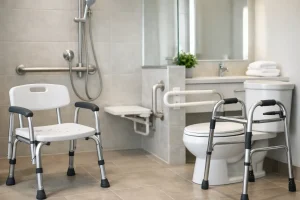

A good mobility bathroom starts long before any tiles are chosen or fittings are fitted. The most useful mobility bathroom planning guide is not really about products first – it is about how the room needs to work, day after day, for the person using it.
That is where many bathroom projects go wrong. People focus on a grab rail, a walk-in shower or a higher toilet, but the bigger question is whether the whole room has been planned around ease, safety and comfort. When that happens, the result feels less like a clinical adaptation and more like a well-designed bathroom that simply works better.
What a mobility bathroom planning guide should help you decide
Every household is different. One person may need support getting in and out of the shower. Another may be planning ahead for later life and want a bathroom that feels stylish now but will still be practical in ten years. Some families are adapting a space after illness, injury or reduced mobility and need solutions that make everyday routines less tiring.
That is why there is no single layout that suits everyone. A mobility bathroom should be based on real movement in the room – turning, reaching, sitting, standing and stepping safely. Planning should also take into account who uses the bathroom now, whether support from a partner or carer may be needed, and how long you expect the design to serve you.
A bathroom can be safer without looking institutional. In many cases, the best designs are the ones where accessibility has been built in so naturally that the room still feels calm, modern and in keeping with the rest of the home.
Start with the person, not the product
It can be tempting to begin by looking at specialist fittings, but the smarter place to start is with daily routines. Think about where the current bathroom feels awkward or risky. Is stepping into the bath becoming difficult? Is the floor slippery when wet? Is there enough space to move comfortably, especially first thing in the morning or at night when balance may be less steady?
The answers shape the design. For some homeowners, replacing a bath with a low-threshold shower is the biggest improvement. For others, a wet room style layout with open access and fewer obstacles may make more sense. If sitting while showering would improve comfort, then a built-in seat or fold-down option may be worth including from the outset rather than as an afterthought.
This is also the stage to consider future needs. If mobility is changing gradually, it often makes sense to plan beyond what is needed today. That might mean reinforcing walls for future grab rails, choosing a room layout that allows easier circulation, or selecting fittings that are simpler to use even if full adaptations are not yet essential.
Layout matters more than people expect
In mobility bathroom design, space is not just about size. It is about how clearly and safely the room functions. A modest bathroom can still work brilliantly if the layout is well planned, while a larger room can feel awkward if key features are placed badly.
Clear routes between the door, basin, toilet and shower are crucial. You want enough room to move without twisting around obstacles or squeezing past furniture. Door openings matter too. In some homes, changing the way a door opens or using a sliding option can improve access far more than people expect.
Toilets and basins need careful positioning. If someone needs support sitting down or standing up, the surrounding space becomes just as important as the fitting itself. The same applies to showers. A beautifully tiled enclosure is of little use if getting in and out feels uncertain.
Good planning also looks at the details around the edges of the room. Where will towels be kept? Are controls easy to reach? Can toiletries be stored without stretching or bending too much? Small frustrations repeated every day soon become big issues.
Choosing the right shower or bathing option
For many homeowners, the shower is the centrepiece of a mobility bathroom redesign. It usually brings the biggest day-to-day improvement because access, washing and cleaning all become easier.
A low-level or level-access shower is often the most practical choice. It removes the challenge of climbing over a bath edge or high shower tray and creates a simpler, safer route in and out. If the room allows, a wet room can go a step further by opening up the floor area and reducing trip points. That said, it depends on the property, the available space and the budget. Wet rooms can be an excellent solution, but they require the right preparation and installation to perform properly over time.
Some households still prefer to keep a bath, especially where there are grandchildren in the home or where bathing is part of a comfort routine. In those cases, a walk-in bath may be worth considering, although it is important to think honestly about ease of use, filling time and whether it suits the person’s needs better than a shower would.
A fixed shower seat, fold-down seat or perch seat can make washing feel more secure and less tiring. This is especially helpful for anyone who becomes fatigued easily or feels unsteady standing for longer periods.
Safety features that should never feel like an afterthought
A safe bathroom is rarely created by adding one or two features at the end. Safety works best when it is designed into the whole space.
Slip-resistant flooring is one of the most important choices. It helps reduce risk, but it should also be practical to clean and comfortable underfoot. Good lighting matters just as much. Shadows, glare and dim corners can all make a bathroom harder to use confidently, particularly at night.
Grab rails are often essential, but placement is everything. They need to be exactly where support is needed, not just fixed where it is easiest to install them. The good news is that modern options can look far more discreet and stylish than many people expect.
Thermostatic controls are another sensible feature. They help prevent sudden changes in water temperature, which can be uncomfortable and in some cases dangerous. Lever taps and easy-turn controls can also make a real difference for anyone with reduced grip strength or arthritis.
Style still matters – and it should
One concern we hear often is that a mobility bathroom will look purely functional. It does not have to. In fact, the most successful projects combine practical access with a finish that feels considered and attractive.
Wall panelling, quality tiling, well-chosen brassware and coordinated finishes can all help create a room that feels inviting rather than medical. Colour contrast can also be used carefully. It can improve visibility around fittings and edges without making the room look stark.
This balance matters because the bathroom is a personal space. It should support independence, yes, but it should also feel comfortable to spend time in. A room that looks good is more likely to feel like part of the home rather than a compromise.
Why professional planning saves stress later
Mobility bathrooms ask more of the design process than a standard refurbishment. Measurements need to be accurate, products need to work together properly and installation needs to be carried out with care. Waterproofing, drainage, floor levels and wall strength are not details to leave to chance.
A fully managed service can make a real difference here. Instead of trying to coordinate multiple trades and second-guess product choices, homeowners can work through the whole plan in one place – from layout and finishes to installation and final details. That means fewer surprises and a much clearer route from idea to finished room.
For local homeowners around St Neots and the wider Cambridgeshire area, that peace of mind is often just as valuable as the finished bathroom itself. Companies such as The Bathroom Magician understand that a mobility bathroom is not only a building project. It is an investment in confidence, comfort and daily life.
A mobility bathroom planning guide should leave room for change
The best plans are practical now and flexible later. Needs can shift, sometimes gradually and sometimes quickly. A bathroom that has been thoughtfully designed from the beginning is far easier to live with and adapt over time.
That might mean choosing a layout with more open floor space, selecting strong, durable finishes that are easy to maintain, or making sure key supports can be added later without major disruption. Planning ahead does not mean overcomplicating the room. It simply means making wise decisions while the work is already being done.
A well-planned mobility bathroom should make everyday life feel simpler, calmer and safer. If the design achieves that while still looking like a bathroom you genuinely love, you have got the planning right.