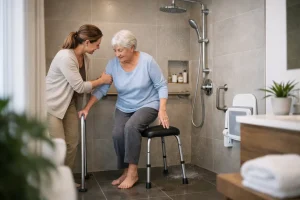

A bathroom can become difficult long before someone considers themselves elderly. Stepping over the edge of a bath, balancing on a wet floor or reaching awkwardly for controls can gradually make everyday routines less comfortable. So, are wet rooms good for elderly homeowners? In many cases, yes. A well-designed wet room can make washing safer, easier and more enjoyable, while still looking like a stylish part of the home rather than a clinical adaptation.
The key is in the design. A wet room is not simply a shower with the tray removed. For it to work well over the long term, the layout, drainage, flooring, shower fittings and support features all need careful thought.
Are Wet Rooms Good for Elderly People?
Wet rooms are particularly well suited to people who want to remain independent at home as their needs change. Their main advantage is level access: there is no raised shower tray or bath side to step over. That removes one of the most common bathroom trip hazards and makes the shower area easier to use for someone with reduced mobility, stiffness, balance concerns or a walking aid.
Because the floor is designed to guide water towards a drain, the whole room can be made more open and accessible. A person can walk straight into the shower, and there is space to add a shower seat or allow assistance if needed. For homeowners planning ahead, this flexibility can be just as valuable as immediate accessibility.
A wet room can also feel more spacious than a conventional bathroom. Removing the visual barrier of a shower tray and enclosure gives a smaller room a calmer, less cluttered appearance. That is helpful where room is limited, but it also creates a more comfortable environment for anyone who finds tight spaces difficult to navigate.
Safety Starts With More Than a Level Floor
A level-access shower is a strong starting point, but a genuinely safe bathroom needs a full design approach. Slips usually happen because several small issues come together: a wet surface, poor lighting, a rushed movement or something awkwardly positioned. Good planning reduces those risks without making the room feel institutional.
Slip-resistant flooring is essential. The right tiles or safety flooring should provide grip underfoot while remaining easy to clean. Very heavily textured surfaces can be uncomfortable or difficult to maintain, so material choice needs to balance safety with practicality. The floor must also be laid correctly with an accurate fall towards the drain, so water clears efficiently rather than pooling where someone may stand.
A fixed shower screen can contain spray while leaving a wide, uncomplicated entrance. Depending on the room and the person using it, a frameless panel, a full-width screen or an open shower area may be appropriate. An overly open layout is not always the best answer if it leaves the rest of the floor wet, especially in a compact bathroom.
Lighting deserves proper attention too. Bright, even lighting makes it easier to see wet areas, controls and changes in floor level. A separate light for the shower area can be useful, while good ventilation helps prevent condensation from making surfaces damp and reducing visibility.
The fittings that make everyday use easier
Practical fittings should be chosen around the homeowner, not added as an afterthought. A thermostatic shower controls water temperature and helps guard against scalding. Lever-style taps are usually easier to operate than small twist handles, particularly for people with arthritis or reduced grip strength.
A shower seat can make washing less tiring and more secure. Fold-down seats are a neat option where space is limited, while a freestanding waterproof seat may suit a larger room. Grab rails are another valuable feature, but their position matters. They should be securely fixed where support is naturally needed, such as beside the shower entrance or close to the toilet, rather than placed simply because there is an empty wall.
It is worth choosing attractive rails, shower controls and accessories that complement the rest of the bathroom. Accessibility features no longer need to look purely functional. With considered finishes and quality products, they can feel like a natural part of a well-designed room.
When a Wet Room May Not Be the Right Choice
Wet rooms are not automatically the best solution for every household. If someone enjoys a long soak and uses a bath regularly, removing it can be a disappointing compromise. In a home with only one bathroom, keeping a bath may also matter for visiting family, younger children or future resale appeal.
In some properties, the existing floor structure may make a wet room more complex to install. Creating the correct floor gradient, fitting a suitable drain and ensuring reliable waterproofing all require specialist work. This does not necessarily rule out a wet room, but it can affect the budget and the available design options.
There is also a difference between a wet room and a low-level shower enclosure. A low-profile tray with a wide opening can provide excellent accessibility while keeping water more contained. For homeowners who want a straightforward shower upgrade rather than full-room waterproofing, this can be a sensible alternative.
The best choice depends on mobility now, likely future needs, room size and the way the household lives. A good bathroom design should support independence without asking people to give up features they genuinely value.
Planning a Wet Room for the Long Term
The strongest mobility bathrooms do not announce themselves as mobility bathrooms. They are comfortable, attractive spaces designed to be easy to use every day. Planning for the long term means considering the small details that can make a major difference later.
Keep the route into the room clear, with a door that opens easily and enough circulation space around the toilet and basin. A wall-hung basin can create useful room beneath it, while a vanity unit offers convenient storage for toiletries that would otherwise clutter the floor. Choose a toilet height that is comfortable to sit down on and stand from, rather than assuming standard fittings will suit everyone.
Storage should be within easy reach. Recessed shower niches are especially useful in wet rooms because bottles do not need to sit on the floor or perch on a shower seat. Controls should be easy to reach from both outside and inside the spray area, allowing the water to be set before stepping in.
Do not overlook heating. A warm floor is pleasant at any age, but it is particularly welcome when someone is less steady or slower moving after a shower. Underfloor heating can also help the room dry more quickly. A well-sized heated towel rail provides a warm towel and gives the room another effective source of heat.
Waterproofing is the part you should never see
The appearance of a wet room is only as good as the work behind the walls and beneath the tiles. Proper tanking creates a waterproof barrier across the areas exposed to water, protecting the structure of the home. Drainage needs to be carefully planned, and every joint and finish must be completed to a high standard.
This is why wet rooms are not a job for shortcuts. A poorly installed wet room can lead to leaks, damp and expensive repairs. A professionally managed installation gives homeowners confidence that the unseen essentials are being handled as carefully as the visible finishes.
For homeowners around St Neots and Cambridgeshire, The Bathroom Magician can help turn practical requirements into a bathroom that feels personal, polished and built to last. From layout and product choices to installation and finishing touches, having one experienced team manage the project removes the stress of coordinating separate trades.
A Bathroom That Supports Independence With Style
A thoughtfully designed wet room is more than a response to mobility concerns. It can be a smart investment in comfort, safety and confidence at home. By choosing a level-access layout, reliable drainage, non-slip surfaces and fittings that are easy to use, homeowners can create a bathroom that works well today and remains useful as life changes.
The most successful design is one that feels effortless: warm underfoot, simple to clean, safe to move around in and a pleasure to use every morning. Start with how the bathroom needs to work for you, then let the style follow naturally.