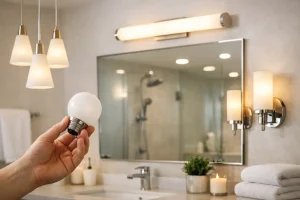

A bathroom can have beautiful tiles, quality brassware and a perfectly planned layout, yet still feel underwhelming if the lighting is wrong. That is why knowing how to pick bathroom lighting matters so much. Get it right and the room feels brighter, calmer, safer and far more comfortable to use from early mornings to late evenings.
Bathroom lighting is rarely about one fitting in the middle of the ceiling and hoping for the best. Most bathrooms work better when lighting is planned in layers, with each type doing a different job. You need enough light to shave, apply make-up or clean the room properly, but you also want a softer feel when you are running a bath or getting ready for bed. Good lighting should support the way you actually use the space, not just how it looks in a showroom.
How to pick bathroom lighting for real life
The best place to start is with your routine. Think about what happens in your bathroom on an average day. If it is a busy family bathroom, you will need clear, practical light that works well at all times. If it is an en suite used mainly in the morning and evening, you may want a more relaxed feel with good mirror lighting and softer background light. If the room is designed with accessibility in mind, visibility and safety become even more important.
This is where many homeowners go slightly off course. They choose fittings because they like the look of them, then try to make the room work around that choice. A better approach is to decide what the light needs to do first, then choose fittings that suit the design.
Size and layout make a difference too. A compact bathroom with no natural light usually needs a brighter, more careful scheme than a large room with a generous window or rooflight. Dark tiles, matt finishes and deep paint colours can absorb light, while pale surfaces tend to reflect it around the room. The same fitting can feel completely different from one bathroom to another.
Start with the three main layers of light
Most well-designed bathrooms use a mix of ambient, task and accent lighting.
Ambient lighting is your general light. It gives the room an even base level of brightness and usually comes from ceiling fittings such as downlights or a flush light. This is what helps the room feel open and usable when you first walk in.
Task lighting is more focused. It is the light you need around the mirror or vanity area, where clear visibility matters most. If you have ever tried to shave or put on make-up with a ceiling light behind you, you will know the problem straight away – shadows across the face. Well-placed task lighting reduces that issue.
Accent lighting is the finishing touch. It is not essential in every bathroom, but it can add depth and atmosphere. This might be LED lighting in a recess, under a floating vanity unit or around a feature wall. Used well, it makes a bathroom feel more considered and more relaxing.
In many cases, the most successful scheme is not the fanciest one. It is simply the one where these layers work together without fuss.
Choose mirror lighting carefully
If there is one area worth getting right, it is the mirror. The face should be lit evenly from the front or sides, rather than from above alone. Side lights or an illuminated mirror often do a better job than a single overhead fitting because they reduce harsh shadows.
Colour quality matters here as well. A light that is too cool can feel stark and unflattering, while one that is too warm may not be practical for grooming. For most bathrooms, a neutral white tends to strike the best balance. It feels clean and crisp without looking clinical.
This is also one of those areas where style and function need to meet in the middle. A decorative wall light may look lovely, but if it throws light in the wrong direction, it will not perform well enough for everyday use.
Think about brightness, not just the fitting
When people ask how to pick bathroom lighting, they often focus on the shape or finish of the fitting first. In practice, brightness is just as important. A bathroom that is too dim can feel gloomy and impractical. One that is too bright can feel cold and uncomfortable.
Rather than thinking in old-fashioned wattage terms, it helps to consider the overall effect you want in the room. You need enough brightness for safe use and everyday tasks, but not so much that the space feels harsh. This is why dimmable lighting can be such a good option, especially in larger bathrooms or en suites. It gives you flexibility throughout the day.
That said, dimmers are not always the answer on their own. In a small bathroom, careful positioning may matter more than extra control. In a family bathroom, reliability and ease of use may be more useful than mood lighting. It depends on the room and the household.
Safety comes first in a bathroom
Bathrooms are wet spaces, so lighting needs to be suitable for the area where it is being installed. This is not just a design decision. It is a safety requirement. Different parts of the room need different levels of protection, particularly near showers, baths and basins.
This is where expert guidance really helps. Homeowners should not be left trying to work out electrical zones and fitting ratings on their own. A properly planned bathroom renovation takes all of that into account from the start, so the finished room is both safe and well considered.
It is also worth remembering that lighting affects safety beyond regulations. In mobility bathrooms and wet rooms, clear visibility can support confidence and independence. Good lighting around entries, shower areas and floor level changes can make the room easier and safer to use every day.
Match the lighting to the style of the bathroom
Practical lighting does not need to look plain. The fittings you choose should still suit the overall design of the room.
If your bathroom has a clean, contemporary look, recessed downlights, slimline wall lights and simple illuminated mirrors often work well. In a more traditional bathroom, decorative glass shades or classically styled wall lights can add character while still giving you the light you need.
Finishes matter too. Chrome, black, brushed brass and softer metallic tones can all work beautifully, but they should relate to the rest of the scheme. A bathroom feels more polished when the lighting ties in with your taps, handles and accessories rather than competing with them.
This is another reason a full design approach is helpful. Lighting should not be a last-minute add-on. It works best when it is considered alongside tiling, wall finishes, storage, mirror choice and room layout.
Common mistakes when picking bathroom lighting
One of the most common mistakes is relying on a single central ceiling light. It may technically light the room, but it rarely lights it well. Another is choosing mirror lighting that looks stylish but does little to help with daily tasks.
Some bathrooms also suffer from being over-lit with cool, harsh downlights that flatten the whole space. Others go too far the other way and end up so soft and atmospheric that basic jobs become difficult. The aim is balance.
It is also easy to forget how lighting interacts with materials. Gloss tiles can bounce light around effectively, while heavily textured or darker finishes may need more support. If you are including wall panelling, alcoves or feature niches, those details can either disappear or stand out depending on how the lighting is handled.
How to pick bathroom lighting when renovating
If you are planning a full refurbishment, the ideal time to sort lighting is early in the design process. That gives you more freedom with wiring positions, mirror placement, ceiling details and feature lighting. It also helps avoid the familiar problem of a lovely bathroom let down by awkward switch positions or poorly placed fittings.
A managed renovation service makes this easier because the design, product choices and installation are considered together. Instead of piecing decisions together separately, the whole room is planned as one scheme. That usually leads to better results and a far less stressful experience.
For homeowners around St Neots and across Cambridgeshire, that joined-up approach is often what turns a bathroom from simply new into genuinely well designed. At The Bathroom Magician, that means creating spaces that look smart, work hard and feel right for the people using them.
The right bathroom lighting should never call attention to itself for the wrong reasons. It should simply make the room feel better the moment you switch it on – clearer where you need it, softer where you want it, and always suited to the way you live.