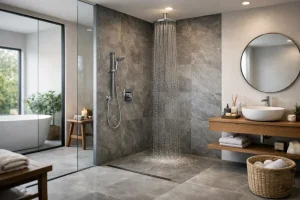

Step into a badly planned wet room in winter and you will notice it straight away – a chilly floor, water where you do not want it, and a space that never quite feels dry. Get the design and installation right, though, and wet rooms can be one of the smartest bathroom upgrades you can make. They look clean and contemporary, make excellent use of space, and can be a brilliant choice for households thinking about long-term comfort and accessibility.
For many homeowners around St Neots and across Cambridgeshire, the appeal is not just the look. A wet room can remove the awkward step into a shower tray, create a more open feel in a smaller bathroom, and make everyday cleaning simpler. But it is not the right answer for every home, every layout or every budget. The real question is not whether wet rooms are fashionable. It is whether one will work properly for the way you live.
What makes a wet room different?
A wet room is a fully waterproofed bathroom space where the shower area sits level with the rest of the floor, rather than inside a raised tray or enclosed cubicle. The floor is laid to a subtle fall so water drains away efficiently, and the walls and floor are tanked beneath the finished surfaces to protect the structure underneath.
That waterproofing is the part many people do not see, but it is the part that matters most. A wet room should not simply look like a shower area without a tray. It needs to be designed from the ground up so that drainage, floor gradients, tiling or wall panels, and ventilation all work together.
In practical terms, that means a proper wet room feels simple to use because a great deal of thought has gone into making it perform well. No fuss, no puddles migrating across the room, no awkward edges to step over.
Why wet rooms appeal to so many homeowners
The first reason is space. In a compact bathroom, removing a bulky shower enclosure can make the whole room feel larger. Sightlines open up, the floor looks less interrupted, and the room can appear calmer and less crowded.
The second is style. Wet rooms suit modern homes beautifully, but they are not limited to ultra-minimal interiors. With the right tiles, brassware and storage, they can feel warm and classic as well. The point is flexibility. You are not tied to a standard tray size or enclosure shape, so the design can be tailored to the room.
The third is accessibility. For anyone planning ahead, recovering from injury, or wanting a safer setup for later life, level access is a major advantage. A well-designed wet room can support easier movement, reduce trip hazards and create a bathroom that is comfortable to use without looking clinical.
That balance matters. Many people want a bathroom that is practical now and future-friendly later, without feeling as though they have had to compromise on appearance.
Where wet rooms work best
Wet rooms are often associated with small bathrooms, and for good reason. In a tight footprint, they can make every inch count. If a standard shower enclosure would make the room feel boxed in, a wet room layout can create a more open result.
They also work very well in en suites, loft conversions and downstairs shower rooms where flexibility is valuable. Because the shower area does not have to fit within the limits of an off-the-shelf tray, awkward corners and unusual room shapes can often be handled more neatly.
Larger bathrooms can suit wet rooms too, but they usually need more careful zoning. In a bigger space, you may want a glass screen or partial division so the shower area feels intentional rather than visually lost. The room should still feel warm, comfortable and easy to move around once it is wet.
The trade-offs people should know about
Wet rooms are not automatically the best option just because they look good in photos. They come with a few practical considerations, and being honest about those from the start usually leads to a better result.
One is cost. Because proper tanking, drainage and floor preparation are essential, a wet room can cost more than a standard shower installation. If the floor needs structural work to achieve the correct fall, that can add to the project.
Another is heat and comfort. In an enclosed shower cubicle, warmth builds up quickly. In a more open wet room, that warmth can disperse faster. Underfloor heating, the right towel radiator and thoughtful room layout can make a big difference here.
Splashing is another factor. Even with careful planning, water will travel more than it would inside a fully enclosed shower. That is not a fault if the room is designed for it, but it does affect where furniture, towel storage and switches should sit.
Then there is cleaning. In some ways, wet rooms are easier to maintain because there are fewer frames, seals and corners to scrub. But large tiled areas and glass screens still need regular care, especially in hard water areas where marks build up.
Wet rooms and accessibility
This is where wet rooms often make the strongest case. For homeowners planning a forever home, or for families adapting a bathroom for a parent or partner, level access can transform day-to-day life. It allows easier entry, offers more room to manoeuvre, and can be paired with features such as grab rails, fold-down seats and non-slip flooring.
The best accessible bathrooms do not feel institutional. They feel calm, smart and considered. Good design can integrate safety features so they support independence without dominating the look of the room.
That is why bespoke planning matters so much. The height of fittings, the position of controls, the amount of turning space and the feel underfoot all affect how successful the finished room will be.
Design details that make wet rooms work
A successful wet room is usually the result of small decisions made well. Drain placement matters. So does the size of the tiles, because very large formats are not always ideal on floors that need a gentle fall. Slip resistance matters too, especially if the room is being designed with accessibility in mind.
Glass screens are worth considering even in open layouts. A single fixed panel can help contain spray without making the room feel closed off. Wall panelling can also be a practical alternative to full tiling in some areas, offering a cleaner look with less grout to maintain.
Storage should not be an afterthought. Recessed niches, vanity units positioned away from the wettest zone, and well-placed hooks or rails all help the space feel organised. A wet room should feel effortless to use, not stripped back to the point where everyday life becomes inconvenient.
Ventilation is another essential. Because more of the room is exposed to moisture, a good extractor fan and sensible heating are crucial. Without them, even a beautifully fitted wet room can become uncomfortable over time.
Why installation quality matters more than ever
With wet rooms, the hidden work is every bit as important as the visible finish. Waterproofing, falls to drain, floor preparation and sealing all need to be right. If they are not, problems may not show up immediately, but they can be expensive and disruptive when they do.
That is why this is one part of bathroom renovation where cutting corners rarely pays off. A wet room should be treated as a complete system rather than a collection of products. The design, the materials and the fitting all need to align.
For homeowners, that usually means less stress when the whole project is planned and managed properly from the start. Instead of trying to coordinate separate trades and hope every detail joins up, it helps to have one experienced team looking at the room as a whole. That is very much how The Bathroom Magician approaches bathroom design and installation – practical advice, careful planning and workmanship that stands up to daily use.
So, are wet rooms right for you?
It depends on your priorities. If you want a sleek, open bathroom that makes excellent use of space, a wet room can be a fantastic option. If accessibility, future-proofing or easy step-free showering is high on your list, it may be one of the best investments you can make.
If your budget is tight, your room is poorly suited to the drainage requirements, or you strongly prefer the warmth and containment of an enclosed shower, another solution may be more practical. There is nothing wrong with that. Good bathroom design is about choosing what works best in your home, not following a trend.
The best starting point is a proper conversation about how you use the room now, what frustrates you about it, and what you want from it over the next ten years. A well-designed wet room can feel effortless for a very long time – and that is usually the sign of a bathroom done properly.