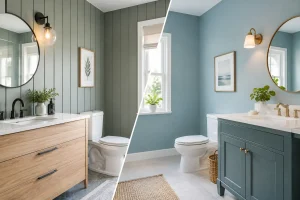

A freshly painted bathroom can look beautifully crisp on day one. But after a few years of daily showers, children’s bath times and rushed weekday mornings, the finish has to work much harder than it first appears. When weighing up wall panels versus bathroom paint, the right answer depends on where the material will be used, how the room is ventilated and how much maintenance you are happy to take on.
Paint remains a sensible, flexible option for many bathroom walls. Wall panelling, however, offers a highly practical alternative in shower areas, around baths and in rooms where you want a low-maintenance surface that stands up to moisture. A well-designed bathroom can use either one, or a thoughtful combination of both.
Wall panels versus bathroom paint: the everyday difference
Bathroom paint is a specialist coating designed to cope better with steam and condensation than ordinary emulsion. It is available in a huge range of colours and usually costs less to buy at the outset. It can also be repainted when you fancy a change, which makes it an appealing choice for walls away from direct splashing.
Wall panels are fixed boards that create a watertight decorative surface. Depending on the product and design, they can recreate marble, stone, tile, concrete, timber textures or a smooth contemporary finish. With fewer joins than tiles and no grout to scrub, they are particularly popular for shower enclosures and bath surrounds.
The key distinction is exposure. Paint copes well with humid air when the room is properly ventilated, but it is not designed to be constantly soaked. A quality wall panel system is made for wet zones, helping protect the wall behind from water ingress.
Where paint is the better choice
Paint should not be dismissed simply because panels are more water-resistant. In the right place, it is a stylish and cost-effective finish.
For larger walls away from the shower or bath, bathroom paint gives you far more freedom with colour. A soft sage green, warm neutral or deep blue can transform the character of a room without committing to a full wall finish. It is especially useful in period homes, where a painted wall can sit naturally alongside traditional sanitaryware, decorative mirrors and feature lighting.
Paint can also be an excellent option for a cloakroom with no shower, provided the space is ventilated and surfaces are kept dry. If the wall has an awkward shape, a sloping ceiling or detailed architectural features, painting may be simpler than cutting panels around every angle.
There is a maintenance consideration, though. Even good bathroom paint may eventually need touching up or repainting, particularly near windows, above baths or in rooms that suffer from regular condensation. Peeling, staining or dark spotting are signs that moisture is lingering too long on the surface or that ventilation needs attention.
When wall panels earn their place
Wall panels come into their own where water is part of everyday life. Inside a shower enclosure, around a fitted bath or throughout a wet room, they provide a durable, easy-clean barrier that paint alone cannot offer.
Unlike tiled walls, panels do not have rows of grout lines that can discolour or require regular cleaning. For busy families, this can make the morning routine a little easier. A quick wipe with a soft cloth and a suitable non-abrasive cleaner is generally all that is needed to keep the surface looking smart.
They are also a practical consideration for mobility bathrooms. A smooth, hygienic wall finish is easy to maintain and can support a calm, uncluttered design. Paired with level-access showering, grab rails placed where they are genuinely useful and good lighting, wall panels can help create a room that is both safer and more enjoyable to use.
Style has moved on, too. Modern panels are not limited to plain white or glossy finishes. Large-format stone effects can give a shower the appearance of a premium tiled installation, while soft mineral tones and subtle textures suit more relaxed, contemporary bathrooms. Because the panels have fewer visible joins, they can make a compact room feel calmer and more spacious.
Moisture, ventilation and what happens behind the surface
The most expensive bathroom problems are often hidden ones. Water that gets behind a finish can damage plasterboard, timber and surrounding structures before it becomes obvious from the outside.
This is why installation matters as much as the surface you choose. A panel system needs correct preparation, careful sealing at joints and edges, and proper fitting around shower valves, niches and bath trims. It is not simply a case of attaching a decorative board to a wall. Done properly, it forms part of a water-managed shower area.
Paint also relies on good preparation. The wall should be dry, sound and properly primed where needed, with a suitable bathroom paint applied according to the manufacturer’s instructions. Painting over an existing damp issue only conceals it temporarily.
Neither option removes the need for ventilation. An effective extractor fan, used during bathing and for a sensible period afterwards, helps reduce condensation across the room. Opening a window can help, but it is not always enough on its own, particularly during colder Cambridgeshire months when warm, damp air quickly settles on cold surfaces.
Comparing cost over the life of the bathroom
Initial price is often where bathroom paint has the advantage. Materials are relatively affordable, and repainting a dry wall is usually straightforward. If you are refreshing a bathroom rather than undertaking a full renovation, paint can deliver a noticeable improvement for a modest outlay.
Wall panels usually involve a higher upfront cost because of the material, trims, waterproofing details and professional fitting. Yet the longer-term picture can be different. In wet areas, panels can reduce the need for redecoration and save time spent tackling stained grout or stubborn mould around tile joints.
The best value is not always the lowest starting price. A shower wall finished with ordinary paint may appear cheaper, but it risks becoming a false economy if it needs repeated repair or allows moisture into the wall. Equally, installing wall panels across every surface may not be necessary if a carefully chosen paint colour would give the room more warmth and flexibility.
A combined approach often looks best
For many homes, the strongest design is not wall panels versus bathroom paint as an either-or decision. It is using each material where it performs best.
Panels can protect the shower enclosure and bath area, while painted walls bring colour and personality to the rest of the room. This combination can soften the look of a large panelled surface and prevent a bathroom from feeling overly clinical. It also offers an opportunity to coordinate the painted shade with vanity units, flooring, brassware or accessories.
In a small en-suite, full-height panelling on the wet walls can create a clean, uninterrupted backdrop, with paint on the remaining wall or ceiling to add depth. In a family bathroom, panels behind the bath and in the shower can take the hard work, while a washable painted finish keeps the wider space easy to refresh over time.
How to choose for your home
Start by looking at how the bathroom is actually used. A lightly used guest en-suite has different demands from a main family bathroom with several showers a day. Consider the amount of direct water, the quality of existing ventilation, who will be cleaning the room and whether accessibility may become more important in the future.
It is also worth considering the property itself. Older walls may need careful assessment before any new finish is fitted. A professional bathroom design and installation service can identify issues early, plan waterproof areas correctly and help you see how materials will work together before work begins. That avoids costly compromises halfway through the project.
At The Bathroom Magician, the focus is on creating a bathroom that looks right for your home and works properly every day. No jargon. No stress. Just practical guidance on the finishes, layout and details that will stand the test of time.
Choose paint when you want colour flexibility on dry walls. Choose wall panels where daily water exposure and easy maintenance are the priority. Then give the room the finishing touch it deserves: a design that makes every ordinary morning feel a little more comfortable.