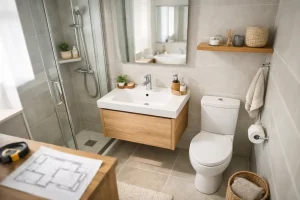

When a bathroom feels cramped, the problem is rarely just size. More often, it is the layout. A room can be small and still work beautifully, but only when every fitting has been placed with purpose. That is why a small bathroom layout guide matters so much – the right plan can make daily routines easier, improve storage, and help the whole room feel calmer and more spacious.
For many homeowners, especially in older properties around St Neots and Cambridgeshire, small bathrooms come with awkward dimensions, sloping ceilings, boxing, narrow doorways or windows in inconvenient places. None of that means you have to settle for a room that feels compromised. Good design is about making the space suit the way you live.
What a small bathroom layout guide should solve
A small bathroom is not just a puzzle of fitting in a toilet, basin and bath or shower. It also needs to feel comfortable to move around in. You need enough clearance to stand at the basin, open a shower door without a struggle, reach storage easily and clean the room without too much hassle.
That is where many layouts go wrong. Homeowners often focus first on what they want to include, when the better starting point is how the room needs to function. If two people use the space in quick succession each morning, the basin area may matter more than a larger bath. If accessibility is a concern, a walk-in shower and clear floor area may take priority over anything else. If it is a family bathroom, storage and durable finishes may shape the layout more than visual impact alone.
The best layouts balance four things at once – movement, comfort, storage and appearance. Ignore one of those, and the room tends to feel awkward however attractive the products may be.
Start with the room, not the products
Before choosing furniture or tiles, look carefully at the space itself. Door position makes a big difference. A door that opens inward can consume valuable floor area, while a pocket door or outward opening door can free up useful room if the property allows it. Windows also matter because they affect where mirrors, shower enclosures and tall storage can go.
Then there are the practical details homeowners do not always see at first. Soil pipe position can influence where the WC works best. Ceiling height may rule out certain shower options. Stud walls might allow recessed storage, while solid walls may not. These are not glamorous decisions, but they shape whether the final bathroom feels effortless or frustrating.
This is one reason a managed design and installation service is so useful. A layout that looks fine on paper can become much more complicated once plumbing routes, floor levels and installation details are taken into account.
The best layout options for a small bathroom
There is no single perfect plan, because the right answer depends on room shape and how you use the space. Still, some layout approaches consistently work better than others.
The one-wall layout
If your bathroom is narrow, placing the WC, basin and shower or bath along one wall often creates the cleanest result. It keeps plumbing efficient and leaves clearer floor space opposite. This can make the room feel less broken up and easier to navigate.
The trade-off is that it may limit your choice of furniture sizes. You also need to avoid making the room feel too linear or cramped, which is where wall-hung fittings and lighter finishes can help.
The end-shower layout
In a rectangular bathroom, putting the shower across the far end can be one of the smartest moves. It creates a natural zone, almost like the room has been squared off, and often leaves enough length for a WC and basin along one side.
A fixed glass panel or low-profile tray usually helps the room feel more open than a bulky corner enclosure. If you prefer a bath, a shower bath at the end can work too, although it takes up more visual and physical space.
The corner-focused layout
Corners are often underused in small bathrooms. A corner basin or compact corner WC can sometimes release just enough central space to make the whole room work better. This can be particularly useful in awkward rooms where a full-width basin would interrupt movement.
That said, corner products are not always the best long-term answer. Some can feel too small for everyday use, especially in a main family bathroom. It depends on who is using the room and how often.
The walk-in shower layout
For many smaller bathrooms, replacing a bath with a walk-in shower is the single biggest improvement. It can make the room feel larger, easier to clean and more accessible. This is especially helpful for older homeowners planning ahead or anyone wanting a bathroom that supports safer daily use.
A walk-in design needs careful planning, though. The screen position, drainage and splash control all matter. Done well, it feels generous. Done badly, it can leave the room cold, wet or awkward to use.
Choosing the right fittings for tight spaces
A compact layout works best when the fittings are properly scaled. That does not always mean choosing the smallest product available. Very tiny basins and short projection toilets can solve one problem while creating another if they are uncomfortable to use.
Wall-hung furniture is often a strong choice because it reveals more floor and helps the room feel lighter. Slim-depth vanity units can give useful storage without pushing too far into the walkway. Back-to-wall WCs with concealed cisterns can also reduce visual clutter, although they need the right wall depth or boxing detail.
In shower areas, clear glass generally keeps the room feeling open. Framed enclosures can work, but heavy visual lines tend to make compact bathrooms feel busier. Recessed shelving is worth considering as well. It gives practical storage without adding bulk, which is exactly what a smaller room needs.
Storage is part of the layout
Storage is not something to squeeze in later. In a small bathroom, it should be part of the layout from the start. Otherwise, bottles end up around the bath, spare loo rolls live in plain sight, and the room quickly feels messy however carefully it was designed.
Vanity storage is usually the hardest-working option because it combines two functions in one footprint. Mirrored cabinets are also useful, especially where wall space is limited. If there is an alcove, chimney breast recess or unused section above boxing, these can often be turned into practical storage without stealing room from the main circulation area.
Open shelving can look attractive, but it tends to work best when you are willing to keep it neat. For many busy households, closed storage is the more forgiving choice.
Making a small bathroom feel bigger
A good layout does most of the heavy lifting, but visual choices still matter. Large-format tiles can reduce grout lines and make the room feel calmer. Light colours often help, though a darker scheme can also work if the lighting is planned properly and the layout is uncluttered.
Mirrors are especially effective when placed to bounce light around the room. Layered lighting also makes a difference. A single central ceiling light rarely flatters a bathroom. Better task lighting around the mirror and softer general lighting can make the space feel both brighter and more comfortable.
Keeping the floor as visible as possible usually helps too. Wall-hung units, floating vanities and simple shower screens all contribute to a greater sense of openness. It is not about tricks. It is about reducing visual stops and making the room easier for the eye to read.
When accessibility shapes the layout
For some homeowners, a small bathroom layout guide is not just about saving space. It is about making the room safer and easier to use every day. That may mean wider access, reduced trip hazards, grab rails positioned where they are genuinely helpful, or a level-access shower that supports independent bathing.
These choices do not have to make the bathroom feel clinical. With the right design, accessible bathrooms can still feel stylish, warm and in keeping with the rest of the home. The key is planning early rather than trying to retrofit solutions after the main layout has already been fixed.
Why expert planning saves stress
Small bathrooms leave less room for error. A basin that projects too far, a door that clashes with a vanity unit, or a towel radiator in the wrong place can affect the whole room. On a larger project, you might absorb those issues. In a compact bathroom, every centimetre counts.
That is why detailed planning is so important. At The Bathroom Magician, we often find that homeowners know what they dislike about their current bathroom but are not always sure what will solve it. The design stage is where those frustrations get translated into practical decisions that suit the property, the budget and the people using the space.
A small bathroom can absolutely feel stylish, easy to use and built around real life. The secret is not cramming more in. It is choosing a layout that earns its place, so the room works harder without feeling harder to live with.