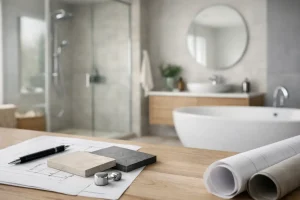

The best bathroom designs usually start with a frustration. Not enough storage. A shower that feels cramped. Tiles that looked lovely once but are now hard work to keep clean. If you’re wondering how to design a new bathroom, the right place to begin is not with colours or taps, but with how the room needs to work for you every single day.
That matters whether you are updating a busy family bathroom, creating a calmer en suite, or planning a mobility bathroom that supports comfort and independence. A good design should look right, of course, but it also needs to suit your home, your routine and the people using it. No jargon. No stress. Just sensible decisions made in the right order.
How to design a new bathroom from the ground up
Before you choose a basin or browse tile samples, take a step back and think about the space as a whole. The most successful bathrooms are planned around use, not just appearance. A beautiful room that lacks storage or feels awkward to move around will soon lose its appeal.
Start by asking a few practical questions. Who uses the bathroom every day? Is it mainly for quick weekday mornings, relaxed evening baths, or both? Do you need it to be easy for children to use now, or safer and more accessible for later? These answers shape almost every design decision that follows.
If your bathroom is part of a long-term home improvement plan, it is worth thinking ahead. Many homeowners in St Neots and the wider Cambridgeshire area want a bathroom that feels stylish now but also remains practical in years to come. That could mean choosing a walk-in shower over a high-sided bath, wider access around key fittings, or surfaces that are easy to clean and maintain.
Begin with the layout, not the finish
Layout is where good bathroom design is won or lost. In most homes, the room size is fixed, so the real challenge is making every part of it work harder. This does not always mean moving everything around. Sometimes the best result comes from improving the existing footprint rather than forcing a completely new arrangement.
Think carefully about how you move through the room. The toilet should not be the first thing you see if that can be avoided. Showers need enough clearance to feel comfortable, and vanity units should leave enough room to stand, bend and open drawers properly. In smaller bathrooms, wall-hung furniture can create a more open feel, while sliding or bifold doors may free up useful floor space.
There are trade-offs. A freestanding bath can look striking, but it needs room around it to clean and appreciate it properly. A large vanity offers excellent storage, but not if it makes the room feel pinched. Wet rooms are sleek and practical, especially for accessibility, but they need careful planning and installation to make sure drainage, falls and waterproofing are right.
Decide what matters most in the room
Every bathroom has a priority. In one home, it is storage. In another, it is a generous shower. In another, it is creating a safer space without making it look clinical. Being clear on the main goal helps you make decisions with confidence.
If storage is the issue, build it into the design from the start rather than treating it as an afterthought. Recessed mirror cabinets, vanity drawers, fitted furniture and alcove shelving can all reduce clutter without crowding the room. If comfort is the priority, details like underfloor heating, a properly sized towel radiator and soft lighting can make a surprising difference.
For family homes, durability tends to matter as much as style. That usually means choosing surfaces and fittings that stand up well to daily use and are easy to wipe down. For older homeowners or anyone planning for future needs, safety features such as level-access showers, anti-slip flooring and grab rails can be incorporated in a way that still feels elegant and considered.
Choose products that suit the space
A common mistake is falling for individual products before checking whether they suit the room. That impressive rainfall shower head may need better water pressure than your home provides. A double basin may sound useful, but in a compact bathroom it can leave you short on worktop and storage. Good design is not about choosing the most expensive option. It is about choosing the right one.
Baths, basins, toilets and shower enclosures all come in a wide range of sizes. The proportions matter. In a smaller room, a shorter projection toilet or a slim vanity unit can make the space feel much more comfortable. In a larger bathroom, undersized fittings can leave the room feeling oddly sparse.
It is also worth considering maintenance. Matt black brassware can look smart, but it may show water marks more readily than chrome. Light grout can brighten a room, but darker grout often proves more forgiving in a busy household. Wall panelling is increasingly popular because it offers a clean, modern finish with less grout to maintain than full tiling.
Lighting changes everything
Bathrooms often have to work at very different times of day, which is why lighting deserves more attention than it usually gets. Harsh overhead light can make a room feel flat and clinical, while poor task lighting around the mirror makes shaving, skincare and make-up more difficult.
The best approach is layered lighting. Ceiling lights provide overall brightness, mirror lighting helps with daily routines, and softer ambient lighting adds comfort for evening use. If your bathroom has little natural light, warmer tones and reflective finishes can help the room feel less enclosed. If it gets plenty of daylight, think about how your chosen colours and materials will look in both sunshine and winter gloom.
Pick materials that look good and last
This is where style starts to come through, but practical thinking should still lead the way. Bathrooms deal with moisture, heat and constant use, so finishes need to cope with all three. Tiles, wall panels, worktops and flooring should not just match your taste – they should also suit the level of wear the room will see.
Large-format tiles can make a room feel more spacious and reduce grout lines, which many homeowners appreciate for cleaning. Textured flooring can add grip underfoot. Porcelain is a strong all-round choice because it is durable and low maintenance. If you want a warmer, softer look, wood-effect finishes often give that feel without the upkeep real timber would need in a wet environment.
When it comes to colour, neutral schemes tend to age well, but that does not mean plain. Warm stone tones, soft greys, off-whites and muted greens can all create a calm, timeless backdrop. If you want personality, it can be easier to add it through mirrors, lighting, brassware or feature tiling rather than making every surface a statement.
Think beyond the visible design
A new bathroom is only as good as the work behind the walls. Plumbing, ventilation, waterproofing and installation quality are what make the finished room perform properly over time. This is one reason a fully managed service is so valuable. It takes the pressure off homeowners who do not want to coordinate multiple trades or worry whether one stage has been completed properly before the next begins.
Ventilation is a good example. It is not the exciting part of bathroom design, but it matters. Without adequate extraction, even the best-looking room can suffer from condensation, mould and damaged finishes. The same goes for tanking in wet areas, shower drainage and careful preparation before tiles or panels go on.
That is why showroom choices and installation planning need to go hand in hand. At The Bathroom Magician, that end-to-end approach helps homeowners make decisions with the full picture in mind, rather than trying to piece a project together bit by bit.
Budget with priorities, not guesswork
Bathroom budgets can move quickly if decisions are made too late or changed halfway through. A clearer approach is to separate your must-haves from your nice-to-haves early on. Spend where it improves daily use, longevity and quality of finish. Save where the difference is mostly decorative.
For example, it is often worth investing in better cabinetry, reliable brassware and skilled installation, because these are the things you live with and rely on every day. You may decide to keep the layout similar if moving pipework adds cost without adding real benefit. Equally, if accessibility is important, it usually makes sense to prioritise the right showering solution from the outset rather than retrofitting later.
A good design process should make those choices easier. It should show you where your money will have the biggest impact and where a simpler option may serve you just as well.
Designing a new bathroom should feel exciting, not overwhelming. When the layout is right, the products suit the way you live and the installation is handled properly, the room starts to do more than look good – it becomes easier to use, easier to maintain and better suited to your home for years ahead. If you are not sure where to start, start with the way you want the room to feel on an ordinary Tuesday morning. That is usually where the best design decisions begin.