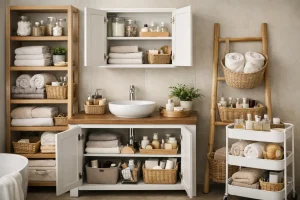

If your bathroom always seems to collect bottles, towels, spare loo rolls and half-used toiletries with alarming speed, the problem usually is not how much you own. It is how the room has been planned. The best bathroom storage ideas are the ones that make daily life easier, keep surfaces clear and still leave the room feeling calm rather than crowded.
That matters even more in homes where the bathroom has to work hard. A family bathroom needs to cope with busy mornings. An ensuite has to feel streamlined in a tighter footprint. A mobility bathroom needs storage that is safe and easy to reach. Good storage is not an afterthought – it is part of what makes the whole room function properly.
What makes the best bathroom storage ideas work?
The most successful storage does two jobs at once. It hides the practical bits you do not want on display, and it keeps everyday essentials close to hand. The balance matters. Too much open shelving and the room starts to look messy. Too many deep cupboards and things disappear into the back, never to be seen again.
That is why fitted solutions often work better than buying a few standalone pieces and hoping for the best. A well-designed bathroom uses the available width, height and awkward corners properly, instead of leaving dead space behind a pedestal basin or above a boxed-in pipe run.
It also needs to suit the people using it. A couple may want neat drawer storage for toiletries and electric toothbrushes. A family may need zones for children’s bath toys, spare towels and cleaning products. Someone planning for later life may prioritise lower storage that can be reached safely without stretching or bending.
Vanity units are still one of the smartest choices
If there is one storage upgrade that transforms a bathroom quickly, it is replacing an exposed basin pedestal with a vanity unit. This gives you concealed space exactly where you need it, without taking up more room than the basin already does.
Drawers are often more practical than cupboards because you can see what is inside at a glance. For everyday use, a wide drawer under the basin can hold toiletries, spare hand towels and cleaning essentials far more neatly than a cluttered windowsill or shelf. In a smaller bathroom, a compact wall-hung vanity unit can also make the floor feel more open, which helps the room appear larger.
The finish matters too. If you want a cleaner, more contemporary look, handleless or slimline designs keep things simple. If your bathroom leans more classic, a painted furniture-style vanity can add warmth while still working hard behind the scenes.
Tall units make use of space you are probably missing
In many bathrooms, the real opportunity is vertical rather than horizontal. Floor space is limited, but wall height is often underused. A tall storage unit, whether full-height or half-height, can hold a surprising amount without dominating the room if it is positioned carefully.
This works particularly well for linen, spare toiletries and the less attractive necessities that are better kept out of sight. In a family bathroom, one tall unit can stop every shelf and ledge from becoming a catch-all. In an ensuite, a narrow tower unit can fit into spaces that would otherwise be wasted.
The trade-off is proportion. In a very small room, an oversized cabinet can make the layout feel heavy. The answer is not to avoid tall furniture altogether, but to choose the width and depth carefully so it complements the room rather than swallowing it.
Recessed storage keeps the room feeling streamlined
When homeowners ask for a bathroom that feels more spacious, recessed storage is often part of the answer. Instead of furniture projecting into the room, storage is built into the wall where possible. This is especially useful in shower areas, around boxed-in sections and above baths.
A recessed niche in a shower is one of those details that seems small but makes daily use much easier. Shampoo and shower gel are easy to reach, yet there is no need for wire racks or bottles lined up on the tray. The same idea works beside a bath, where a niche can hold toiletries neatly without cluttering the edges.
Mirror cabinets are another good example. They combine reflection and storage in one piece, which is ideal when you want practicality without visual bulk. For many bathrooms, they are one of the best bathroom storage ideas because they work hard while keeping the design clean.
Open shelving can work – if it is used sparingly
Open shelves look appealing in photographs, but they are not always the easiest option in everyday life. They can be brilliant for folded towels, attractive jars or a few carefully chosen accessories. They are less brilliant for toothpaste boxes, spare razors and all the odds and ends most bathrooms need to store.
That does not mean you should rule them out. It simply means they work best as a supporting feature rather than the main storage plan. A shelf above a radiator or toilet can be useful. A small alcove shelf can soften the room and add personality. But for the items you use every day, closed storage is usually easier to keep looking tidy.
Storage around the toilet is often overlooked
The space around a WC is easy to ignore, but it can be very useful. Wall-hung toilets with concealed cisterns often create a ledge or furniture run that can double as a practical surface. This is helpful for decorative touches, but also for keeping essentials nearby without crowding the basin area.
In some layouts, fitted furniture around the WC can create extra cupboard space for loo rolls, cleaning products or spare hand towels. It is particularly effective in cloakrooms and compact bathrooms where every centimetre counts. The key is to avoid making the area feel boxed in. Clean lines and good proportions make all the difference.
Small bathroom storage needs a different mindset
In a small bathroom, the aim is not to squeeze in as many cupboards as possible. It is to make each element earn its place. Slim-depth furniture, wall-hung units and mirrored storage usually perform better than bulky freestanding cabinets.
Corner solutions can help, but only when they are genuinely useful. A corner basin vanity, for example, can be a smart choice in the right layout. Random corner shelves, less so, especially if they jut into movement space. This is where tailored design is worth it. What looks efficient on paper can feel awkward once you are using the room every day.
Lighter finishes can also help the room feel less busy, but storage design matters more than colour alone. A pale bathroom full of exposed clutter still feels cramped. A well-planned room with concealed storage nearly always feels calmer.
The best bathroom storage ideas for mobility and accessibility
For accessible bathrooms, storage should never be an obstacle. It needs to be easy to reach, simple to use and positioned with safety in mind. That often means fewer high shelves and more practical drawer storage, lower cupboards and thoughtfully placed niches.
If someone uses the bathroom with reduced mobility, you want essentials within comfortable reach from the basin, shower or WC. Heavy doors, awkward handles and low-quality fittings can all become daily frustrations. Good design removes those problems quietly.
This is one reason fully planned renovations tend to outperform quick fixes. Accessible storage is not just about adding a cabinet. It is about understanding movement through the room, safe access and how the space will support independence over time.
Think in zones, not just products
One of the easiest ways to plan storage well is to think in zones. What do you need at the basin? What needs to live in the shower area? Where should towels sit? Where will spare supplies go?
That approach stops everything being crammed into one oversized cupboard. It also makes the bathroom easier for more than one person to use. In a family home, basin storage may hold daily toiletries, while a tall unit stores backups and cleaning items. In an ensuite, the priority may be quick access to morning essentials without disrupting the calm look of the room.
This is where bespoke planning comes into its own. A bathroom that is designed around your habits always feels easier to live with than one built around generic furniture sizes.
Style and practicality should work together
Storage should make the bathroom look better, not more crowded. Matching fitted furniture creates a more joined-up finish than a room full of separate pieces bought at different times. It also tends to be easier to clean and maintain, which matters in a space used every day.
Materials are worth considering too. Bathrooms are warm, damp environments, so storage needs to stand up to moisture and regular use. Well-made fitted units with durable finishes generally give better long-term value than cheaper options that begin to swell, mark or loosen after a short time.
For homeowners planning a renovation in St Neots and the surrounding area, this is often where professional design support pays off. A specialist such as The Bathroom Magician can spot storage opportunities early in the planning stage, before the room is tiled and fitted, which gives you far more options than trying to improve things afterwards.
The right storage does not shout for attention. It simply makes the bathroom feel easier, tidier and better suited to the way you live. If you are planning an upgrade, choose solutions that fit your routine as well as your room, and the space will keep working for you long after the newness has worn off.