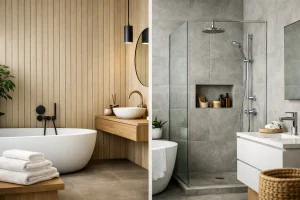

A shower wall that is beginning to look tired can make an otherwise good bathroom feel overdue for attention. So, is wall panelling good for bathrooms? For many homes, the answer is yes. Quality bathroom wall panels provide a smart, practical alternative to tiles, with fewer grout lines to clean and a wide choice of finishes to suit anything from a compact en-suite to a family bathroom or accessible wet room.
The important word is quality. Bathroom panelling needs to be designed for wet areas and fitted properly around showers, baths, windows and corners. Choose the right product and installation, and it can look excellent for years while making everyday cleaning far simpler. Choose a cheap decorative panel or leave gaps around the edges, and moisture can find its way behind the surface.
Why wall panelling works well in bathrooms
Bathroom wall panels are waterproof boards or sheets that cover the existing wall. They are commonly made with a waterproof core and a durable decorative surface, often replicating marble, stone, concrete, tile or warm timber effects. Unlike standard painted walls, they are built to cope with steam, splashes and regular cleaning.
Their biggest practical advantage is the lack of grout. Traditional tiles can look beautiful, but grout lines need ongoing attention and may discolour over time, particularly in busy shower areas. A panelled wall has far fewer joins, leaving fewer places for soap residue, limescale and mould to gather. For households with limited time, or anyone who wants a bathroom that is easier to maintain, that is a meaningful benefit rather than a small luxury.
Panels can also be installed more quickly than a fully tiled wall. This may reduce disruption during a renovation, especially where panels can be fitted over a sound existing surface. Less cutting, setting and grouting means the room can move towards completion sooner. Every bathroom is different, however, so the wall condition and the scope of the work still need to be assessed before a timescale is promised.
There is a design benefit too. Large-format panels create a calm, uncluttered look that can make a smaller bathroom feel more open. A pale stone-effect finish can brighten a room with limited natural light, while a darker slate or contemporary concrete look can give a shower area real definition. With a coordinated shower tray, vanity unit and flooring, wall panelling can feel every bit as considered as a tiled scheme.
Is wall panelling good for bathrooms with showers?
Yes, provided the panels are specified for shower use and professionally sealed. The shower enclosure or wet area is where wall panelling proves its value most clearly: it creates a water-resistant surface that is simple to wipe down after use and avoids a wall of grout lines.
This does not mean that every panel is suitable everywhere. Decorative wall cladding intended for dry rooms should not be used behind a shower. A bathroom installer should use proper waterproof panels, compatible trims, sealants and fittings, then ensure each joint is secure. The quality of the preparation behind the panels matters just as much. A damaged, loose or damp wall should be dealt with before it is covered.
For a wet room, the decision requires even more care. Walls are only one part of the waterproofing plan. The floor, drainage, shower screen, falls and junctions must all work together to direct water safely away. Wall panelling can be an excellent wet-room finish, but it should sit within a properly designed and tanked installation rather than being treated as a shortcut.
The benefits homeowners notice every day
The most obvious benefit is easy cleaning. A soft cloth, warm water and a suitable non-abrasive bathroom cleaner are usually enough to keep panels looking fresh. There is no need to scrub grout with a stiff brush, and no need to reseal a tiled wall as part of routine maintenance.
Wall panelling is also a sensible option for mobility bathrooms. Smooth walls are easier to keep hygienic, while the reduced number of joints can support a clean, practical environment around level-access showers and shower seats. The finish can still be stylish and personal, rather than making the room feel clinical.
Comfort matters as well. Panels do not feel as cold or hard-edged as a heavily tiled room can sometimes feel. They can help create a more relaxed, spa-inspired setting, particularly when paired with good lighting and thoughtful storage. For homeowners planning to stay in their property for years, choosing finishes that are both attractive and easy to live with is often the right long-term approach.
Finally, wall panels offer consistency. Natural stone and handmade tiles have character, but variation from piece to piece is part of their nature. Panels can give a more uniform finish, which suits homeowners looking for clean lines and a controlled, contemporary look.
Where tiles may still be the better choice
Wall panelling is not automatically the right answer for every bathroom. Tiles offer enormous flexibility in shape, pattern and layout. If you have your heart set on a handmade tile, a detailed mosaic border or a particular heritage look, tiling may better deliver the design you have in mind.
Tiles can also be useful where a wall is particularly uneven and needs building out or reshaping as part of wider preparation work. That said, panels can often be fitted over suitable surfaces, so the best option depends on the condition of the room rather than a fixed rule.
Budget deserves an honest conversation too. Basic panels can appear less expensive at first glance, but long-lasting waterproof products, neat trims and skilled fitting all contribute to the finished cost. Premium porcelain tiles can cost more in materials and labour, yet they may be the preferred choice for a highly individual scheme. The fairest comparison looks at the complete installed solution, its maintenance needs and how long you expect to enjoy it.
A mixed approach is often particularly effective. You might choose wall panels inside the shower for easy maintenance, then use tiles, paint or another finish elsewhere in the room. This keeps the practical benefits in the wettest area while allowing more decorative freedom around a basin wall or freestanding bath.
Choosing bathroom wall panels that last
Start with the location. Shower walls, bath surrounds and splashback areas need products that are expressly made for regular water exposure. Do not rely on a label that simply says moisture-resistant. In a bathroom, particularly around a shower, waterproof performance is the standard to look for.
Then consider the finish in the context of the whole room. Gloss surfaces bounce light around a small bathroom and are straightforward to wipe clean. Matt finishes can look softer and more architectural, though a textured finish may need a little more attention when cleaning. Large marble-effect panels make a strong statement, while subtle stone or neutral finishes tend to remain easy to live with as tastes change.
The thickness and construction of the panel matter more than a showroom sample alone can reveal. Better-quality systems are stable, durable and designed to work with matching trims and sealants. Edges, corners, cut-outs for shower controls and openings around windows need careful detailing. These are the areas where a well-fitted bathroom separates itself from one that merely looks acceptable on day one.
It is also worth thinking about access for future repairs. Shower valves, pipework and concealed cisterns should be planned sensibly before the walls are finished. A fully managed bathroom design process considers these practical details early, so the finished room looks good without making future maintenance unnecessarily difficult.
Installation makes the difference
Even the best bathroom wall panel cannot compensate for poor preparation. Before fitting begins, the installer should check for signs of leaks, damaged plaster, unstable boards or damp. The surfaces need to be sound, clean and appropriately prepared, and plumbing positions should be finalised before panels are cut.
Accurate measuring is essential. Bathrooms rarely have perfectly square walls, and existing properties often have awkward corners, boxed-in pipework or window reveals to work around. Panels must be cut precisely, with correct expansion allowances and neatly finished edges. The sealant should be applied carefully and allowed to cure before the shower is used.
This is why homeowners often value one team that can oversee the design, products and fitting together. At The Bathroom Magician, that joined-up approach helps ensure the panel choice works with the shower, furniture, lighting and layout, rather than becoming an isolated decision made halfway through the project.
A practical finish with real design potential
Wall panelling is a very good bathroom choice when you want a waterproof, low-maintenance finish without compromising on appearance. It is especially strong in shower enclosures, family bathrooms and mobility-focused spaces where easy cleaning and reliable performance matter every day.
The best result comes from treating panelling as part of the wider bathroom design, not simply as a quick wall covering. Choose a finish you will enjoy seeing each morning, invest in materials made for the space, and make sure the fitting is as carefully planned as the room itself.