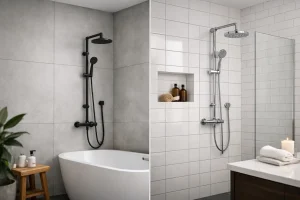

A shower wall can look smart on day one with almost any finish. The real test comes later: after busy mornings, steamy baths, children’s splashes, cleaning routines and years of everyday use. When weighing up wall panels vs tiles, the best choice is rarely about fashion alone. It is about how you use the room, the condition of the walls behind it and how much maintenance you want from your new bathroom.
For some homes, traditional tiles provide the detail and character needed to create a personal design. For others, large waterproof wall panels offer a clean, practical finish with far fewer joins to maintain. Both can look excellent when they are properly specified and professionally fitted.
Wall panels vs tiles: the key difference
Tiles are individual pieces of ceramic, porcelain, natural stone or similar material fixed to the wall and finished with grout. They have been a bathroom favourite for generations because they offer huge choice in colour, shape, texture and layout.
Bathroom wall panels are large boards fitted directly to prepared walls or, in some cases, over suitable existing tiles. They are available in a broad range of finishes, including marble-effect, stone-effect, concrete-look, timber-inspired and plain contemporary colours. With fewer seams and no grout lines across most of the surface, they create a more continuous appearance.
Neither option is automatically better. A compact en-suite, a busy family bathroom, a period property and an accessible shower room all place different demands on the walls around them.
Cleaning and day-to-day maintenance
This is often the deciding factor for homeowners. Grout is practical and durable when installed correctly, but it has more texture than a panel surface and can hold soap residue and limescale. In hard-water areas, grout lines may need regular attention to keep them looking fresh. Good-quality grout, sealing where appropriate and a consistent cleaning routine will make a significant difference.
Wall panels are generally quicker to wipe down because their surface is smooth and there are fewer joints. A non-abrasive bathroom cleaner and soft cloth are usually all that is required. This can be particularly appealing in a main family bathroom, a rental property or a mobility bathroom where easier maintenance supports independent living.
That does not mean panels need no care at all. The seals around edges, shower trays and fittings must be checked and kept clean, just as silicone seals would be in a tiled shower. Water protection depends on careful preparation and correct fitting, not simply on the surface material chosen.
Appearance: detail or a calm, continuous finish?
Tiles offer more freedom at a smaller scale. You can introduce a patterned floor, a herringbone feature wall, a border or a contrasting niche. Smaller-format tiles can follow awkward shapes neatly, which is useful around alcoves, boxing and characterful older walls. Porcelain can also provide a premium, substantial feel that many homeowners love.
The trade-off is visual busyness. Lots of small tiles and grout lines can make a compact bathroom feel more crowded, especially if the room has limited natural light.
Wall panels suit homeowners who prefer a calmer, more streamlined look. Larger sheets make a shower enclosure feel more open, while marble or stone-effect finishes can create a high-end look without the upkeep associated with some natural materials. They work especially well in contemporary bathrooms and wet rooms where clean lines are part of the design.
Panels are not restricted to plain white or glossy finishes. Modern ranges can be surprisingly convincing, but it is worth seeing full-size samples in a showroom. A pattern that looks subtle on a small sample may appear much stronger across an entire shower wall.
Mixing panels and tiles can be the right answer
The decision does not have to be all or nothing. A popular approach is to use panels inside the shower area, where easy cleaning matters most, then tile the remaining walls or add a tiled floor for texture and contrast. This can give the room both personality and practicality.
A well-planned mixed finish needs careful coordination. Colours, trims, brassware and flooring should work together, rather than making the bathroom feel like separate sections were chosen at different times.
Installation time and disruption
A tiled bathroom requires sound, properly prepared walls. Depending on the surface and the shower area, this may include suitable backer boards or waterproofing before tiling begins. Tiles are then fixed, allowed to set, grouted and finished. It is skilled work, particularly where layouts, cuts and waterproof shower zones are involved.
Wall panels can often be installed more quickly because each board covers a larger area. In the right conditions, they may also be fitted over existing tiles, reducing removal work. However, this is only sensible when the existing surface is secure, flat and free from signs of damp or movement. Covering a problem wall does not solve the problem behind it.
For a full bathroom renovation, wall finishes are only one part of the programme. Plumbing changes, electrics, ventilation, flooring, plastering and fitting sanitaryware all need to be coordinated. Choosing panels may shorten one stage of the job, but a reliable installer will plan the whole room rather than making promises based on one material alone.
Cost: look beyond the initial price
There is no single answer to whether panels or tiles cost less. Basic tiles can be inexpensive, while premium porcelain, handmade styles and intricate layouts can increase both material and labour costs. Larger tiles may use fewer pieces, but can require more preparation and careful handling.
Wall panel prices vary just as widely. Budget options may be attractive upfront, while thicker, higher-quality decorative panels with matching trims can cost more. Installation can be quicker, which may reduce labour time, but the overall figure depends on the size of the room, wall preparation, the number of corners and openings, and whether the project includes a new shower enclosure or wet room system.
The more useful question is value over the life of the bathroom. If a low-maintenance surface saves you time and helps the room stay looking tidy for years, it may be worth a higher initial outlay. If a specific tiled design is central to the look you want, investing in quality materials and fitting can be equally worthwhile.
Durability and repairs
Quality porcelain tiles are exceptionally hard-wearing. If one tile becomes damaged, it can often be replaced, provided matching tiles have been kept aside. Grout can also be renewed if it becomes tired over time. The potential weak point is movement in the wall beneath, which can lead to cracked grout or tiles if the substrate has not been properly prepared.
Wall panels are designed to cope well with the humid bathroom environment when fitted with the right system of trims and seals. Their large surface area means fewer joints, but damage to a panel can be more involved to repair than replacing a single tile. It is worth asking about the panel’s thickness, finish, warranty and availability of matching components before making a decision.
In either case, ventilation matters. A good extractor fan, used properly, helps control condensation and protects the wider bathroom, including painted ceilings, cabinetry and window frames.
What works best for accessible bathrooms and wet rooms?
For homeowners planning for future needs, easy cleaning and safe showering are often more valuable than decorative detail. Wall panels can be a strong option for level-access showers and mobility bathrooms because they reduce grout lines and create a neat, easy-to-maintain surface around the showering area.
Tiles also work well in accessible spaces, particularly on floors where slip resistance is a key consideration. The right tile size and grout design can support grip, while a thoughtful layout can make a wet room feel spacious rather than clinical.
The best result comes from designing the room around the person using it. Shower seating, grab rails, screen positions, storage, lighting and access should all be considered early, not added as an afterthought once the finishes have been chosen.
How to choose with confidence
Start with the room’s everyday demands. A household that wants the fastest possible cleaning routine may favour panels in the shower. Someone renovating a Victorian home or creating a decorative feature wall may be drawn to tiles. If you expect to stay in the property for many years, consider what will remain practical and enjoyable as routines change.
It also helps to see materials alongside the bath, vanity unit, taps and flooring you are considering. This is where showroom guidance is valuable: it is much easier to judge scale, texture and colour in person than from a small image online.
At The Bathroom Magician, we help homeowners around St Neots and Cambridgeshire weigh up these choices as part of the wider bathroom design, installation and finishing process. No jargon. No stress. Just a bathroom that looks right for your home and works well every day.
Before choosing a finish, picture yourself cleaning the shower on a Saturday morning, not just admiring it after installation. The material that makes that moment simpler, while still giving you a bathroom you are pleased to come home to, is usually the right one.