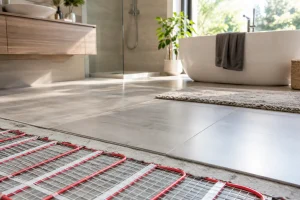

Cold tiles first thing in the morning can make an otherwise beautiful bathroom feel less inviting. That is why homeowners planning a renovation often ask, is underfloor heating worth it? For many bathrooms, the answer is yes – but only when it is chosen for the right room, installed properly and considered as part of the wider design rather than an add-on at the end.
Underfloor heating brings a quiet, even warmth from the floor upwards. It removes the need to rely solely on a radiator, makes tiled floors much more comfortable underfoot and can help the room dry more quickly after baths and showers. However, it does come with upfront costs, practical installation requirements and a few situations where another heating solution may make better sense.
Why underfloor heating works so well in bathrooms
Bathrooms tend to have hard, cool surfaces. Porcelain, ceramic and natural stone tiles are durable, water-resistant and easy to clean, but they can feel distinctly chilly. Underfloor heating changes that experience without changing the practical benefits of the floor finish.
Unlike a radiator, which concentrates warmth around one part of the room, underfloor heating spreads gentle heat across the floor. The result is a more consistent temperature, particularly useful in compact bathrooms where a radiator can make wall space feel limited. It also means fewer cold spots around the shower, vanity unit or toilet.
There is a comfort benefit, but there is also a design benefit. Removing or reducing the need for a large radiator can free up valuable space for storage, a wider basin unit or a better shower layout. In a small ensuite, that can make a real difference to how the room works day to day.
For mobility bathrooms and wet rooms, a warm, dry floor can be especially welcome. It can help moisture evaporate more quickly and offers a pleasant surface for anyone who spends longer getting in or out of the shower. It is not a substitute for proper ventilation, waterproofing or slip-resistant flooring, but it supports a safer, more comfortable space.
Is underfloor heating worth it for your bathroom?
The value depends on how you use the room and what is already in place. It is often most worthwhile when you are carrying out a full renovation, replacing the floor tiles or creating a new wet room. At that stage, the floor is already being prepared, tiled and finished, so the additional work can be planned neatly into the project.
It can be less attractive if your bathroom is otherwise complete and the only aim is to take the chill off the floor. Retrofitting usually means lifting the existing flooring, checking the subfloor and fitting a new finish. That may still be worthwhile, but it is a bigger decision than adding a heated towel rail.
Think about the following questions before deciding:
- Is the bathroom used daily, particularly in the early morning or evening?
- Are you replacing tiles or renovating the room from the ground up?
- Is wall space limited or would you prefer a cleaner, less cluttered look?
- Does the room feel cold despite having adequate heating elsewhere in the home?
- Are you planning to stay in the property long enough to enjoy the improvement?
In a family bathroom, ensuite or downstairs shower room used every day, the answer is often positive. In a rarely used cloakroom, the installation cost may be harder to justify unless it is part of a larger project.
Electric or water-based underfloor heating?
There are two main types of underfloor heating, and the right one depends largely on the size of the area and the scope of the renovation.
Electric underfloor heating
Electric systems use heating mats or cables laid beneath the floor finish. They are typically the most straightforward choice for a single bathroom, particularly during a refurbishment. They are slim, responsive and well suited to tiled floors.
An electric system needs professional electrical installation and suitable controls, usually including a programmable thermostat and floor temperature sensor. It can be set to warm the room around your regular routine, rather than running unnecessarily all day.
For many bathroom projects, electric underfloor heating is the practical option because it does not require changes to the central heating pipework. The trade-off is that electricity can cost more per unit than gas, so good controls and realistic usage habits matter.
Water-based underfloor heating
Water-based, or hydronic, systems circulate warm water through pipes beneath the floor. They can be very efficient when connected to a suitable boiler or heat pump, especially across a larger area of the home.
For one bathroom alone, however, a water-based system can involve more disruption and expense. It is usually best considered as part of an extension, a whole-house heating upgrade or a major renovation where floors and heating systems are already being altered.
If you are renovating one bathroom in an established home, electric heating is commonly the simpler route. If you are redesigning several rooms or building from scratch, it is worth discussing whether a water-based system fits the broader heating plan.
What does it cost to run?
Running costs are often the biggest concern, and there is no single figure that applies to every household. The size of the bathroom, insulation levels, floor construction, electricity tariff, thermostat settings and how long the system runs all affect the total.
A well-designed bathroom system should not need to run continuously. Most homeowners use timed heating periods to take the edge off the floor before the household gets up and again in the evening. A modern thermostat allows you to set those periods precisely.
Insulation beneath the heating system is vital. Without it, some warmth can be lost into the subfloor rather than travelling upwards into the room. An insulation board also helps the floor warm up more efficiently, which can reduce warm-up times and make the system feel more effective.
It is also worth being clear about expectations. Underfloor heating is excellent for comfort and gentle background warmth, but a larger or poorly insulated bathroom may still need another heat source. A heated towel rail can work well alongside it, keeping towels dry and adding extra warmth when needed.
Installation details that should not be overlooked
Underfloor heating is hidden once the bathroom is complete, so the preparation matters as much as the finished appearance. The subfloor must be sound, level and appropriate for the chosen system. Any movement in a timber floor, for example, needs to be addressed before tiling begins.
Floor height is another consideration. Heating mats, insulation boards, adhesive and tiles all add depth. In some properties, this can affect door clearances, transitions into adjoining rooms and the level of a shower tray or wet room floor. Planning these details early avoids awkward compromises later.
The layout should also be designed around fixed furniture and sanitaryware. There is little value in heating directly beneath a fitted vanity unit, bath or toilet where heat cannot circulate into the room. The usable floor area is what determines the system design, not simply the overall room dimensions.
A qualified electrician should complete the electrical connection, testing and certification. Bathroom electrics have specific safety requirements, particularly around showers, baths and basins. This is not a place to cut corners.
The best floor finishes for underfloor heating
Tiles are generally the strongest match for underfloor heating because they conduct and retain heat well. Porcelain and ceramic are popular choices for bathrooms thanks to their durability, broad choice of styles and easy maintenance.
Natural stone can also work beautifully, although it may require suitable sealing and care depending on the material. Vinyl and other specialist bathroom floor finishes can sometimes be used, but they must be approved for use with underfloor heating and fitted within the manufacturer’s temperature limits.
The flooring decision should never be made in isolation. A pale large-format tile may make a compact bathroom feel more spacious, while textured tiles can provide added grip in a shower area. The heating system should support the look and practical performance you want from the finished room.
When underfloor heating may not be the right choice
Underfloor heating is not essential in every bathroom. If your budget is tight, investing first in reliable waterproofing, quality ventilation, good lighting and durable fittings will usually deliver more immediate value. These are the foundations of a bathroom that performs well for years.
It may also be unnecessary in a small cloakroom with no shower or bath, particularly if the room is already comfortably heated. Likewise, if you need fast, powerful heat in a large and poorly insulated bathroom, underfloor heating alone may not meet the brief.
The best approach is to treat it as one part of the room’s overall heating and ventilation plan. A thoughtfully positioned towel rail, extractor fan, insulation and well-planned underfloor heating can work together far better than any one feature on its own.
For homeowners investing in a bathroom they will enjoy for years, underfloor heating is often one of those details that quickly becomes hard to live without. Plan it early, choose a system that suits the room and use it with sensible controls, and every step onto the bathroom floor can feel like a small upgrade to everyday life.