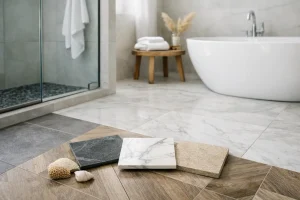

A bathroom floor has to cope with more than its fair share: wet feet, splashes from the bath, steamy mornings, dropped toiletries and frequent cleaning. The best tiles for bathroom floors are not simply the ones that look right in a showroom. They need to feel safe underfoot, suit the way your household uses the room and remain easy to live with for years to come.
For most homes, porcelain is the strongest all-round choice. But the ideal floor may be a smaller textured tile for a walk-in shower, a warmer-looking stone-effect design for a family bathroom, or a carefully sealed natural stone surface for a more traditional space. The detail matters.
What makes a bathroom floor tile a good choice?
A successful bathroom floor starts with practical decisions, then builds in the style. Water resistance is essential, but so are grip, cleaning requirements, durability and how the tile works with the rest of the room.
Tiles with a matt or lightly textured finish generally offer more confidence under wet feet than highly polished options. That does not mean the floor needs to look rough or utilitarian. Many modern porcelain tiles have a refined stone, concrete or timber effect while still providing a sensible level of grip.
It is also worth considering who will use the bathroom. A young family may need a hard-wearing, forgiving surface that stands up to daily bath time. For someone planning a mobility bathroom or wet room, slip resistance and a level-access layout become priorities. In an en-suite used mainly by adults, a larger-format tile may be perfect if the shower area is designed with the correct fall and drainage.
Look beyond the showroom sample
A single tile sample can make a finish look more polished or more textured than it will appear across a full floor. Lighting changes the effect too. Before choosing, view a few tiles together and think about their place in the complete scheme: wall finishes, vanity unit colour, brassware and natural light all influence the final result.
A professional design will also account for cuts around toilets, basins and doorways. This is particularly valuable in compact bathrooms, where the wrong tile size or layout can make the room feel busy.
Porcelain tiles: the best all-round bathroom floor option
Porcelain is often considered one of the best tiles for bathroom floors because it is dense, highly water-resistant and exceptionally durable. It does not need sealing, is straightforward to clean and is available in an enormous range of colours, formats and finishes.
Stone-effect porcelain gives the character of slate, limestone or marble without the same ongoing maintenance. Wood-effect porcelain can bring the warmth of timber to a bathroom without concerns about moisture damage. Concrete-effect designs work well in clean, contemporary spaces, especially when paired with wall panelling or simple large-format wall tiles.
The trade-off is that porcelain can feel cool underfoot. In a bathroom refurbishment, underfloor heating is often the answer. It takes the chill out of winter mornings and allows the room to feel comfortable without relying solely on a radiator. Porcelain conducts heat effectively, making it an excellent partner for this type of heating.
Choose a matt, grip-rated porcelain for shower areas and busy family bathrooms. A polished porcelain may suit a lower-splash area, but it needs careful consideration where wet feet are likely.
Ceramic tiles: a practical choice in the right room
Ceramic tiles can offer good value and plenty of design flexibility. They are commonly used on bathroom walls, but selected ceramic products are also suitable for floors. The key is to choose a tile specifically rated for floor use rather than assuming every ceramic tile will cope with regular foot traffic.
For a cloakroom, lightly used en-suite or a bathroom where budget is a major consideration, floor-rated ceramic can be a sensible option. It is usually easier to cut than porcelain, which can be useful where a room has awkward corners or pipework.
That said, porcelain is generally the more resilient option for a main family bathroom. It is less porous and better equipped for the long-term demands of a heavily used room. If you are investing in a full renovation intended to last, the additional cost of porcelain is often worthwhile.
Natural stone: beautiful, but not maintenance-free
Natural stone brings depth and variation that manufactured tiles cannot fully replicate. Slate, limestone, marble and travertine can all create a distinctive bathroom, from a country-home feel to quiet, hotel-inspired luxury.
However, stone asks more of the homeowner. Most natural stone floors require sealing on installation and periodic resealing afterwards. Some varieties are more vulnerable to staining, etching or discolouration from strong cleaning products. A gentle cleaning routine is part of the deal.
Texture varies too. Riven slate can offer excellent grip but has an uneven surface that may be harder to clean. Honed limestone feels smoother and more contemporary, but may need a more considered approach in wet areas. Natural stone can be a wonderful choice when you love its character and are happy to maintain it, but it is not always the simplest route for a busy household.
Tile size, grout and layout change the room
Large-format tiles can make a bathroom feel calmer because there are fewer grout lines breaking up the surface. They work particularly well in medium and larger bathrooms, or in a contemporary en-suite where a clean, uninterrupted look is the aim.
Smaller tiles have their place too. Mosaic and small-format tiles are especially useful on shower floors and wet room areas. The extra grout joints provide more grip, and the smaller pieces can follow the gentle slope needed to guide water towards the drain.
In a small bathroom, there is no fixed rule that says you must choose small tiles. A large tile can make a compact room appear less cluttered, provided the layout is planned well. Conversely, a patterned small tile can give a small cloakroom real personality. The best choice depends on the room’s shape, the number of cuts required and the wider design.
Grout should be treated as part of the design rather than an afterthought. A close colour match creates a quieter, more expansive feel. Contrasting grout makes the pattern more noticeable and can suit a period-style scheme, but it will draw attention to every line. Mid-tone grout is often more forgiving than brilliant white in a hardworking family bathroom.
Safety matters most in showers and wet rooms
A bathroom floor should feel secure, not slippery. This is especially important around showers, baths and toilets, and it can make a meaningful difference for older homeowners or anyone with reduced mobility.
Ask about the tile’s slip resistance, particularly if you are planning a level-access shower or wet room. Ratings can sound technical, but the principle is simple: choose a finish designed to provide grip when it is wet. A very smooth, glossy tile may be attractive, but it is rarely the best choice for the shower zone.
Drainage and installation are just as important as the tile itself. In a wet room, the floor must be correctly prepared, waterproofed and formed to the right gradient before tiling begins. Poor preparation can lead to standing water, cracked grout or leaks beneath the surface. This is one area where experienced installation protects both the look of the bathroom and the fabric of your home.
Do not forget comfort and maintenance
The right floor should make everyday routines easier. Porcelain and ceramic need little more than regular sweeping and mopping with a suitable cleaner. Avoid overly harsh products, particularly on grout and natural stone, as they can dull finishes or damage protective sealants.
If warmth is a concern but underfloor heating is not part of the plan, choose a less stark colour palette and use washable bath mats where they will not create a trip risk. Stone-effect tiles in warm beige, soft greige or muted earth tones can make a bathroom feel more inviting than cooler grey finishes.
For a long-lasting result, the floor tile should be selected alongside the shower tray, drainage, wall finishes and heating plan, not as a final decorative extra. A well-designed bathroom makes these elements work together, so the room looks considered and feels effortless to use every day.
The best bathroom floor is the one that suits your home rather than a passing trend. Choose a tile you will enjoy seeing each morning, then make sure its grip, durability and installation are equal to its good looks.