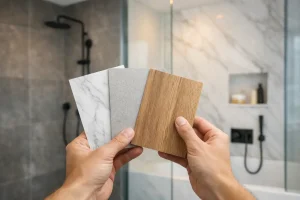

A shower wall has a demanding job. It must stand up to daily water, steam, soap and cleaning, while still looking good years after the bathroom is finished. Knowing how to choose shower wall panelling starts with more than picking a colour you like. The right panel needs to suit your shower layout, the condition of your walls, how the room is used and the standard of finish you expect.
For many homeowners, wall panelling offers a smart alternative to tiles. There are fewer grout lines to clean, installation can be quicker, and the range of stone, marble, timber-effect and contemporary plain finishes makes it easier to create a bathroom with real character. But not every panel is right for every room. A considered choice now can prevent leaks, awkward joins and costly changes later.
Start with the shower area, not the sample
A showroom sample is useful, but it cannot tell you whether a panel will work around your shower tray, enclosure, window or ceiling height. Before choosing a finish, look carefully at the space that needs covering.
Measure the shower walls, including any returns, alcoves and boxing around pipework. Consider where fittings such as the shower valve, riser rail, shelves and grab rails will sit. These details affect how panels are cut and joined, and whether you will need matching trims.
A standard enclosure with square, uninterrupted walls is usually straightforward. An older property may be less forgiving. Walls can be uneven, corners may not be perfectly square, and pipework can create complications. Good installation can accommodate these issues, but choosing a panel system with suitable trims and a flexible fitting approach matters.
For a wet room or level-access shower, the decision needs even more care. The wall finish must work alongside correct tanking, drainage and floor falls. Wall panelling can be an excellent option here, particularly where easy cleaning and reduced grout lines support a more accessible bathroom, but it should form part of a properly planned waterproofing system.
How to choose shower wall panelling by material
The material behind the visible finish affects durability, feel, price and where the panel can be used. Rather than assuming every panel labelled as bathroom panelling is suitable for a shower, check that it is designed for wet areas and installed according to the manufacturer’s system.
PVC panels
PVC shower panels are lightweight, practical and often one of the more budget-friendly choices. They are available in many finishes and can be a sensible solution for an en-suite, cloakroom shower or rental property where easy maintenance is a priority.
Their lighter construction can mean they do not have the same solid feel as premium panels. Quality varies considerably, too. A cheaper panel may show more movement or have a less convincing printed finish, so it is worth viewing a full-size sample where possible rather than relying on an online image.
Laminate shower panels
High-pressure laminate panels are a popular choice for homeowners looking for a substantial, polished finish. They are typically rigid and available in convincing marble, stone, concrete and timber effects, as well as modern plain colours. Larger boards mean fewer joints across the wall, which can create a clean, high-end look.
They tend to cost more than basic PVC alternatives and need careful cutting and sealing. When fitted properly, however, they are hard-wearing and particularly well suited to busy family bathrooms where appearance and practicality need to work together.
Acrylic and decorative panels
Acrylic panels can bring a glossy, contemporary finish to a shower enclosure. They reflect light well, making them useful in smaller or darker bathrooms. Decorative composite options can also give a distinctive look, although the available colours and textures may be more limited than laminate ranges.
The key question is not simply which material is best. It is which one suits your room, budget and expectations. A premium marble-effect laminate panel may transform a main bathroom, while a simpler panel could be the more sensible choice for a compact guest shower.
Check the waterproofing details
A shower panel is only as reliable as its joints, edges and sealant. The broad face of the panel is designed to resist water, but water will always look for weaknesses around corners, shower trays, windows and fittings.
Ask how the panels connect to one another and how the perimeter will be finished. Some systems use discreet internal trims, while others are designed to create a closer, more minimal joint. Both can work well when specified and fitted correctly. What matters is that the complete system – panels, trims, adhesives and sealants – is suitable for the setting.
Pay particular attention to the bottom edge where the panels meet the shower tray or floor. This is one of the most exposed areas in the room. A neat bead of quality sanitary sealant is not merely a finishing touch; it is part of the water barrier. It should also be accessible for inspection and replacement in the years ahead.
Do not assume wall panelling removes the need for sound preparation behind it. Depending on the wall condition and the installation method, the background may need levelling, boarding or waterproofing before fitting begins. Covering a damp or unstable wall is never a long-term solution.
Choose a finish that suits everyday life
Wall panelling can make a small bathroom feel calmer because it avoids the visual busyness of lots of tile joints. Large-format marble effects are popular for this reason, especially in compact en-suites. Pale stone, warm white and soft grey finishes can brighten a room, while darker panels can add drama when balanced with good lighting and lighter sanitaryware.
It is worth thinking about the bathroom as a whole. A busy panel pattern may compete with a patterned floor, while a quiet finish gives you more freedom with brassware, furniture and accessories. If you are unsure, use one statement surface and let the rest of the scheme support it.
Texture matters as well. High-gloss panels bounce light around the room but may show water marks more readily in hard-water areas. Matt and textured finishes can feel more understated and may disguise everyday splashes better, though some heavily textured surfaces can take a little more effort to wipe down.
For a long-term home, choose a finish you will still enjoy after trends move on. A timeless stone-effect panel or a warm neutral shade often gives more flexibility if you later change the vanity unit, mirror or flooring.
Think about cleaning before you buy
One of the strongest reasons to choose shower wall panelling is easy maintenance. With fewer grout lines, there is less opportunity for discolouration and mould to take hold. That said, no shower surface is maintenance-free.
Most panels need only a soft cloth, warm water and a mild non-abrasive cleaner. Avoid harsh scouring pads and aggressive chemical products unless the manufacturer specifically approves them, as these can dull or scratch the surface. Keeping the shower ventilated and wiping excess water away after use will help any finish stay fresher for longer.
If mobility, comfort or independence are priorities, easy-clean surfaces become even more valuable. A thoughtfully designed level-access shower with smooth wall panels, practical storage and well-positioned support rails can reduce daily effort without making the room feel clinical.
Plan fittings, storage and future changes
Shower controls, screens, shelves and grab rails all need secure fixing. Heavy items should be planned before the panels are installed so that the wall behind can provide appropriate support. Do not leave this to chance, particularly in a family bathroom or an accessible shower where safety fittings may be essential.
Recessed niches are another feature to decide early. They create useful storage without shelves projecting into the shower space, but they need correct waterproofing and careful panel detailing. A well-positioned niche can make a shower feel more generous; a poorly placed one can become an awkward cleaning point.
Also consider access to plumbing. Most shower valves and pipework can be planned neatly behind the finished wall, but future servicing should not require unnecessary damage to the room. This is where experienced bathroom design and installation makes a real difference.
Compare the whole cost, not just the panel price
The cheapest board is not always the lowest-cost solution once trims, adhesives, wall preparation and fitting are included. Equally, a premium panel can represent good value when it reduces installation time, improves the final look and saves years of grout cleaning.
When comparing options, ask what is included in the quoted system and whether the installer has allowed for all edges, corners, cut-outs and sealing. It is also sensible to check the product warranty and, just as importantly, the workmanship guarantee offered for the installation.
For homeowners around St Neots and Cambridgeshire, visiting a showroom can make these decisions much easier. Seeing larger samples in person reveals the true scale of a pattern, the texture of the surface and how it looks under bathroom lighting. At The Bathroom Magician, the aim is to bring these choices together with the wider room design, so the shower panels work properly with the tray, enclosure, furniture and fittings.
The best shower wall panelling should make your bathroom easier to live with, not simply more attractive on installation day. Choose a system that suits the room, insist on proper preparation and fitting, and select a finish that feels right for your home. That is how a practical shower space becomes one you are pleased to use every morning.