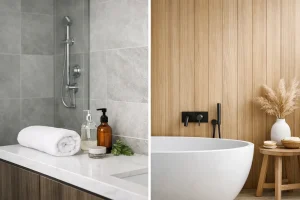

A shower wall has a demanding job. It faces daily splashes, steam, soap residue and the occasional enthusiastic bath-time flood, while still needing to look good for years. When deciding between bathroom tiles or wall panelling, the best choice is not always the one that looks best in a showroom. It is the one that suits how your household uses the room, the condition of the existing walls and the level of maintenance you are happy with.
For homeowners planning a long-term bathroom renovation, both options can create a smart, durable finish. The right answer often comes down to where the material will be used, rather than choosing one for the entire room.
Bathroom tiles or wall panelling: the key differences
Tiles are individual pieces of ceramic, porcelain or natural material fixed to the wall and finished with grout. Their huge range of sizes, colours and patterns makes them a classic choice for creating a bathroom with real character. From understated metro tiles to large-format porcelain and decorative feature walls, tiles give you considerable freedom over the final design.
Wall panelling is usually made from waterproof, decorative boards fitted over prepared walls. The boards have a watertight surface and sealed joins, creating a smooth finish with far less visible jointing than tiled walls. Modern panels are available in stone, marble, concrete, timber-effect and plain finishes, so they are no longer limited to a basic utility-room look.
Neither is automatically superior. Tiles tend to offer more design flexibility and a traditional premium feel. Wall panels are prized for their speed of installation, straightforward cleaning and minimal grout. The practical details matter as much as the appearance.
Choose tiles when design detail matters most
Tiles are particularly well suited to homeowners who want a bathroom with a distinctive, tailored look. You can run the same tile from the shower area across a feature wall, add a contrasting border, or combine different formats to define separate areas of the room. In a period property, tiles can also sit more naturally alongside original details than some contemporary panel finishes.
Porcelain tiles are especially popular in busy family bathrooms because they are hard-wearing and absorb very little water. Large-format tiles can make a compact bathroom feel calmer and more spacious, as there are fewer grout lines breaking up the wall. Smaller tiles, meanwhile, can bring texture and interest to alcoves, splashbacks and curved features.
The trade-off is installation time. Tiling requires careful preparation, accurate setting out, cutting and grouting. Walls need to be sound and suitably flat before work begins, particularly with larger tiles. Quality tile work is not something to rush, and the result depends greatly on the detail behind the finished surface.
Grout also needs some attention over its lifetime. With sensible ventilation and regular cleaning, it can remain in excellent condition, but it is more susceptible to staining and mildew than a smooth panel surface. Choosing a good-quality grout and having it properly finished makes a meaningful difference.
Choose wall panelling for easy-care shower walls
Wall panelling comes into its own in shower enclosures, around baths and in bathrooms where reducing cleaning time is a priority. Because a panel covers a much larger area, there are fewer joins for dirt or mould to collect in. A wipe with a soft cloth and suitable bathroom cleaner is generally all that is needed to keep the surface looking fresh.
This can be a particularly appealing option for mobility bathrooms and multigenerational homes. A clean, low-maintenance wall finish supports a practical, calm space without sacrificing style. Panels can be paired with level-access shower flooring, grab rails and well-planned storage to create a bathroom that works comfortably now and in the future.
Panels may also reduce the amount of wall preparation needed during a refurbishment, as they can often be fitted over existing sound surfaces. That does not mean installation should be treated as a shortcut. The wall still needs checking for damp, movement and structural issues, while edges, corners and joints must be sealed correctly to keep water where it belongs.
For homeowners keen to minimise disruption, panelling can be a sensible route. It is often quicker to fit than a fully tiled room, although the overall project programme still depends on plumbing changes, flooring, electrics, sanitaryware and any repairs uncovered along the way.
Think about cost as a whole, not just per square metre
It is tempting to compare the price of a tile with the price of a panel and make the decision there. In reality, the installed cost is what matters. Tiling involves adhesive, grout, trims, preparation and skilled fitting, with labour increasing where patterns, niches or intricate cuts are involved. Premium tiles can also add significantly to the budget.
Wall panels can cost more or less than tiles depending on the range selected, but their larger format and quicker fitting can make them competitive for shower areas. Fewer individual components and less grouting may also simplify the installation process.
The most cost-effective option is not necessarily the lowest initial quote. Consider how long you expect the bathroom to serve your household, how much maintenance you are willing to take on and whether the finish supports the value and style of the rest of your home. A well-designed bathroom should feel right every morning, not merely meet a short-term budget.
Mixing tiles and panels often gives the best result
A full-room commitment is not required. Many successful bathroom designs use wall panels inside the shower enclosure and tiles elsewhere. This approach gives you the easy-clean benefit where water exposure is highest, while retaining the texture, colour and detail of tiles on visible feature walls.
Another option is to tile behind a basin or around a freestanding bath, then use panels in the shower. In a small en-suite, a large-format panel in the shower can create an uncluttered backdrop, with a carefully chosen tiled splashback adding personality without making the room feel busy.
The key is to make the combination look intentional. Colours, undertones and finishes should complement each other, and transitions need to be planned around corners, shower screens, niches and fittings. This is where professional bathroom design earns its place: the small decisions prevent a mixed-material scheme from looking pieced together.
Do not overlook safety and everyday comfort
Wall finishes are only one part of a bathroom that functions well. If the room is being adapted for easier access, the layout deserves just as much attention as the materials. A walk-in shower, a shower seat, sensible lighting and secure support rails can all be integrated attractively when considered at the design stage.
Both tiles and panels can work in accessible bathrooms. Panels offer a smooth, easy-clean surface with minimal joints, while tiles offer scope to coordinate wall finishes with slip-resistant floor tiles. For wet rooms, waterproofing beneath the surface is essential regardless of the decorative finish chosen. The visible wall is only as reliable as the preparation and installation behind it.
Good ventilation matters too. An effective extractor fan, appropriate heating and a room layout that allows surfaces to dry will protect whichever finish you choose. No wall material is a substitute for managing moisture properly.
How to make the final decision
Start by looking at your daily routine. A busy family shower room may benefit from the quick cleaning of panels, while a main bathroom intended as a relaxing, design-led retreat may justify the extra detail of carefully selected tiles. If you are renovating a forever home, think ahead to changing needs and choose surfaces that will remain practical as well as attractive.
Next, consider the room itself. Is it compact or generously sized? Are the walls uneven? Will the shower be used heavily? Is there a window, good extraction and enough space for a level-access layout if required? These answers shape the right specification far more reliably than a trend image.
At The Bathroom Magician, we help homeowners around St Neots and Cambridgeshire see the practical differences before work starts, selecting finishes that suit the room, budget and lifestyle. No jargon. No stress. Just a properly planned bathroom with the right materials in the right places.
A bathroom should not ask you to choose between beautiful and practical. Whether you prefer the crafted detail of tiles, the low-maintenance appeal of wall panelling or a thoughtful combination of both, choose the finish that will make everyday life easier long after the renovation is complete.