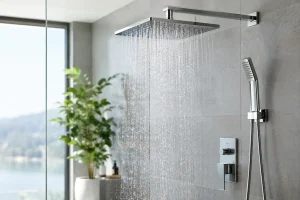

A rainfall shower can make a rushed weekday morning feel noticeably calmer, but only when it is properly matched to your water supply, space and habits. This rainfall shower system review looks beyond the showroom appeal to help you decide whether this style of shower is a sensible investment for your home.
The short answer is that a well-designed rainfall system can be a wonderful addition to a bathroom renovation. It creates broad, even coverage and gives the room a more considered, luxurious finish. However, the largest shower head is not always the best choice. Water pressure, cleaning requirements, layout and who will use the bathroom all deserve equal attention.
What is a rainfall shower system?
A rainfall shower system usually combines a large, fixed overhead shower head with a separate hand shower on a rail or hose. The overhead head delivers a soft, wide spray intended to mimic rainfall, while the hand shower gives you the control needed for rinsing, cleaning and more targeted showering.
Systems are available in exposed and concealed designs. An exposed system has a visible riser rail and controls on the wall, making it a practical option for many refurbishments. A concealed system hides much of the pipework within the wall for a cleaner, more minimal look. Both can work beautifully, but concealed fittings need to be planned before walls are finished and can take more installation work.
You may also see ceiling-mounted rainfall heads. These can be striking in a large walk-in shower or wet room, although they need suitable ceiling access and careful positioning. For most family bathrooms, a wall-mounted overhead shower provides the same relaxed feel with fewer practical complications.
Rainfall shower system review: the everyday benefits
The main benefit is coverage. Unlike a standard shower handset, which delivers a more concentrated spray, a rainfall head distributes water across a wider area. This can feel gentler and more immersive, particularly after a long day or if you prefer not to hold a shower head while washing your hair.
A dual-function system is also much more useful than an overhead head alone. The hand shower is invaluable for rinsing shampoo, washing children, cleaning the enclosure and reaching areas the fixed head cannot. It is one of those details that is easy to overlook when choosing products, then miss immediately once the bathroom is in use.
Visually, rainfall showers suit a wide range of bathroom styles. Chrome remains an easy choice for a bright, classic finish, while brushed brass, matt black and brushed nickel can add warmth or contrast. The best finish is not simply the trendiest one. It should work with your taps, accessories, tiles and the level of upkeep you are comfortable with. Matt black can look particularly smart, for example, but water marks may be more visible in hard-water areas.
For homeowners planning to stay in their property, the sense of comfort matters. A shower is used every day, often by more than one person. Choosing a system that feels enjoyable as well as functional can make a real difference to how the whole room works.
The trade-offs to consider before buying
A rainfall shower does not automatically provide a powerful shower. The feel of the spray depends on the size of the head, its design and, crucially, the water pressure available in your home. A larger head spreads the water over a bigger area, so weak pressure can leave it feeling disappointing rather than indulgent.
Homes with a combi boiler or a mains-pressure unvented cylinder can often support an appropriate rainfall system well. Properties with a gravity-fed system may need a compatible low-pressure shower or a pump. This is why product selection should follow a proper assessment of the existing plumbing, not just a choice made from a photograph.
Water use is another consideration. Some rainfall heads have a generous flow rate, which can increase water and energy use, especially in a busy household. Many quality systems now include flow regulators or efficient spray patterns that maintain a pleasant experience while using less water. The right option depends on your household and priorities. If long showers are a regular ritual, it is sensible to discuss efficiency at the design stage.
Cleaning is the other reality. Large shower heads have more nozzles, and limescale can build up over time. Look for silicone nozzles that can be rubbed clean by hand. A regular wipe-down, particularly around the shower controls and head, will help retain the finish and keep the spray even. In hard-water parts of Cambridgeshire, this simple maintenance routine is especially worthwhile.
Choosing the right style for your bathroom
The best rainfall shower system is one that fits the room rather than dominating it. In a compact enclosure, an oversized head can splash beyond the showering area and leave limited elbow room. A moderate-sized overhead head, positioned carefully, is often more comfortable and practical.
For a family bathroom, a thermostatic valve is a strong choice. It helps keep the temperature stable if someone runs a tap elsewhere in the house, reducing the risk of an unpleasant surprise under the shower. It is a reassuring feature for households with children, older relatives or anyone who values an easy, predictable routine.
In a walk-in shower, think about where the water will fall before deciding on the head position. The shower should be far enough from the opening to contain splashes, while still allowing easy access. Screen size, floor falls, drainage and the direction of the spray all work together. This is one reason a shower layout benefits from being designed as a whole, rather than assembled from individual fittings.
Accessibility deserves careful thought too. A fixed rainfall head can be relaxing, but it should not replace a height-adjustable hand shower. A rail-mounted handset gives greater flexibility for seated showering, assisted washing and users of different heights. Paired with level-access flooring, secure grab rails and a well-positioned shower seat where needed, it can form part of a bathroom designed for long-term independence.
Exposed or concealed: which is better?
Neither is universally better. An exposed shower system is often the straightforward choice when replacing an existing shower. Its visible bar valve and riser rail can suit contemporary and traditional bathrooms, and future servicing is generally more accessible. It can also reduce the amount of wall alteration required during installation.
A concealed system offers a neater, less cluttered appearance, with controls and shower outlets set into the wall. It works particularly well with large-format tiles, wall panels and calm, minimalist schemes. The trade-off is planning. Pipework, valve depth and access requirements must all be resolved before tiling or panelling begins.
Good installation matters more than the style of system. Pipework must be secure, valves correctly set, waterproofing properly managed and the shower tested before the room is handed over. A beautiful shower is no comfort if water escapes behind a wall or the controls are awkward to use.
Questions worth asking in the showroom
Before settling on a rainfall shower, ask how it will perform with your current water system, whether it needs a pump, and what flow rate you can realistically expect. Check the height of the riser and overhead head too, particularly in rooms with lower ceilings.
It is also worth handling the controls. Can you turn them easily with wet hands? Is it clear which control operates temperature and which changes the outlet? Small details make a surprising difference when you are using the shower half awake on a winter morning.
Finally, consider the complete shower area. The enclosure or screen, tray or wet-room floor, drainage, lighting and ventilation all affect how enjoyable the shower will be. A rainfall system is a feature, not a solution on its own.
A thoughtfully chosen rainfall shower can bring a little more comfort to ordinary routines without making the bathroom harder to live with. Start with how your household uses the space, then choose the system that supports it beautifully for years to come.