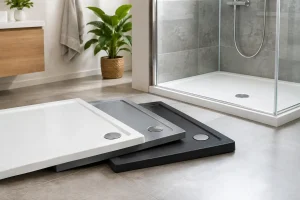

A shower can look beautifully finished on the day it is installed, but the real test comes during busy weekday mornings, muddy dog walks and years of daily use. Shower trays sit at the heart of that experience. Choose the right one and the shower feels secure, easy to clean and properly integrated into the room. Choose poorly and even high-quality screens and tiles can be let down by awkward drainage, movement underfoot or a difficult step in and out.
For a bathroom renovation, the tray is not simply a base to put beneath a shower enclosure. Its size, shape, height and position influence the whole layout. That is why it deserves proper consideration early in the design process, alongside the shower screen, brassware and wall finish.
Start with the way the bathroom needs to work
The best shower tray is rarely just the largest one that will fit. It should give the person using it enough room to shower comfortably without making the rest of the bathroom feel cramped. In a compact en-suite, a quadrant tray can soften a tight corner and preserve a clearer route past the basin or WC. In a larger family bathroom, a rectangular tray may create a more generous showering area and suit a sliding or hinged screen.
Think about everyday routines as well as floor plans. A household with young children may appreciate a wider tray with plenty of elbow room. Someone planning to remain in their home for many years may prefer a low-profile or level-access arrangement that reduces the step into the shower. For some properties, particularly older homes where floors and pipework need careful assessment, what appears straightforward on a plan may require a different installation approach in practice.
A well-managed design service looks at these details before products are ordered. It avoids the frustration of discovering late in the project that a preferred tray does not allow enough room for a door to open, or that the waste position clashes with existing joists.
Shower trays: material makes a practical difference
Most quality shower trays are made from acrylic-capped stone resin, acrylic or steel. Each has a place, but the right choice depends on priorities rather than appearance alone.
Stone resin trays are popular in fitted bathrooms because they are solid, stable and available in a wide choice of sizes and profiles. Their weight helps them feel reassuring underfoot, which can be particularly welcome in a main bathroom used by the whole household. They are also well suited to slim designs, helping create the clean, contemporary look many homeowners want.
Acrylic trays are usually lighter and can be easier to handle during installation. They can be a sensible option where access is restricted or where the project calls for a more economical solution. The trade-off is that a lower-quality acrylic tray may flex if it is not correctly supported, so the strength of the construction and fitting method matter greatly.
Steel trays are durable and have a crisp, neat finish, although they may feel cooler under bare feet and offer fewer design options. Whatever the material, look beyond the surface. A properly supported tray, fitted level and connected to suitable drainage, will perform far better than an expensive tray installed as an afterthought.
Do not overlook slip resistance
A textured or slip-resistant finish is worth considering, especially for family bathrooms, mobility bathrooms and households where confidence underfoot is a concern. It need not mean compromising on style. Many modern trays offer subtle finishes that are comfortable to stand on and easy to maintain.
This is one area where individual needs matter. A smooth tray may be perfectly suitable for some users and easier to wipe down, while a higher-grip surface can offer extra reassurance for others. The right answer comes from discussing who will use the space now and in the future.
Low profile, raised or level access?
The height of a shower tray changes both the look and usability of the shower. Low-profile trays create a sleek transition from bathroom floor to shower area. Where floor construction and drainage allow, they can be fitted close to floor level, reducing the step and making the room feel more open.
For accessibility, a level-access shower area can be an excellent long-term choice. It allows easier entry for people with reduced mobility and can accommodate a shower seat or mobility aid when carefully planned. However, achieving this detail is not always as simple as selecting a very slim tray. The floor may need to be prepared to provide the correct fall to the waste while keeping the surrounding floor level. Waterproofing and precise installation are essential.
Raised trays are sometimes the sensible choice, not a compromise. If pipework cannot be recessed into the floor without significant disruption, a tray installed on a riser kit can provide the space needed for the waste. It can also make future access to drainage simpler. The visual impact can be reduced with a neat panel, but the additional step should be considered carefully, particularly if ease of access is a priority.
Drainage is where good design earns its keep
The waste outlet is easy to ignore while looking at showroom displays, yet it has a major effect on how reliably a shower performs. Water must clear quickly enough for the chosen shower valve and shower head. A powerful rainfall shower, for example, may need a higher-flow waste than a modest handset.
The route from the waste to the existing plumbing also matters. Ideally, pipework should have sufficient fall to carry water away efficiently. When that cannot be achieved, the design may need adjusting. Moving the shower position, choosing a different tray or revising the floor build-up can be far better than accepting slow drainage or a tray that holds water at one end.
Correct levelling is equally vital. A tray must be installed in accordance with the manufacturer’s requirements, with its fall guiding water towards the waste. Even a small error can affect drainage and leave persistent puddles that attract limescale and make cleaning harder.
Match the tray to the enclosure and wall finish
A tray and screen should be specified as a working pair. The dimensions must match precisely, and the opening style needs to suit the available clearance. Sliding doors are useful where there is little room in front of the shower, while pivot or hinged doors can feel more spacious if the layout allows them to open freely.
Consider the walls too. Large-format tiles and wall panels can both create a smart, low-maintenance shower area, but they need to be fitted over properly prepared and waterproofed surfaces. Grout lines, panel joins and the seal between screen and tray all need careful finishing. A good shower is built from layers of practical decisions, not just attractive individual products.
Colour can help the shower sit naturally within the scheme. White remains a classic choice and works with almost any style. Slate-effect, grey or black trays can create a stronger contemporary look, but they may show soap residue or hard-water marks more readily depending on the finish. In hard-water areas of Cambridgeshire, choosing easy-clean surfaces and maintaining them regularly can make a noticeable difference.
Cleaning and care without the fuss
Most shower trays need only regular cleaning with a non-abrasive bathroom cleaner and a soft cloth. Avoid harsh scourers or products that can dull the surface. Rinsing away shampoo and soap residue after use, then drying the tray when practical, helps preserve its finish and keeps limescale at bay.
If water starts draining slowly, deal with it early. Hair and soap build-up in the waste are usually simple to remove, whereas repeated blockage can point to a drainage issue worth investigating. Silicone seals should also be checked periodically. They are a small detail, but they protect the areas where water is most likely to find its way behind finishes.
A shower base that supports the whole project
The most successful bathroom renovations begin by balancing appearance with the realities of the room, the plumbing and the people using it. Shower trays are a perfect example. A slim, stylish tray may be ideal, but only if it can be installed with dependable drainage. A raised option may be less dramatic visually, but it could be the most practical route to a reliable shower in a particular property.
At The Bathroom Magician, this is why tray selection is considered as part of the complete design and installation, rather than as an isolated product choice. Taking time to get the foundation right gives every other element of the shower a better chance to look good, work properly and stay that way.
When you are planning your bathroom, stand back from the brochure image and picture a normal morning at home. The right tray is the one that makes that routine feel easier, safer and more comfortable, day after day.