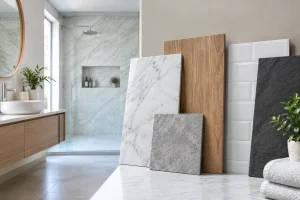

A bathroom wall can look beautiful on installation day and still be the wrong choice for daily life. Steam, splashes, cleaning products and poor ventilation all take their toll. The best materials for bathroom walls are therefore not simply the ones that suit your preferred colour or style. They must also suit where they are being fitted, how the room is used and how much maintenance you are happy to take on.
For a busy family bathroom, the priority may be quick cleaning and dependable water resistance. In an en-suite, you may have more freedom to create a quieter, more decorative finish. For a mobility bathroom or wet room, wall finishes must work alongside properly planned waterproofing, shower screens and practical fittings. Getting these decisions right early makes the finished room easier to live with for years to come.
What Makes a Bathroom Wall Material a Good Choice?
Before comparing finishes, it helps to separate wet areas from the rest of the room. The walls inside a shower enclosure, around a bath with an overhead shower and in a wet room need a fully waterproof surface and a sound waterproofing system behind it. A material described as water-resistant is not always suitable for constant direct water exposure.
Outside those areas, there is more flexibility. You may choose tiles to half-height, moisture-resistant paint above a tiled section, or panels around the bath and a painted feature wall elsewhere. This approach can manage the budget while keeping the places that work hardest properly protected.
Cleaning is another practical consideration. Large, smooth surfaces with fewer joins are usually quickest to wipe down. Grout, textured stone and heavily detailed finishes can look striking, but they need more regular attention. There is no single right answer, only the right balance for your household.
The Best Materials for Bathroom Walls Compared
Porcelain and ceramic tiles
Tiles remain a favourite because they are versatile, hard-wearing and suitable for almost every bathroom style. Porcelain is particularly dense and low-porosity, making it an excellent choice for shower walls, wet rooms and family bathrooms. Ceramic tiles are often more budget-friendly and offer a huge choice of shapes, colours and finishes.
A well-tiled bathroom can last for many years, and tiles cope well with everyday splashes and cleaning. They also allow for a genuinely bespoke result, whether you prefer large-format marble-effect porcelain, traditional metro tiles or a simple matt neutral finish.
The trade-off is grout. Even with good-quality grout and sealing where required, grout lines need cleaning and may eventually need refreshing. Smaller tiles create more grout joints, while large-format tiles create a calmer look with less visible grout. Large tiles can be an especially good choice for people who want a more streamlined, lower-maintenance bathroom, although careful installation is essential to keep the layout neat.
Waterproof wall panels
Wall panelling has become a popular alternative to tiles, particularly around showers and baths. Quality waterproof panels create a smooth, watertight surface with far fewer joins than a tiled wall. They are quick to clean, warm to the touch and available in finishes that range from soft stone and marble effects to contemporary concrete and timber looks.
For homeowners who want a smart bathroom without the ongoing task of grout cleaning, panels are often one of the most practical options. They can also be fitted efficiently as part of a renovation, helping to keep disruption to a minimum.
Not all panels are made to the same standard, so material quality and correct fitting matter. The edges, joints and shower fittings must be carefully sealed, and the wall beneath needs to be sound. A premium panel system installed properly can look refined and perform brilliantly, but a poorly fitted budget product can allow water behind the surface.
Natural stone
Natural stone brings depth and character that manufactured products cannot completely copy. Marble, limestone, slate and travertine can make a bathroom feel considered and luxurious, especially in a period property or a high-end en-suite.
However, stone asks more of the owner. It is porous to varying degrees, needs sealing and may react badly to harsh cleaning products. Some stones can also show water marks or develop a natural patina over time. That can be part of their appeal, but it is worth choosing stone because you appreciate its individuality, not because you expect a completely maintenance-free finish.
In a shower, the specific type of stone and the installation method should be assessed carefully. Porcelain stone-effect tiles are often a sensible alternative where the look of natural stone is desired but easier upkeep is a priority.
Microcement and polished plaster finishes
For a contemporary, pared-back bathroom, microcement and specialist polished plaster finishes can create an almost joint-free surface. Their soft movement and tactile appearance work beautifully in modern schemes, particularly when used across walls, floors or built-in storage features.
These finishes need expert preparation and application. They are layered systems rather than a simple coat applied to any existing wall, and their final performance depends on a suitable substrate and a correctly applied sealant. When specified and installed well, they offer a distinctive, elegant result. When shortcuts are taken, cracking, staining or water damage can follow.
They are best viewed as a design-led choice for homeowners who value a seamless appearance and are willing to invest in skilled workmanship. They may not be the most cost-effective option for every bathroom, but they can be very effective in the right space.
Moisture-resistant bathroom paint
Paint is one of the most flexible and affordable wall finishes, particularly above tiles or panels and on walls away from direct water. A good bathroom paint is formulated to cope better with humidity and condensation than standard emulsion, making it useful for ceilings and larger dry-wall areas.
Paint gives you the freedom to refresh the room more easily in future. It can bring warmth to a bathroom, soften a tile-heavy scheme or introduce a stronger colour without committing to a fully tiled room.
It is not a replacement for waterproofing in a shower area. Even high-quality bathroom paint should not be relied on where water hits the wall regularly. Ventilation also matters. If a bathroom suffers from persistent condensation, improving extraction is just as important as selecting the right paint.
Decorative wallpaper in the right place
Wallpaper can add personality to a cloakroom, guest bathroom or spacious en-suite, especially on a wall well away from the shower and bath. Specialist moisture-resistant or vinyl wallpaper is more suitable than standard paper finishes, but it still needs a dry, well-ventilated setting.
This is a choice for lower-splash areas rather than a hard-working family shower room. Used thoughtfully, it can create a welcoming, less clinical feel without compromising practicality.
Match the Material to the Area of the Bathroom
A successful bathroom often uses more than one wall finish. For example, porcelain tiles or waterproof panels may protect the shower enclosure, while painted walls make the rest of the room feel less enclosed. In a compact bathroom, continuing one panel or tile finish across the shower wall can make the space feel larger and more settled.
For wet rooms, waterproofing behind the finish is fundamental. The visible tile, panel or microcement is only one part of the system. Correct falls to the drain, tanked walls, sealed joints and carefully positioned shower fittings all help prevent future problems.
If accessibility is part of the brief, wall construction deserves particular thought. Grab rails, fold-down shower seats and other support fittings may need secure structural backing behind the finished wall. Planning this before tiling or panelling avoids disruption later and helps create a bathroom that supports independence without looking institutional.
Consider Maintenance Before Making a Final Choice
The most attractive finish is not always the one that best fits your routine. If you want to spend as little time cleaning as possible, large-format porcelain tiles or waterproof wall panels are usually strong contenders. If you enjoy natural materials and do not mind regular care, stone can be rewarding. If you like changing colour schemes, paint outside wet areas gives you useful flexibility.
It is also sensible to think beyond the wall itself. Pale grout can look fresh but may need more attention in a busy household. Dark matt tiles can be dramatic but may show limescale in hard-water areas. Glossy panels reflect light well in smaller bathrooms, while matt finishes can create a softer, more relaxed atmosphere.
A showroom visit can make these decisions far easier. Seeing full-size samples in different light, feeling textures and comparing colours next to your chosen brassware or furniture helps turn an idea into a practical scheme.
The right wall finish should make your bathroom feel good every morning, not create another household job. Whether you choose timeless tiles, easy-clean panels or a more individual decorative surface, a carefully planned installation will ensure the material works as well as it looks.