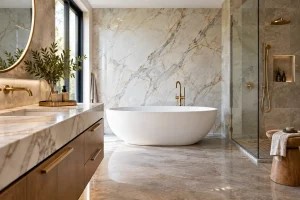

A luxury bathroom should still feel good on a rushed weekday morning, stand up to steam and splashes, and be straightforward to clean. That is why the best luxury bathroom materials are not always the most expensive ones. The right choices combine a high-end appearance with durability, comfort and sensible maintenance for the way your household lives.
At The Bathroom Magician, we help homeowners look beyond a single showroom display and consider how every finish will work together. From the warmth of timber-effect furniture to the crisp finish of large-format porcelain, material decisions shape how your bathroom looks, feels and performs for years to come.
Choosing the best luxury bathroom materials
The most successful luxury bathrooms use materials with a clear purpose. Floor finishes need to be safe underfoot. Wall surfaces must cope with moisture. Brassware should feel substantial and retain its finish, while furniture needs to offer useful storage without making the room feel crowded.
It also pays to think about the room as a whole rather than choosing each item in isolation. A highly patterned natural stone may be beautiful, but it can compete with decorative tiles, bold brassware and a statement basin. Often, one standout material paired with calmer supporting finishes creates a more considered result.
For homes in Cambridgeshire, practicality matters too. Hard water, family routines and the changing needs of a long-term home all deserve a place in the specification. A material that looks excellent on day one but needs constant attention may not feel luxurious for long.
Porcelain tiles: refined, reliable and versatile
Porcelain is one of the strongest all-round choices for bathroom walls and floors. It is dense, low-porosity and highly resistant to stains and moisture, which makes it well suited to busy family bathrooms, shower rooms and wet rooms.
Modern porcelain can convincingly recreate marble, limestone, concrete and timber, often without the upkeep associated with the natural version. Large-format marble-effect tiles give a calm, hotel-inspired look with fewer grout lines, while wood-effect planks bring warmth to a bathroom without concerns about water damage.
For flooring, choose a finish with enough grip for wet conditions. A polished tile can look striking on a wall, but a matt or textured porcelain is generally the safer option underfoot. This is particularly valuable in mobility bathrooms, where confidence and stability matter as much as visual appeal.
The trade-off is that porcelain can feel cool underfoot. Underfloor heating is a worthwhile addition where budget allows, turning a practical surface into one that feels genuinely indulgent in the morning.
Why tile size matters
Larger tiles can make a compact bathroom appear more open because there are fewer visible grout lines. They work especially well in contemporary schemes and walk-in shower areas. However, small mosaic tiles still have a role, particularly on shower floors where extra grout lines can improve grip, or as a detailed feature in a niche or behind a basin.
Natural stone: character with a little more care
Natural stone brings individuality that manufactured materials cannot fully copy. Marble has distinctive veining, limestone offers a softer, more understated appearance, and slate provides depth and texture. No two pieces are exactly alike, which can make a bathroom feel genuinely bespoke.
Stone does require a realistic approach to maintenance. Most natural stone needs sealing to protect it from moisture and staining, and acidic cleaners can damage its surface. Marble, in particular, can etch or mark over time. For some homeowners, that developing patina is part of its charm. For others, especially in a bathroom used by children or guests, porcelain with a stone effect is the more relaxed choice.
When natural stone is used, it can be most effective as a focal point. Consider it on a feature wall, vanity top or within a carefully designed shower area, rather than covering every surface. This keeps the look special while controlling cost and maintenance.
Wall panels: a smart alternative to fully tiled walls
Quality wall panelling has earned its place in luxury bathroom design. Available in stone, marble, concrete and decorative finishes, waterproof panels create a clean, modern surface with minimal joins. They are particularly useful in shower enclosures and around baths, where fewer grout lines mean less cleaning.
For homeowners who want a faster transformation or a lower-maintenance alternative to tiles, panels are a practical option. They can also make an accessible bathroom feel stylish rather than clinical, with continuous surfaces that are simple to wipe down.
The key is product quality and careful installation. Premium panels should feel substantial, have well-finished edges and be fitted with the right waterproofing system behind them. A well-designed panelled shower can look polished and purposeful; a poorly fitted one can quickly undermine the room.
Quartz and solid surfaces for vanity tops
A vanity top is one of the hardest-working surfaces in the bathroom. It handles water, toiletries, soap and daily cleaning, so appearance alone is not enough. Quartz is a popular luxury choice because it is non-porous, durable and available in a wide range of colours and patterns, including subtle marble-inspired designs.
Solid surface materials offer another elegant route. Their smooth, joint-free appearance works beautifully with integrated basins and contemporary furniture. They are warm to the touch compared with stone and can often be repaired if lightly scratched.
Real marble vanity tops offer undeniable impact, but they need more care around cosmetics, toothpaste and cleaning products. If you love the look but prefer a less demanding surface, quartz is often the sensible compromise.
Brassware: choose finishes made for real life
Taps, shower controls and accessories may be small in scale, but they have a major influence on how luxurious a bathroom feels. Well-made brassware has a reassuring weight and a refined action. It should be selected for performance as well as finish.
Chrome remains a timeless choice, particularly in bathrooms where easy maintenance is a priority. Brushed brass adds warmth and works well with natural stone, timber and soft neutral colours. Brushed nickel is a quieter alternative with a similarly sophisticated feel, while matt black can give a strong contemporary contrast.
Not every finish suits every household equally. Matt black can show limescale and water marks, while polished finishes may need more frequent buffing. In hard-water areas, regular gentle cleaning and avoiding abrasive products will help preserve the finish. It is also worth choosing taps, shower valves and accessories from a coordinated range so that tones and proportions match.
Glass, mirrors and lighting materials
Clear safety glass keeps a shower area visually open and allows feature tiles or wall panels to remain visible. A frameless or minimally framed screen often gives a more luxurious finish than a heavily framed enclosure, provided the layout allows enough room for comfortable access and cleaning.
Mirrors deserve just as much thought. A large illuminated mirror can make a smaller room feel brighter and more spacious, while a demisting pad removes the frustration of steamed-up glass after a shower. For a softer look, consider a mirror with a warm metallic frame or integrated ambient lighting.
Lighting should flatter the materials you have chosen. Warm white lighting tends to bring out the richness of timber, brass and stone, whereas overly cool light can make even expensive finishes feel harsh. Layered lighting around the mirror, ceiling and bathing area creates a more comfortable room at every time of day.
Furniture finishes that bring warmth and order
Luxury is often felt in the details that keep clutter out of sight. Well-planned vanity furniture, tall storage and recessed niches can make a bathroom calmer and easier to use. Moisture-resistant cabinetry is essential, especially close to showers and baths.
Timber-effect finishes add warmth without the movement and maintenance of solid wood. Fluted fronts, painted cabinetry and textured laminates can introduce character, while handleless drawers create a clean contemporary look. The best choice depends on the room: a compact cloakroom may benefit from wall-hung furniture to reveal more floor, while a family bathroom may need generous drawers for towels and everyday essentials.
Do not overlook internal storage either. Drawer dividers, easy-access pull-outs and space for electrical toothbrushes can make daily routines noticeably easier. A beautiful bathroom works best when it has a place for the things you use.
Let materials support the way you live
The right material palette should make your bathroom easier to enjoy, not give you another list of jobs. Whether you are planning a calm en-suite, a hard-wearing family bathroom or a safer accessible space, start with the surfaces that need to work hardest and build the design around them.
A showroom consultation can help you see finishes together, feel their texture and understand their care requirements before committing. With thoughtful choices and skilled fitting, your bathroom can feel like a treat every day while remaining practical for the years ahead.