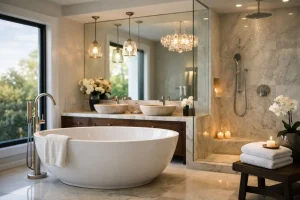

A luxurious bathroom is rarely about having the biggest room or the most expensive fittings. In practice, what makes a bathroom luxurious is how it feels when you use it every day – calm, comfortable, well planned and beautifully finished. The best luxury bathrooms do not just look impressive in a photo. They work effortlessly for the people who live with them.
That matters even more in real homes around St Neots and across Cambridgeshire, where a bathroom needs to earn its place. It has to cope with busy mornings, evening routines, changing family needs and, for many homeowners, the long-term question of how the space will serve them in years to come. Real luxury is not excess for its own sake. It is thoughtful design that makes daily life easier and more enjoyable.
What makes a bathroom luxurious in real life?
The short answer is balance. A luxurious bathroom brings together layout, materials, lighting, heating, storage and finishing details in a way that feels considered rather than crowded. You can often tell within a few seconds whether a bathroom has been designed properly. The room feels settled. Nothing is awkwardly placed. There is enough space where you need it, and the materials feel solid and pleasant to touch.
That is why luxury is not defined by one hero feature. A freestanding bath can look stunning, but if it makes the room feel cramped or leaves little practical storage, it may not feel luxurious once the novelty wears off. Equally, a walk-in shower with excellent drainage, warm underfloor heating and easy-clean wall panelling may deliver more comfort and satisfaction than a room full of statement pieces.
Layout comes first
Before tiles, taps or colours are chosen, the layout decides whether the room will feel high end or frustrating. Good bathroom design starts with how people move through the space. You need enough room to step out of the shower comfortably, open vanity drawers without obstruction and use the basin without feeling hemmed in.
In smaller bathrooms, luxury often comes from restraint. A wall-hung vanity can create a greater sense of space. A properly sized shower tray or wet room floor may work better than forcing in a bath that dominates the room. Concealed cisterns, recessed shelving and carefully positioned mirrors all help a bathroom feel less busy and more refined.
In larger bathrooms, the risk is the opposite. Too much empty space can leave a room feeling cold and unfinished. A luxurious layout gives each area a purpose, whether that is a bathing zone, a generous showering area or a practical getting-ready space with good lighting and storage.
Quality materials make the difference
One of the clearest answers to what makes a bathroom luxurious is material quality. You notice it in the weight of a tap, the smoothness of a drawer, the finish on the tiles and the overall crispness of the installation. Premium materials do not have to be flashy, but they should feel dependable and built to last.
Porcelain tiles are a popular choice because they are durable, elegant and easy to maintain. Large-format tiles can create a calmer, more seamless appearance with fewer grout lines. Wall panelling is another strong option, especially for homeowners who want a clean finish with less maintenance. When chosen well, it can look smart and contemporary while being practical for family life.
Natural textures also add depth. Stone-effect surfaces, wood-look finishes and soft matt colours tend to feel more timeless than heavily trend-led choices. Luxury usually comes from a room still looking good years later, not simply from following the latest fashion.
Lighting changes everything
Poor lighting can flatten even the best bathroom design. Good lighting, on the other hand, can make an ordinary room feel warm and expensive. A luxurious bathroom should have layers of light rather than one harsh ceiling fitting doing all the work.
Practical task lighting around the mirror is essential for shaving, make-up and daily routines. Softer ambient lighting helps the room feel calmer in the evening. Feature lighting in alcoves, under vanity units or around mirrors can add depth without feeling overdone.
Natural light is always valuable, but privacy matters too. The right window treatment or glass choice can keep the room bright without making it feel exposed. If natural light is limited, careful artificial lighting becomes even more important.
Comfort is a luxury, not an extra
Many homeowners think of luxury in visual terms first, but comfort is what people remember. Underfloor heating on a winter morning, a shower with strong and reliable water flow, a warm towel rail in the right place – these details have a bigger impact than people often expect.
Temperature control matters as well. A bathroom that heats up quickly and stays comfortable feels far more indulgent than one that looks beautiful but is cold and draughty. Soft-close furniture, easy-to-reach storage and a quiet extractor fan all add to that sense of ease.
This is where a professionally managed renovation really matters. Luxury depends on what sits behind the finished surfaces as much as what you can see. Pipework, waterproofing, ventilation and drainage all need to be right. If they are not, even a stylish bathroom will quickly lose its appeal.
Storage keeps the room calm
Clutter is the enemy of luxury. A bathroom filled with bottles, toiletries and towels left without a proper home will never feel restful for long. That does not mean every surface must be empty, but the room should make tidiness easy.
Vanity units with useful internal storage, mirrored cabinets, recessed niches and fitted shelving all help. The best solutions are tailored to the household. A family bathroom may need space for children’s bath items and extra towels, while an en-suite may benefit more from streamlined storage that keeps everyday essentials close at hand.
The key is to build storage into the design from the start rather than adding it as an afterthought. When done properly, the room feels cleaner, calmer and easier to live with.
Finishing details create the polished look
Luxury often shows up in the finishing touches. Matching brassware, neatly aligned tile cuts, well-positioned accessories and consistent colour choices all make a bathroom feel more cohesive. These are the details that separate a room that looks acceptable from one that feels professionally designed.
That said, there is a balance to strike. Too many statement features can make a bathroom feel busy. Often, one or two standout elements are enough – perhaps a striking vanity unit, a beautifully framed mirror or a brushed brass shower set. The rest of the room can then support those choices without competing with them.
A luxurious bathroom should also feel personal. Some homeowners prefer a hotel-style scheme with soft neutrals and clean lines. Others want something warmer and more characterful. Neither approach is better by default. What matters is that the design suits the property and the people using it.
Luxury should still be practical
This is where many bathroom projects go wrong. People chase a look without thinking through the day-to-day reality. Slippery flooring, awkward freestanding baths, poor storage or difficult-to-clean surfaces can all undermine the sense of luxury very quickly.
A truly luxurious bathroom is easy to maintain and pleasant to use. For some homeowners, that might mean a low-level shower tray and wide access for future peace of mind. For others, it may be a wet room, a double basin, or wall panelling that cuts down on cleaning time. There is no single formula.
This is especially relevant for mobility bathrooms and age-friendly design. Accessibility does not need to mean clinical or compromised. In many cases, a safer bathroom with level access, well-planned support features and elegant finishes can feel every bit as luxurious as a more conventional design. Comfort, confidence and independence are forms of luxury too.
What makes a bathroom luxurious depends on the homeowner
Every home has different priorities. A couple renovating their forever home may want a calm, spa-like en-suite with premium finishes and excellent storage. A family may care more about durability, easy cleaning and a layout that works under pressure. Someone planning ahead may want a bathroom that looks beautiful now and remains easy to use later on.
That is why the best bathroom projects start with questions rather than products. How do you use the room? What frustrates you now? What would make mornings easier or evenings more relaxing? Once those answers are clear, the design can follow.
At The Bathroom Magician, that is the thinking behind a properly managed bathroom renovation. No jargon. No stress. Just a bathroom designed around how you live, with the quality and craftsmanship to make it feel special for years to come.
If you are wondering whether your new bathroom should feel luxurious, the better question is this: what would make it feel better to use every single day? Start there, and the right kind of luxury usually follows.