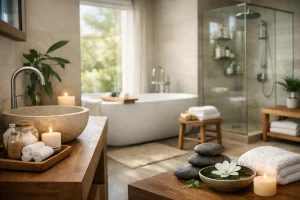

The best spa bathrooms do not rely on a single statement bath or a shelf full of candles. They feel considered from the moment you step inside: warm underfoot, easy to use, calm in colour and free from the everyday clutter that can make a bathroom feel busy. For homeowners planning a renovation, the real goal is to create a room that offers a welcome pause at the end of the day while still working properly for the morning rush.
A spa-inspired bathroom can suit a compact en-suite, a family bathroom or a larger main bathroom. The scale may change, but the principles remain the same. Thoughtful layout, durable materials, soft lighting and well-chosen fittings all play a part. Just as importantly, they need to be designed around how you live.
Start with comfort, not just the look
A successful spa-style bathroom begins with a practical question: what would make this room easier and more pleasant to use every day? For one household, that may be a generous walk-in shower with a rainfall head and a built-in seat. For another, it may be a deep bath for a quiet soak after work, alongside enough storage to keep children’s toiletries out of sight.
Trying to fit every luxury feature into one room can make it feel cramped rather than relaxing. A large freestanding bath is visually striking, for example, but it needs space around it to look right and to clean easily. In a smaller room, a carefully designed shower area, wall-hung furniture and a wide vanity can create a more convincing feeling of calm.
Consider how the room is used at different times of day. Shared bathrooms often benefit from a double basin or extra surface space, while a separate WC can make family routines easier. If anyone in the household has reduced mobility, a level-access shower, supportive seating and easy-to-reach controls can be incorporated without sacrificing a luxurious finish.
Let the layout create breathing room
The most relaxing rooms rarely feel crowded. Good planning gives each element enough room to be used comfortably, with clear routes through the space and storage placed where it is needed.
A wet room can be an excellent choice when designed and installed correctly. Removing a shower tray can create a more open, uninterrupted floor and makes access simpler. However, it demands proper waterproofing, suitable falls for drainage and careful choice of non-slip flooring. This is one area where expert installation matters as much as the finished appearance.
If a wet room is not the right fit, a low-profile shower tray with clear glass can still make the bathroom feel open. Frameless or minimally framed screens allow the eye to travel across the room, particularly when paired with large-format wall tiles or continuous wall panels.
Choose materials that look good after real life happens
Spa bathrooms are often associated with natural stone, timber and textured finishes. These can bring warmth and character, but they also need to stand up to steam, splashes and regular cleaning. The best material is not always the most delicate or expensive one. It is the one that gives you the finish you want without adding unnecessary maintenance.
Large porcelain tiles are popular because they offer a refined look with fewer grout lines. They can recreate the appearance of stone, concrete or marble while being hard-wearing and straightforward to clean. For a warmer feel, wood-effect porcelain is a practical alternative to real timber in a high-moisture room.
Wall panelling can also work beautifully in a spa-inspired scheme. It provides a smooth, grout-free surface that is easy to maintain, and modern designs offer convincing stone, mineral and soft neutral finishes. Used in the shower area or across a feature wall, it can make a renovation feel polished without creating a cleaning burden.
Natural materials still have their place, but they should be chosen with open eyes. Real stone may require sealing and more attentive care. Timber furniture needs to be bathroom-suitable and protected from persistent moisture. If you want the visual softness of these materials with less upkeep, porcelain, laminate and quality panels are often sensible alternatives.
Build a calm palette with contrast
Soft whites, warm greys, sandy beiges and muted greens are reliable starting points for a spa feel, especially in rooms with limited natural light. A single shade throughout can feel flat, though. Contrast adds depth: a textured shower wall against smooth tiles, brushed brass taps against pale stone-effect surfaces, or a darker vanity beneath a light worktop.
The aim is not to make everything match perfectly. It is to create a small number of finishes that work together and will still feel appealing in years to come. Strong trends can be enjoyable, but permanent surfaces are a significant investment. If you love a bolder colour or pattern, consider introducing it through a painted wall, niche backing, towels or accessories that are easier to update later.
Lighting makes the biggest difference after dark
Bright ceiling lighting is useful for cleaning and getting ready, but it is rarely flattering or restful on its own. Layered lighting is what gives spa bathrooms their atmosphere.
Start with practical general lighting that illuminates the room evenly. Then add task lighting around the mirror, ideally positioned to reduce shadows on the face. Finally, introduce softer ambient light, such as dimmable ceiling fittings, discreet LED lighting beneath a vanity unit or illumination inside a recessed shelf.
Dimmers are particularly worthwhile in a bathroom designed for relaxation. They allow the same room to be bright and functional in the morning, then quieter and gentler in the evening. All fittings must be correctly selected for bathroom use and fitted safely in the appropriate zones, so lighting should be planned early rather than added as an afterthought.
Natural light deserves attention too. If privacy is a concern, obscured glazing, fitted shutters or moisture-resistant blinds can preserve daylight without leaving the room exposed. Avoid blocking a window with tall furniture where possible. Daylight and a clear sightline can make even a modest bathroom feel more generous.
Add the details that make everyday routines feel better
Spa luxury is often found in the parts of a bathroom you touch and use constantly. A thermostatic shower keeps the water temperature stable. A properly sized shower head gives better coverage. Underfloor heating takes the chill from tiled floors and can help the room dry more efficiently after bathing.
Storage is equally important. Open shelves can look attractive in photographs, but a fully open room can quickly become cluttered. A mix of concealed storage for cleaning products and everyday toiletries, plus a few open areas for neatly folded towels or a plant, is usually more practical. Recessed shower niches are especially useful because they keep bottles close at hand without taking up shower space.
Do not overlook ventilation. Warm, humid bathrooms need effective extraction to protect finishes, reduce condensation and keep the room comfortable. A quiet, appropriately specified extractor fan may not be glamorous, but it is one of the details that protects your investment over time.
For those planning a bathroom that supports independence, spa-like comfort and accessibility can work together naturally. Lever-style taps, a thermostatic shower, slip-resistant finishes and a shower seat can all make the room easier to use. With careful product selection, these features can feel integrated into the design rather than clinical or separate from it.
Why professional planning pays off
A serene finished bathroom depends on a great deal of work happening behind the walls. Pipework, electrical positions, ventilation, waterproofing, drainage and tile setting all need to be coordinated before the finishing touches can be enjoyed. Changing decisions partway through an installation can add cost, delay the project and compromise the original design.
Working with a specialist who can manage the design, product selection and installation helps bring those decisions together from the outset. At The Bathroom Magician, the focus is on creating a bathroom that suits the property, your routine and the level of maintenance you are comfortable with. No jargon. No stress. Just clear guidance from the first ideas through to the final finishing details.
The most rewarding spa bathroom is not one that copies a hotel exactly. It is one that makes your own home feel calmer, warmer and easier to live in, every single day.