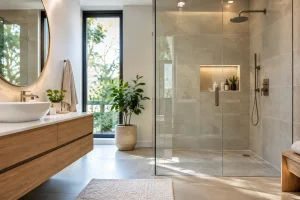

A shower room earns its keep in the first ten minutes of the morning. It needs to feel calm when the household is busy, stay easy to clean after a rushed shower, and remain comfortable for years rather than simply looking good on installation day. The best shower room ideas 2027 are therefore less about chasing a passing trend and more about creating a space that works beautifully for real life.
For homeowners planning a renovation, the strongest designs bring together generous showering space, durable materials, useful storage and lighting that flatters rather than dazzles. Whether you are updating a compact en-suite, replacing a tired family bathroom or planning for easier access in later life, thoughtful choices at the design stage can make every day simpler.
Start with the way your household uses the room
Before choosing tiles or brassware, consider the routines the shower room must support. A couple sharing an en-suite may value a wider shower tray, twin storage and a quiet, hotel-like feel. A busy family might need hard-wearing finishes, easy-clean glass and somewhere to keep bottles off the floor. In a guest shower room, a compact layout can still feel generous when the shower, basin and storage are correctly proportioned.
This is where a bespoke plan makes a genuine difference. A large walk-in shower is appealing, but it is not automatically the right answer in every room. In a smaller space, a carefully sized enclosure with sliding or folding doors may preserve valuable circulation room. If the shower is likely to be used by someone with reduced mobility, a level-access wet room can remove a trip hazard, provided the floor fall, drainage and waterproofing are properly designed.
The aim is not to fit the most features into the room. It is to make each feature earn its place.
Shower Room Ideas 2027: relaxed, practical luxury
The shower rooms likely to feel current in 2027 have a quieter kind of luxury. They favour tactile materials, warm tones and well-considered details over overly decorative schemes. They should still feel personal, but without relying on a look that dates quickly.
Choose warmer, softer surfaces
Cool grey has had a long run, but warmer stone shades, soft taupes, clay tones and gentle off-whites are creating more inviting shower rooms. These colours work especially well in properties where homeowners want the bathroom to feel connected to the rest of the home, rather than clinical or separate.
Large-format porcelain tiles remain a sensible choice for shower walls and floors. Fewer grout lines can make a room look more spacious and reduce cleaning time. Natural stone-effect finishes offer character without the maintenance demands of real stone, while subtle texture can add interest without making the room feel busy.
Wall panelling is another practical option worth considering. Quality bathroom panels can provide a crisp, grout-free finish and are particularly useful for those who want lower-maintenance surfaces. Tiles often offer more freedom with pattern and layout, while panels can be quicker to fit and easier to wipe down. The best choice depends on the desired look, the existing walls and how much day-to-day maintenance you want.
Make the shower the focal point
A spacious shower enclosure can give even an ordinary-sized room a more considered feel. Frameless or minimally framed glass keeps sightlines open, allowing the wall finish to become part of the design. A fixed glass screen works well in many walk-in layouts, though it needs enough room outside the shower to prevent water travelling across the floor.
Brushed nickel, bronze and softer metallic finishes are likely to remain popular because they bring warmth without feeling overly formal. They can be used for the shower controls, basin tap, handles and accessories to create a coordinated finish. Matte black can still look striking, particularly against pale wall finishes, but it may show water marks more readily in hard-water areas. It is a design choice that benefits from being realistic about cleaning habits.
A recessed shower niche is one of the most useful details to include during a renovation. It creates a dedicated home for shampoo and shower gel, keeps ledges clear and can be finished in a matching or contrasting tile. Position it where it is easy to reach but not directly in the main spray of water.
Use lighting to change the mood
One ceiling light is rarely enough for a shower room. Layered lighting makes the room more useful at different times of day and gives it a more finished appearance. Bright, even lighting around the mirror helps with shaving, skincare and getting ready for work. Softer lighting in a shower recess, beneath a vanity unit or along a ceiling feature can make an evening shower feel far more relaxing.
Every light fitted close to water needs the correct safety rating and professional installation. It is also worth placing switches and controls where they are convenient from the doorway, rather than reaching across the room in the dark. Small decisions like this make a shower room feel easier to live with from day one.
Natural light matters too. If privacy is a concern, obscured glazing, a carefully positioned blind or a rooflight can brighten the room without putting it on display. In rooms with limited windows, good ventilation is just as important. An effective extractor fan helps protect finishes, reduce condensation and keep mirrors clearer.
Storage should disappear into the design
A shower room can look luxurious in photographs and still be frustrating if there is nowhere for spare towels, cleaning products or everyday toiletries. The answer is not always a bigger room. It is better storage in the right places.
A wall-hung vanity unit creates useful drawer space while revealing more of the floor, which can make a compact shower room feel larger. Deep drawers are usually more practical than a cupboard, as items at the back are easier to find. A mirrored cabinet above the basin adds discreet storage without taking up additional floor space, and a tall, slim unit can use an awkward corner effectively.
Keep the basin area clear by allowing for soap, toothbrushes and electrical items early in the design. If there is room, a heated towel rail close to the shower gives towels a proper home and adds everyday comfort. For larger rooms, a built-in bench or ledge can provide a place to sit, rest a towel or simply bring a more considered shape to the layout.
Plan for long-term comfort, not just the next trend
Many homeowners are now designing shower rooms that will serve them well over the long term. This does not mean the room needs to look clinical. Good accessibility can be incorporated with elegant finishes, concealed support where appropriate and fittings selected for comfort as well as style.
A low-profile tray or true level-access shower can reduce stepping over a high edge. A thermostatic shower helps maintain a safe water temperature, while an easy-grip control can be useful for people of all ages. Slip-resistant floor tiles offer greater confidence underfoot, especially in a wet room, but should still be chosen with cleaning in mind. Very heavily textured tiles can hold more dirt than a lightly textured porcelain surface.
If future needs are a consideration, it may be wise to strengthen walls behind the shower or toilet before tiling. This can make it easier to fit grab rails later without disrupting the finished room. The details can remain discreet until they are needed.
Do not overlook the technical work behind the finish
The most successful shower rooms are built on the work you cannot see. Correct waterproofing, well-planned drainage, sound pipework and accurate tile preparation all protect the room from leaks and costly disruption later on. A wet room, in particular, needs careful attention to falls in the floor so that water drains efficiently rather than pooling where it should not.
It is also worth thinking about access for maintenance. Concealed cisterns and shower valves can look wonderfully clean, but they should be installed with sensible access points for future servicing. This is the practical side of bathroom design that helps a beautiful room stay dependable.
A fully managed renovation removes the pressure of coordinating separate trades and trying to make decisions in the right order. At The Bathroom Magician, the process can bring design, product selection, fitting, tiling and finishing details together as one considered project, so nothing is left to chance between stages.
The right shower room should make an ordinary morning feel easier and an unhurried evening feel like time well spent. Start with how you live, choose finishes you will be happy to maintain, and give the installation details the same care as the visible design. That is how a new shower room continues to feel like a good decision long after the final tile is fitted.