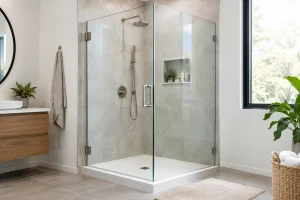

A shower enclosure can look beautifully simple once it is fitted, but choosing the right one involves more than picking a shape and a chrome handle. This shower enclosure buying guide will help you consider the room you have, who uses it and how you want the bathroom to work every day. Get those details right at the start and your new shower will feel spacious, secure and easy to care for.
Start with the room, not the enclosure
It is tempting to fall for a particular style in a showroom or online image, then try to make it fit. A better approach is to assess the bathroom first. Measure the available wall space, note where the door, window, radiator and basin sit, and think about the clear floor area needed to move comfortably around the room.
The position of the waste pipe and existing plumbing can also influence what is practical. Moving these services is possible as part of a full renovation, but it may affect the budget and the layout options. In a compact bathroom or en-suite, a carefully chosen enclosure can create a more open feel without asking you to compromise on showering space.
Do not measure only the footprint of the tray. You also need to allow for the way the shower door opens. A hinged door that swings into a narrow walkway soon becomes frustrating, while a sliding or bi-fold door can be a better answer where space is tight.
Choose an enclosure shape that suits daily life
The best shape is the one that works naturally with your bathroom layout and your household. Style matters, of course, but comfort and access matter more.
Quadrant enclosures
A quadrant enclosure has a curved front and is designed to sit neatly in a corner. Its rounded shape avoids a sharp corner projecting into the room, making it a popular choice for smaller bathrooms. Offset quadrants provide extra length on one side, which can offer a more generous showering area where the room allows.
They are practical and attractive, although the curved glass and tray may cost more than a straightforward square model. Replacement parts should also be selected carefully, as they are not always interchangeable between ranges.
Square and rectangular enclosures
Square enclosures are clean-lined, versatile and well suited to many family bathrooms. Rectangular options offer more room to move, particularly if you prefer a wider shower or need a comfortable space for assisted showering.
A larger tray is not automatically the right choice. In a modest room, an oversized enclosure can make the toilet or basin awkward to use. The aim is balance: enough internal space to shower comfortably, with sensible circulation around the rest of the bathroom.
Walk-in shower screens
A walk-in shower usually combines a fixed glass screen with an open entry. It can make a room feel calm, modern and less enclosed, and it is particularly useful for anyone who finds a conventional shower door inconvenient.
However, it needs enough depth and a well-planned showering area to contain splashes. The position and type of shower valve matter too. A walk-in design works best when the water is directed away from the opening, rather than towards it.
Door style is a practical decision
The door is often where a good-looking choice becomes either effortless or irritating. Pivot and hinged doors provide a wide opening and can feel substantial, but they require clear space outside the enclosure. Some designs allow the door to open inwards as well as outwards, which can be useful if someone needs assistance or if a child has accidentally locked themselves in the shower area.
Sliding doors do not intrude into the room, so they are a sensible option opposite a basin or toilet. Look for smooth-running rollers and easy access for cleaning, as this is where cheaper mechanisms can show their limitations over time.
Bi-fold doors fold inwards and are ideal where every centimetre counts. They offer a useful opening without the outward swing of a hinged door, though there are more moving parts to maintain. For a mobility-focused bathroom, consider whether the entrance is wide enough for the user now and in the years ahead.
Glass, frames and finishes: where quality shows
Most quality shower enclosures use toughened safety glass. Thicker glass generally feels more solid and stable, particularly on larger panels or walk-in screens. It can also give the bathroom a more premium finish. That said, heavier glass needs suitable walls, fixings and professional installation, so it is not simply a case of choosing the thickest option available.
Clear glass keeps the room feeling open and lets decorative wall tiles take centre stage. Frosted, fluted or tinted glass offers more privacy and can create a distinctive look, but may reduce light slightly in a small or darker bathroom.
Frameless and semi-frameless styles have a light, contemporary appearance, while framed enclosures can offer excellent rigidity and sometimes a more forgiving fit where walls are not perfectly square. Many homes have walls that are slightly out of line, especially in older properties. Adjustment profiles can accommodate minor variation, but there is a limit. Accurate surveying avoids unwelcome gaps and makes the finished shower look properly considered.
Chrome remains a classic choice because it coordinates easily with taps and accessories. Black, brushed brass and brushed nickel can look striking, but they benefit from a coordinated scheme. Mixing finishes can work, though it should look intentional rather than accidental.
This shower enclosure buying guide: tray and drainage
The enclosure and shower tray need to be considered as one system. A low-profile tray provides a sleek look and makes stepping in easier. It is an excellent option for contemporary bathrooms and can support accessible design, provided there is enough room below the floor for the waste and pipework.
In some properties, particularly where floor levels or pipe routes are restrictive, a slightly raised tray may be the more straightforward and reliable solution. It can still look smart when finished with a neatly tiled step or matching panel. The right answer depends on the building, not just the photograph that inspired the project.
Pay close attention to drainage. A powerful shower needs a waste system that can remove water at the same rate it is delivered. If the waste is undersized, poorly positioned or installed without the correct fall, water can pool in the tray. This is not a finishing detail – it is a core part of a dependable shower installation.
Plan for comfort, safety and cleaning
A beautiful shower should not demand constant work to stay that way. Easy-clean glass coatings can reduce the build-up of water marks and soap residue, although they do not remove the need for regular cleaning. A quick wipe with a squeegee after showering makes a noticeable difference, especially in hard-water areas.
Choose handles that are comfortable to grip, and make sure seals, hinges and rollers can be maintained or replaced if needed. Very minimal designs can be elegant, but ask how accessible the concealed fittings will be in future.
For households with younger children, older relatives or anyone with reduced mobility, think beyond the enclosure itself. Anti-slip tray surfaces, thermostatic shower controls, a fold-down seat and discreet grab rails can make showering safer without making the bathroom feel clinical. A wide-entry walk-in shower or low-threshold enclosure may support independence for longer, while still looking refined.
Ventilation is equally important. An extractor fan sized for the room, together with sensible heating and good installation, helps control condensation and protects finishes around the shower. It is one of the quiet details that has a major effect on how the bathroom performs over time.
Avoid choosing on price alone
Two enclosures can look similar at first glance yet differ greatly in glass thickness, rollers, seals, adjustment, guarantee and availability of spare parts. The lowest initial price can become poor value if doors rattle, seals discolour quickly or a failed component cannot be replaced.
This does not mean every bathroom needs the most expensive enclosure. It means choosing a product level that suits how often it will be used and how long you expect it to last. A busy family bathroom deserves durable hardware and glass that feels reassuringly solid. A lightly used en-suite may allow more flexibility in the budget.
A professional design and installation service can help bring these decisions together, from checking dimensions and drainage to selecting tiles and fittings that complement the enclosure. At The Bathroom Magician, the focus is on making those choices clear and manageable, with no jargon and no stress.
Before making a final decision, stand in the proposed shower area if you can. Imagine opening the door with a towel in hand, reaching the controls, cleaning the glass and stepping out on a busy morning. The enclosure that works best in those ordinary moments is the one that will continue to feel right long after the renovation is complete.