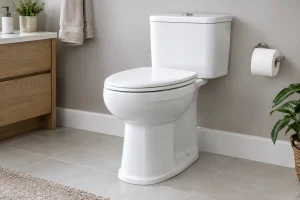

A raised WC pan for less than you think could make a meaningful difference to how comfortably and confidently you use your bathroom every day. For many homeowners, particularly those planning for later life, recovering from an injury or simply tired of a low, awkward toilet, it is one of the most practical upgrades available. It does not have to mean a clinical-looking room or a complete compromise on style.
A higher toilet can be incorporated into a beautifully designed bathroom, cloakroom or mobility-focused space. The key is choosing the right height, style and installation approach for your property, rather than selecting a product based on price alone.
What is a raised WC pan?
A raised WC pan is designed with a higher seating position than a standard toilet. It reduces the distance you need to bend down and rise back up, which can make sitting and standing easier for people with reduced mobility, sore knees, hip pain or balance concerns.
The term can describe a comfort-height toilet pan, usually supplied as a complete close-coupled or back-to-wall toilet, rather than a standard pan with a separate raised seat fitted on top. A raised seat may be suitable as a short-term solution, but a purpose-designed higher WC generally looks neater, feels more secure and is easier to keep clean.
There is no single perfect height. What feels comfortable depends on the people using the bathroom, their height, their mobility and whether they need space for a walking aid or assistance from another person. This is why trying different options in a showroom can be far more useful than working from measurements alone.
Why a raised WC pan can cost less than expected
The assumption that accessible bathroom features are always expensive is understandable, but it is not always true. A comfort-height toilet is often a modest step up from a good-quality standard model, especially when it is chosen as part of a planned bathroom renovation.
The final investment is influenced less by the extra height of the pan and more by the wider work around it. If a new toilet is being fitted in the same position, with sound pipework and an accessible cistern connection, the installation can be relatively straightforward. If the layout needs changing, waste pipes need moving, flooring needs repairing or walls require alteration, the project becomes more involved.
Choosing a raised WC pan early also helps avoid unnecessary costs later. Retrofitting a higher toilet after new tiles, wall panels and flooring have been installed may mean disturbing finishes that could have been planned around from the start. It is often more cost-effective to include comfort and accessibility in the original design, even if you do not need full mobility adaptations today.
Raised WC pan options that suit different bathrooms
A close-coupled raised toilet has the cistern attached directly to the pan. It is familiar, practical and often a sensible choice for family bathrooms where value and straightforward maintenance matter. Many modern designs have cleaner lines than traditional models, so they can work well in both classic and contemporary schemes.
A back-to-wall raised WC sits against a furniture unit or boxed-in wall, with the cistern concealed behind it. This can create a more tailored appearance and reduce exposed pipework. It is particularly effective when paired with fitted bathroom furniture, as the room feels more considered and easier to keep tidy.
Wall-hung toilets can also be set at a chosen height during installation. They offer a sleek look and leave the floor visible beneath the pan, which can make a compact bathroom feel more open. However, they need an appropriate frame and secure wall construction, so they are not automatically the least expensive route. They can be an excellent option where the design and structure allow for it.
For a smaller cloakroom, the projection of the toilet matters as much as seat height. A compact raised WC can preserve valuable room to move without sacrificing everyday comfort. In a larger mobility bathroom, the priority may be clear space beside the toilet for support rails, a wheelchair transfer or help from a family member or carer.
Comfort is only part of the decision
A higher toilet can support independence, but it should work as part of the whole room. The route into the bathroom, the turning space, the shower access, the floor finish and the position of taps and storage all affect how easy the room is to use.
Support rails are a good example. They can provide reassurance and stability, but their placement needs careful thought. A rail that is too far away, at the wrong height or fixed to an unsuitable wall will not provide the support it should. When planned properly, contemporary grab rails can blend naturally with the rest of the bathroom fittings rather than making the room feel institutional.
The toilet seat itself also deserves attention. A soft-close seat prevents slamming and is useful in busy households. A well-shaped, durable seat can improve comfort, while removable hinges make cleaning easier. These are small details, yet they make a noticeable difference over years of daily use.
Planning for the right height and position
Before selecting a raised WC pan, consider who will use it now and in the future. A height that suits one person perfectly can feel less natural for someone much shorter. If several generations share the home, the best answer may be a moderate comfort height rather than the tallest available option.
Position matters just as much. There should be enough room in front of the pan to stand comfortably and enough space to the side where support or assistance may be needed. Doors must open safely without creating a tight pinch point, and nearby basin units should not obstruct movement.
It is also worth checking the existing plumbing before becoming attached to a particular layout. Keeping the toilet near its current soil pipe location can reduce disruption and cost. Moving it may still be worthwhile if it creates a safer, more spacious bathroom, but it should be a considered design decision rather than an unwelcome surprise once work begins.
Style does not need to be sacrificed
A mobility-conscious bathroom can still feel like a bathroom you are proud to show visitors. Slimline furniture, warm-toned wall panels, textured tiles, coordinated brassware and well-planned lighting can all create a calm, welcoming space. The toilet can be selected to match the room rather than standing apart from it.
Easy-clean features are especially worthwhile. Rimless toilet designs can improve hygiene by making the bowl easier to clean, while smooth, glazed surfaces and sensible gaps around fittings reduce awkward corners where dust and moisture collect. Wall panelling may also be a practical alternative to heavily grouted walls in areas where low maintenance is a priority.
The best design is rarely the one with the most features. It is the one that feels intuitive every morning and remains comfortable as your needs change.
Why professional fitting makes a difference
A toilet is a hard-working fitting, and a poor installation can quickly undermine a good product. The pan must sit level and securely, the waste connection must be reliable, and the surrounding finishes need to be completed neatly. If walls are being reinforced for support rails or a concealed cistern frame, this work needs to happen at the right stage of the renovation.
A fully managed bathroom project also removes the difficulty of coordinating plumbers, fitters, tilers, electricians and decorators yourself. At The Bathroom Magician, the design can be shaped around the way you live, with product choices and installation planned together from the outset. No jargon. No stress.
A practical upgrade for a more comfortable home
A raised WC pan is not only for people with severe mobility needs. It can be a sensible, discreet investment in comfort, safety and long-term usability, particularly when you are already updating a tired bathroom. Costs vary according to the toilet style, plumbing and the amount of renovation work required, but the upgrade itself may be more achievable than expected.
The most helpful next step is to sit on a few options, discuss how the room is used and plan for the years ahead. A well-chosen toilet should not draw attention to itself. It should simply make everyday life feel easier.