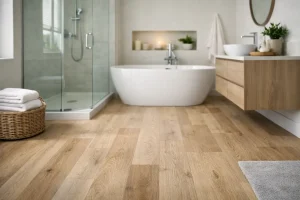

A bathroom floor has a harder life than almost any other surface in the home. It deals with splashes, steam, muddy feet, dropped bottles and constant cleaning, so choosing the right material matters. If you are considering Quick-Step flooring LVT for a bathroom renovation, the appeal is easy to see – it offers the look of wood or stone with a softer, more practical finish underfoot.
For many homeowners, the real question is not whether luxury vinyl tile looks good. It does. The question is whether it works well enough, for long enough, in a room that gets wet every day. That is where a proper, measured look helps.
Why Quick-Step LVT suits bathroom projects
Bathrooms need flooring that can cope with moisture without becoming a maintenance headache. Quick-Step LVT is designed with that in mind. It is made to handle humid conditions better than many traditional floor finishes, and it is often chosen by homeowners who want something warmer and quieter than ceramic tiles.
That softer feel is a genuine benefit in daily use. Step onto a tiled floor on a cold winter morning and you notice it immediately. LVT tends to feel more comfortable underfoot, which can make a main family bathroom or en suite feel more welcoming. In homes where comfort matters as much as appearance, that small difference counts.
It also gives you more design flexibility than many people expect. If you like the look of timber but would never put real wood in a bathroom, LVT offers a practical middle ground. If you prefer a stone effect, you can achieve that too, often without the colder, harder feel of the real thing.
What Quick-Step LVT does well – and where you still need care
The biggest advantage is water resistance. In a well-designed bathroom, with correct fitting and sealed edges where needed, Quick-Step LVT can perform very well. It is generally far more forgiving than laminate or solid wood in wet areas, which makes it an attractive option for busy households.
It is also relatively easy to clean. A regular sweep and a light mop are usually enough to keep it looking smart. For homeowners planning a long-term bathroom upgrade, low day-to-day effort is often just as important as the initial look.
There is another practical point that often gets overlooked: noise. LVT tends to absorb sound better than harder surfaces, which can help a bathroom feel less echoey. In family homes, especially upstairs bathrooms, that can make the space feel calmer and more comfortable.
That said, no flooring is completely foolproof. LVT is water resistant, but good installation still matters. If the subfloor is uneven, if joints are poorly handled, or if the room has recurring leaks, even a strong product can be let down. The floor covering is only one part of the system. The preparation underneath is just as important.
Is Quick-Step LVT better than tile in a bathroom?
Sometimes yes, sometimes no. It depends on how you use the room and what matters most to you.
If you want a floor that feels softer, warmer and easier to live with, LVT has a strong case. It is especially appealing in en suites, cloakrooms and family bathrooms where comfort and low maintenance are high priorities. It can also be kinder underfoot for those who are less steady or who simply do not enjoy standing on hard surfaces.
Ceramic or porcelain tile still has strengths of its own. Tile can offer exceptional longevity, and in some high-end bathroom designs it gives a sharper, more solid architectural finish. For very wet zones, such as some wet room layouts, tile is often still the more traditional choice because the whole floor build-up can be formed around drainage and tanking in a way that suits the space.
So this is not really about one material being universally better. It is about matching the floor to the room, the household and the way the bathroom is going to be used.
Where Quick-Step LVT works best
In a standard bathroom renovation, Quick-Step LVT often works best where you want a balance of style and practicality. A family bathroom is a good example. You need something that copes with daily splashes, is simple to clean and does not feel harsh under bare feet.
It also suits en suites very well. These spaces are often more design-led, and LVT gives you plenty of visual choice without creating extra maintenance. If you want the room to feel polished but still easy to manage, it is a sensible option.
For mobility-friendly bathrooms, the conversation becomes more specific. Comfort underfoot can be helpful, and some LVT designs can support a practical, easy-clean finish. But slip resistance, floor levels and transitions all need careful thought. In accessible design, it is never just about choosing an attractive floor. It is about making sure the whole room works safely and confidently every day.
The installation side matters more than the brochure
One of the most common mistakes in bathroom projects is spending hours choosing finishes and not enough time considering the fitting. The quality of the installation affects how the floor looks, how it feels and how long it lasts.
Subfloor preparation is critical. If the base is uneven, you may notice movement, visible imperfections or premature wear. In a bathroom, where water and humidity are regular factors, that preparation becomes even more important.
You also need to think about how the flooring meets baths, shower trays, fitted furniture and thresholds. These details are not particularly glamorous, but they are where good workmanship shows. A bathroom should feel finished, not patched together. No stress. No awkward edges. No weak points that cause problems later.
This is one reason many homeowners prefer a managed renovation service rather than trying to coordinate separate suppliers and trades. Flooring choices are easier when they are considered as part of the full bathroom design, rather than as an isolated product decision.
Design choices that make LVT look more expensive
The right floor can quietly lift the whole room. With Quick-Step LVT, that often comes down to choosing the right tone and pattern for the size and style of the bathroom.
In smaller bathrooms, lighter wood or stone effects can help the space feel brighter and more open. In larger rooms, deeper tones can add warmth and a more tailored feel, especially when paired with well-chosen wall finishes and cabinetry.
If your bathroom includes wall panelling, fitted furniture or brushed brass details, the floor should support those features rather than compete with them. A floor that shouts for attention can make the room feel busy. A floor that complements the overall design tends to age better.
This is also where samples matter. A floor that looks perfect under showroom lighting may feel quite different in a north-facing bathroom at home. Seeing materials alongside tiles, paint colours and bathroom furniture usually leads to a better result than choosing from a small image online.
Is Quick-Step LVT right for your bathroom?
For many homes, yes. It is a practical, attractive choice that suits modern bathroom living well. It offers comfort, straightforward maintenance and a broad range of finishes, all of which make it a strong contender for family bathrooms, en suites and many everyday renovation projects.
But the best answer depends on the room itself. If you are planning a wet room, need a highly specific accessibility solution or want a very particular luxury finish, you may need to weigh LVT against other flooring options. A good bathroom design should never force one material into every situation.
At The Bathroom Magician, that is how we approach it. The floor is not an afterthought and it is not chosen in isolation. It is part of creating a bathroom that looks right, works hard and feels easy to live with for years to come.
If you are choosing between tile, vinyl and other bathroom flooring options, focus on the full picture: comfort, cleaning, safety, style and installation quality. The smartest choice is usually the one that suits your home when the brochure is put away and real life begins.