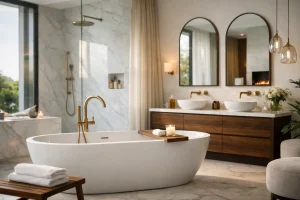

A luxury bathroom is rarely about adding more for the sake of it. The best luxury bathrooms UK homeowners invest in are the ones that feel calm at 7am, work brilliantly on a busy weekday, and still look just as impressive years later.
That matters if you are renovating a long-term home in St Neots, Little Paxton or the wider Cambridgeshire area. Most people are not chasing a showroom look that only works in photographs. They want a bathroom that feels considered, easy to live with, and properly finished from the first tile to the final fitting. No jargon. No stress.
What makes luxury bathrooms UK projects feel truly luxurious?
Real luxury starts with how the room works. It is the difference between a space that looks expensive and one that genuinely improves your day. Good layout, the right lighting, durable materials and thoughtful storage do more for a bathroom than filling it with high-end products that do not suit the room.
That is why luxury should always be tailored to the home and the people using it. In a family bathroom, luxury might mean a smarter layout, easy-clean surfaces and enough storage to keep everything tidy. In an en-suite, it could be a walk-in shower, underfloor heating and lighting that makes the room feel softer and more restful in the evening. For someone planning ahead, luxury may also include safer access, better support and a design that protects independence without looking clinical.
A well-designed bathroom feels effortless because so many decisions have already been made well. The room flows properly. The finishes work together. The practical details are handled before they become problems.
The features that give a bathroom a premium feel
There are certain details that regularly appear in luxury bathrooms, but they work best when chosen with purpose rather than copied from trends. Large-format tiles often create a cleaner, calmer look because there are fewer grout lines. Wall panelling can offer the same visual simplicity while also being low maintenance and practical for busy households.
A walk-in shower is one of the most popular upgrades, and for good reason. It can make the room feel more open, give easier access and create a more refined look than a bulky enclosure. Pair that with a well-designed shower solution, quality brassware and good drainage, and the result feels polished rather than pieced together.
Freestanding baths still have their place, but they are not the only route to luxury. In many homes, a fitted bath with strong lines and elegant surrounding finishes makes more sense. It depends on the size of the room, how often the bath will be used and whether the space needs to suit children, guests or changing mobility needs.
Lighting is another area where quality shows. A single ceiling light rarely does enough. Layered lighting around mirrors, in alcoves or beneath vanity units can completely change the mood of a bathroom. It also makes everyday tasks easier, which is where good design earns its keep.
Luxury is not just about looks
This is where many bathroom projects either succeed or disappoint. A luxury finish that is hard to clean, awkward to use or already dating after a year will not feel like a good investment for long.
The most successful bathrooms balance appearance with everyday practicality. Storage is a good example. Recessed niches, vanity drawers and mirrored cabinets can keep surfaces clear without making the room feel overfilled. That matters more than many people expect because clutter quickly undermines even the smartest design.
Material choice matters too. Natural stone can look beautiful, but it is not always the right answer if you want simpler maintenance. Porcelain, quality ceramics and modern wall panels often deliver a similar premium look with less upkeep. There is no single correct choice – it depends on your priorities, budget and how much day-to-day maintenance you want to take on.
Comfort is part of the equation as well. Underfloor heating, soft-close fittings, anti-slip flooring and easy-to-reach storage all contribute to that sense of ease. They may not be the first things visitors notice, but they are often the features homeowners appreciate most once the bathroom is in daily use.
Planning luxury bathrooms UK homes can actually live with
A luxury bathroom should suit the property it sits in. Period homes, newer builds and extended family houses all bring different opportunities and limits. Ceiling height, natural light, plumbing routes and room shape all influence what is sensible.
That is one reason a managed design and installation service is so valuable. It allows the project to be planned as a whole rather than assembled in stages. Instead of choosing products first and solving problems later, the layout, finishes, storage and installation details can be considered together.
This usually leads to better results and fewer compromises. If the basin position changes, for example, it can affect mirror size, lighting, storage and movement through the room. In a wet room, drainage, floor preparation and waterproofing are fundamental. In a mobility bathroom, access, support and ease of use should shape the design from the start, not be treated as add-ons at the end.
For many homeowners, the luxury is not only in the finished room. It is also in having one experienced team guide the process, help with product selection and manage the fitting properly.
How style and practicality come together
Luxury bathrooms do not need to be cold, minimal or overly designed. In fact, the best ones usually feel warm and easy to live with. Texture, colour and proportion matter just as much as premium fittings.
Soft neutrals remain popular because they are calming and adaptable, but richer tones can work beautifully too, especially when balanced with good lighting and natural textures. Brushed brass, matt black and warmer metallic finishes all have their place, although they should be chosen carefully. A finish that looks striking now may not always suit the room in five years, so it is worth thinking beyond the current trend cycle.
Vanity units are a good place to combine style and function. A well-sized vanity can anchor the room visually while providing practical storage. Floating units help smaller bathrooms feel more spacious, while floor-standing furniture can give a more substantial look in larger spaces. Again, it depends on the room.
Tiling and wall finishes also shape the feel of the bathroom. Full-height tiles can create a clean, premium finish, but that does not mean every wall must be tiled. Sometimes a mix of surfaces gives a more balanced result and can help manage costs without making the room feel less considered.
Where people often get luxury bathroom design wrong
One common mistake is focusing too heavily on individual products. A statement tap, designer bath or expensive tile will not create a luxury bathroom on its own if the layout is awkward or the room lacks cohesion.
Another is underestimating the importance of installation. Even the best products will disappoint if they are poorly fitted. Uneven tiling, weak sealing, bad drainage or rushed finishing work can quickly take the shine off a renovation. Craftsmanship is not an extra. It is central to the result.
There is also a tendency to overfill the room. Luxury needs space to breathe. If every wall carries a feature and every finish competes for attention, the room can feel busy rather than refined. Often, a quieter design with better materials and cleaner lines has much more impact.
Budget planning can trip people up too. It is sensible to invest where it affects long-term performance – waterproofing, installation quality, flooring, brassware and storage tend to matter more than novelty features. A bathroom does not need to include every premium extra to feel special. It needs the right choices in the right places.
A luxury bathroom should still work for real life
This matters especially in homes where needs are changing. A bathroom can be elegant and still provide safer access, more comfortable showering and better support. There is no reason for mobility-focused design to feel purely clinical when it is handled thoughtfully.
Likewise, family homes need bathrooms that can cope with everyday use. Easy-clean surfaces, practical storage and hard-wearing finishes are not compromises. They are often exactly what make a room feel more luxurious over time because it continues to function well.
At The Bathroom Magician, that balance between style and practicality is at the heart of good bathroom design. A premium bathroom should look impressive, of course, but it should also make mornings easier, cleaning simpler and daily routines more comfortable.
If you are thinking about your own renovation, start with how you want the room to feel and function, not just how you want it to look. The best results come when luxury is built around your home, your routine and the way you want to live in the space every day.