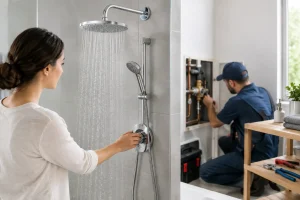

A shower that starts as a trickle can turn a peaceful morning into a daily frustration. Low pressure showers are especially disappointing when the room has been beautifully updated but the experience still feels weak, slow and cold at the wrong moments. The good news is that poor shower performance is not always something you simply have to live with. The right answer depends on your water system, pipework, shower choice and how the bathroom is used.
For homeowners planning a renovation, this is why shower performance should be discussed at the design stage, not left until the fittings are being chosen. A stylish shower head cannot solve a supply problem, but a well-planned bathroom can make the most of the water available.
Why low pressure showers happen
Water pressure and water flow are often treated as the same thing, but they are slightly different. Pressure is the force pushing water through the pipes. Flow is the volume that reaches the shower in a set time. A shower can have acceptable pressure but poor flow if pipework is restrictive, or good flow until another tap is switched on.
In many older homes, the issue comes from a gravity-fed system. Cold water is stored in a tank, often in the loft, and hot water is supplied from a cylinder. The height between the tank and the shower creates the pressure. If that height is limited, or if the shower is fitted on an upper floor, the result can be a noticeably gentler spray.
Other homes may have a combi boiler, where water is heated directly from the mains supply. These systems can provide a strong shower, but performance may fall when more than one outlet is being used. Running a kitchen tap, filling a bath or using another shower at the same time can reduce the flow available.
There can also be more local causes. Ageing pipework, limescale in a shower head, partially closed isolation valves, a blocked filter or a poorly matched mixer valve can all hold a shower back. In hard-water areas, limescale deserves particular attention. It builds up gradually, so homeowners often do not notice the change until the shower is far less effective than it once was.
Start with the cause, not the shower head
It is tempting to replace the shower head first. Occasionally, that is all that is needed. A clean, well-designed head may improve the pattern and feel of the spray, particularly when the existing one is clogged with limescale. However, it will not create water pressure that the system cannot provide.
A proper assessment considers where hot and cold water come from, the location of tanks and cylinders, the size and route of the pipes, and whether the shower must share its supply with other fixtures. It should also consider the type of shower already installed. Some mixer showers need a balanced hot and cold supply to work properly, while electric showers operate differently and are limited by their power rating and incoming cold-water flow.
This is also where an end-to-end bathroom design service is valuable. Rather than choosing a shower on appearance alone, the whole arrangement can be planned around what will work reliably in your home. No jargon. No guesswork. Just a clear route to a shower that feels right every day.
Better options for low pressure showers
The best solution is not always the biggest or most expensive one. It should suit the property, the available water supply and the way your household uses the bathroom.
Choose a shower made for lower pressure
Some shower valves and heads are specifically designed to perform at lower pressures. They use internal engineering to deliver a fuller, more enjoyable spray from a modest supply. This can be a sensible option where the existing system is sound and you want to avoid major plumbing changes.
It is worth checking the manufacturer’s minimum pressure requirement before buying. A large rainfall head may look luxurious, but many require a higher flow rate than a low-pressure system can comfortably deliver. In that setting, a smaller head with well-designed spray settings can often feel better in practice.
Consider a shower pump where suitable
For gravity-fed systems, a shower pump can increase flow to a compatible mixer shower. This can transform the experience, especially where the bathroom has a hot-water cylinder and cold-water storage tank but the water reaches the shower with little force.
Pumps are not a universal fix. They need to be correctly specified, installed in the right location and supplied with suitable water feeds. Noise, maintenance access and the condition of the existing system all matter. A poorly selected pump may be loud, unreliable or simply fail to achieve the improvement expected.
A pump is also not appropriate for every system. It should not be added to a mains-fed supply without professional advice. The aim is not to force more water through the system at any cost, but to create safe, dependable performance.
Upgrade the water system as part of a larger renovation
If a boiler, cylinder or pipework is nearing the end of its useful life, a bathroom renovation can be a good time to consider wider upgrades. A mains-pressure hot-water cylinder, for example, may provide stronger flow across several outlets when the incoming mains supply is sufficient.
This is a larger investment, and it will not suit every home. It may require changes beyond the bathroom itself, including plumbing alterations and space for new equipment. For busy family homes, though, the benefit can be substantial: a more consistent shower, better bath filling and less compromise when multiple people need water at once.
Think carefully about electric showers
An electric shower heats cold water as it passes through the unit, so it does not rely on stored hot water. It can be a practical choice where the hot-water system is limited or where you want the reassurance of a separate showering option.
Its performance still depends on the incoming cold-water supply and the unit’s kilowatt rating. In winter, when the incoming water is colder, an electric shower may need to reduce flow to maintain temperature. It is practical and efficient for many households, but it delivers a different experience from a powerful thermostatic mixer shower.
Design choices that make a modest flow feel better
A satisfying shower is about more than force. The layout, enclosure and controls can all improve everyday comfort.
A carefully positioned shower head makes the water feel more effective without wasting it. Adjustable riser rails are useful in family bathrooms because they suit different heights and allow the spray to be directed properly. Handheld shower heads add flexibility for rinsing, cleaning and seated showering, which can be particularly helpful in mobility bathrooms.
Thermostatic controls are another worthwhile consideration. They maintain a more stable temperature if someone runs a tap elsewhere in the house, reducing unpleasant bursts of hot or cold water. They do not increase pressure, but they make the shower more comfortable and safer to use.
For walk-in showers and wet rooms, drainage needs equal attention. A powerful shower needs drainage that can cope with the flow, while a gentler shower still needs a properly formed floor fall so water does not sit or travel into the rest of the room. Good design deals with both the water you can see and the plumbing behind the walls.
When weak flow needs a professional check
If your shower pressure has suddenly dropped, it is worth investigating before planning an upgrade. A blockage, a failing valve, a boiler issue or a leak may be responsible. Warning signs include fluctuating temperatures, unusual pump noise, water marks, a shower that only performs badly at certain times, or a clear difference between hot and cold flow.
For a full bathroom refurbishment, it is sensible to check the supply before tiles, wall panels and fittings are chosen. At The Bathroom Magician, the focus is on designing the whole bathroom around real life – including the less visible details that determine whether the room works as well as it looks.
A weak shower does not have to dictate a disappointing bathroom. With an honest assessment and the right combination of shower fittings, plumbing and thoughtful design, even modest water supplies can provide a comfortable, safe and enjoyable place to start or end the day.