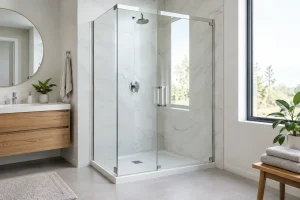

A shower screen can make or break the feel of a bathroom. The right one keeps water where it belongs, gives the room a lighter, more open look and stands up to everyday family life. When browsing Lakes shower screen sales, it is tempting to focus on the headline price. But the best value comes from choosing a screen that genuinely suits your layout, showering habits and installation requirements.
For a renovation that lasts, the screen should be considered alongside the tray, brassware, tiling and access around the room. A beautifully made panel is only as effective as the space and fitting behind it. No jargon. No stress. Just a shower solution that works properly from day one.
Why Lakes shower screens are a popular choice
Lakes is well regarded for shower enclosures and screens designed with daily use in mind. Their range includes simple fixed panels, hinged doors, sliding enclosures, quadrant options and walk-in styles, giving homeowners plenty of scope to balance appearance with practicality.
The appeal is not simply the glass. Details such as sturdy profiles, dependable seals, smooth door operation and easy-clean glass treatments matter once the bathroom is being used every morning. A quality screen should feel secure when opened and closed, contain splashes effectively and be straightforward to keep looking its best.
That said, a premium screen is not automatically the right answer in every room. A compact en-suite may need a sliding door rather than a generous hinged opening. A busy family bathroom may benefit from a more enclosed arrangement, while a level-access wet room may call for a fixed panel with carefully planned drainage. The best choice depends on the whole design, not one product alone.
Start with the way the bathroom is used
Before looking at finishes or frame styles, think about who uses the shower and how the room needs to perform. This is especially useful in homes where one bathroom has to serve several people with different needs.
A walk-in screen can create a calm, spacious look and makes access easier, particularly when paired with a low-profile tray or wet-room floor. However, it needs enough room around the showering area to prevent water travelling across the floor. In a smaller bathroom, a properly fitted enclosure may be the more practical and comfortable option.
Hinged doors offer a satisfying, solid feel and can make cleaning easier because there are fewer tracks. They do, however, need clear floor space to open. Sliding doors save space outside the enclosure, making them a sensible choice near a basin, toilet or towel radiator. Quadrant enclosures soften the corner of the room and can free up valuable walking space, although they may provide less elbow room than a rectangular design.
These are the decisions that are easiest to make on a plan before work begins. They are much harder, and more expensive, to change once tiles are on the wall.
Look beyond the sale price
Sales can be an excellent opportunity to buy a quality shower screen at a more attractive price, particularly when a bathroom refurbishment is already planned. The important question is whether the reduced item is right for the project, rather than whether it is simply reduced.
Check the intended tray size and the adjustment available within the screen or enclosure. Bathroom walls are not always perfectly true, particularly in older properties, and a small amount of adjustment can be valuable during fitting. It is also worth confirming the handedness and door opening direction before ordering. A door that opens into a towel rail or blocks the route into the room will soon become a daily irritation.
Consider the following before committing to a particular model:
- the finished dimensions of the shower tray or wet-room area, not just the rough space available;
- where the shower valve and shower head will sit in relation to the opening;
- whether the floor is level and falls correctly towards the waste;
- the clearance needed to enter, exit and clean the shower comfortably; and
- how the screen will work with tiles, wall panelling and any recessed storage niche.
A screen may look like a standalone purchase, but it is part of a waterproofing and drainage system. Getting those elements right protects the room as well as the investment.
Framed, semi-frameless or frameless?
The amount of visible metal around the glass has a significant effect on the finished look. Framed enclosures offer structure and can suit a wide range of bathrooms, often providing a reassuringly solid feel. They are a practical choice where flexibility and water containment are priorities.
Semi-frameless styles reduce the visual weight of the enclosure while retaining carefully positioned support and sealing. For many homeowners, this is the ideal middle ground: contemporary without being impractical.
Frameless or near-frameless panels make a strong statement in a larger bathroom or wet room. The glass becomes less noticeable, allowing feature tiles, wall panels or a striking shower area to take centre stage. They do require precise installation and careful planning, especially around the fixing points and splash zone. Minimalist design works best when the practical details are handled properly.
Finish also matters. Chrome remains a versatile choice, but black, brushed brass and other finishes can help tie a shower screen into taps, handles and accessories. Matching every item exactly is not always necessary, but the overall scheme should feel intentional rather than pieced together.
Easy cleaning is a design decision
Most homeowners would rather spend their weekend doing something other than cleaning shower glass. While no screen is completely maintenance-free, the right design can reduce the effort considerably.
Easy-clean coatings help water run from the glass more readily, reducing the build-up of limescale and soap residue. They still need sensible care. A quick wipe with a squeegee after showering and a regular clean with a suitable non-abrasive product will keep the glass clearer for longer. Harsh cleaners and scouring pads can damage coatings, seals and finishes.
Simple shapes can also be easier to maintain. Fixed panels have fewer moving parts than a sliding enclosure, while accessible hinges and removable door sections can make deeper cleaning less awkward. This does not mean everyone should choose the simplest screen available. It means the maintenance demands should suit the household.
If mobility or future accessibility is a consideration, a level-access shower with a well-planned fixed screen can offer comfort and confidence without making the room feel clinical. The size and position of the panel, the floor fall and the grab rails or seating, where needed, should all be designed together.
Why professional fitting matters
Even a high-quality shower screen can disappoint if it is fitted poorly. Glass needs to be accurately aligned, seals need to sit correctly and the enclosure must be fixed to suitable walls. The shower tray or floor must also be properly supported and levelled so water drains as intended.
During a full bathroom renovation, there is a clear advantage in having one team coordinate the work. The layout can be checked before installation, pipework can be positioned sensibly, walls can be prepared for the chosen fittings and tiles or panels can be finished cleanly around the screen. This avoids the common problem of selecting a product first and discovering later that the room needs compromises to accommodate it.
At The Bathroom Magician, shower solutions are considered as part of the complete bathroom design, not an afterthought added at the end. For homeowners around St Neots and Cambridgeshire, that means practical guidance from product selection through to a carefully managed installation.
Choosing a screen you will still like in years to come
Trends are useful for inspiration, but a shower screen should earn its place through everyday performance. Choose a style that suits the scale of the room, offers comfortable access and works with the level of cleaning you are happy to do. If a sale price helps you secure a well-made Lakes screen that meets those criteria, it can be money well spent.
The most satisfying bathrooms are not defined by one impressive item. They are the rooms where every choice works together – from the shower tray beneath your feet to the screen that quietly keeps the rest of the room dry.