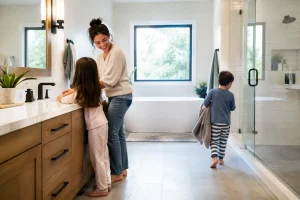

A family bathroom has to work harder than almost any other room in the house. It is the early-morning queue, the post-football clean-up zone and, ideally, a calm place to wind down at the end of the day. Knowing how to upgrade a family bathroom starts with recognising those real routines, rather than choosing a look from a showroom display and hoping it fits.
The best results balance practical details with a style you will still enjoy years from now. Whether you are refreshing a tired main bathroom or planning a full renovation, a well-considered design can make busy days feel far less chaotic.
Start with the way your family uses the room
Before thinking about tiles or taps, consider what causes frustration in the current bathroom. Is there never enough room around the basin? Does everyone need the loo at the same time? Are damp towels and bath toys permanently on show? A good bathroom design solves these everyday problems first.
Think about who will use the room now and in the years ahead. A young family may value a generous bath and easy-clean surfaces, while a household with teenagers may benefit more from a larger shower and better storage. If this is your long-term home, it is also sensible to consider comfort and accessibility early. Small choices, such as a low-entry shower tray, an easy-to-reach shower control or space for a future grab rail, can make a lasting difference without making the room feel clinical.
Measure carefully, but do not focus only on where each item can physically fit. Allow room to open drawers, dry children after a bath and move safely through the space. In compact bathrooms, a professional plan is especially valuable because a few centimetres can affect how the whole room feels.
Choose a layout that reduces the morning rush
The right layout depends on the shape of the room, existing pipework and your budget. Moving a toilet or soil pipe can be worthwhile if it transforms a cramped room, but it will usually add cost and disruption. Keeping key services in roughly the same place can leave more of the budget for quality fittings, storage and finishes.
For many families, the most useful improvement is to create clearer zones. Keep the basin area open and accessible, position the toilet where it feels more private, and make the bathing area easy to contain. A fitted shower screen is generally easier to keep tidy than a curtain, while a bath-shower combination remains an excellent space-saving choice where a separate bath and shower will not fit.
If two people regularly need the bathroom at once, a double basin can help, but only if there is enough worktop and elbow room. In a smaller room, a wide single basin with a useful vanity unit may serve the family better. It depends on whether your main pinch point is teeth-brushing, bathing children or simply finding somewhere to put everything.
Prioritise storage that children can actually use
Open shelves may look lovely in photographs, but family bathrooms need a place for spare toilet rolls, cleaning products, medicines, hair tools and the ever-growing collection of lotions and potions. The aim is not to hide every item away. It is to give everyday essentials a sensible home.
A vanity unit beneath the basin is often one of the hardest-working additions you can make. It uses space that might otherwise be wasted and keeps the worktop clearer. Deep drawers tend to be more practical than a cupboard, as they make it easier to see what is inside without crouching down and rummaging at the back.
Consider a mirrored cabinet for toothbrushes and skincare, tall storage for towels, and hooks at different heights for adults and children. Recessed shelving in a shower can also remove the need for bottles balanced on the tray edge. If young children are in the house, store medication and cleaning products securely out of reach.
Select materials made for busy bathrooms
A family bathroom should look good, but it should not demand hours of upkeep. This is where material choices matter. Large-format wall tiles can mean fewer grout lines to clean, while quality wall panelling offers a smart, low-maintenance alternative for shower areas and around baths. Both can create a polished finish when installed properly.
For flooring, choose a surface with good slip resistance, particularly near a bath or shower. Textured porcelain tiles are durable and attractive, although grout will need routine care. Waterproof bathroom flooring can be warmer underfoot and quicker to fit in some projects. The best option depends on the look you want, the condition of the subfloor and how much maintenance suits your household.
Pale finishes can make a small room feel larger, but pure white is not the only answer. Soft stone shades, warm greys, muted greens and natural wood-effect furniture can create a welcoming space while being forgiving of everyday splashes. A darker floor or a lightly patterned tile can also be a practical choice in a high-traffic family room.
Improve safety without compromising on style
Safety features are most successful when they feel like part of the design, not an afterthought. Thermostatic shower controls help prevent sudden temperature changes, which is reassuring for children and older relatives alike. A shower screen made from toughened safety glass, secure grab rails where needed and a properly fitted non-slip floor all support safer daily use.
Lighting deserves the same attention. A single ceiling fitting can leave faces in shadow at the mirror and make the room feel less inviting. Combine bright, practical lighting around the basin with softer general lighting for evening baths. Every fitting must be suitable for its position in a bathroom, so this is work for a qualified professional.
Ventilation is another unglamorous but essential upgrade. An effective extractor fan, correctly sized for the room, helps clear moisture and reduces the risk of condensation, mould and peeling paint. It protects the investment you are making in your new bathroom as well as making the room more comfortable.
Make cleaning easier from the outset
The easiest bathroom to clean is usually the one with fewer awkward corners and less clutter. Wall-hung furniture creates a clear floor beneath it, making mopping simpler and giving the impression of more space. Rimless toilets are easier to keep hygienic, and concealed pipework means fewer places for dust to settle.
Choose taps and shower fittings with finishes that suit your willingness to maintain them. Chrome remains a reliable, easy-care option. Brushed brass, black and other statement finishes can look superb, but water marks may show more readily depending on the finish and your local water hardness. In parts of Cambridgeshire, hard water can be a factor, so it is worth asking which products will stay looking their best with realistic day-to-day care.
Plan the project around quality, not just the visible fittings
A new bathroom is not only about the bath, shower or tile you can see. Good preparation behind the walls matters just as much. Sound plumbing, proper waterproofing in wet areas, careful tiling and neat finishing protect your home from problems that may not show up until later.
For that reason, a fully managed renovation can remove a great deal of stress. Instead of coordinating separate trades, delivery dates and decisions yourself, you have one team guiding the design, product selection and installation. The Bathroom Magician takes this approach because a bathroom should feel exciting to plan, not like a second job for the homeowner.
It is wise to set a realistic budget with a contingency for hidden issues, particularly in older properties. Water damage, uneven floors or outdated pipework can only become clear once the old bathroom is removed. Spending a little more on professional installation and durable core materials is often better value than choosing cheaper products that will need attention sooner.
How to upgrade a family bathroom with confidence
A successful family bathroom is not necessarily the largest or the most expensive. It is the one that makes everyday life easier: enough storage to keep surfaces clear, a layout that handles busy mornings, finishes that stand up to real use and safety features that support everyone at home.
Start with the problems you want the room to solve, then let those answers shape the design. When every decision has a practical purpose, the finished bathroom will feel good not just on the first day, but on every ordinary Tuesday morning that follows.