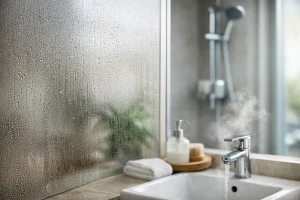

A steamed-up mirror after a shower may seem harmless, but water running down walls, windows and tiles is a sign that humid air has nowhere useful to go. Knowing how to reduce bathroom condensation helps protect more than the appearance of the room. It can prevent mould, peeling finishes, damaged sealant and that persistent damp smell that makes a bathroom feel less clean, however often it is scrubbed.
Condensation is particularly common in older homes, compact bathrooms and rooms with little natural ventilation. The good news is that most cases improve with a few sensible changes. The best long-term results usually come from treating the whole room – ventilation, heating, layout and surfaces – rather than relying on one quick fix.
Why bathroom condensation happens
Every shower, bath and even a basin of hot water releases moisture into the air. When that warm, damp air touches a colder surface, such as a window, external wall, mirror or toilet cistern, it turns back into droplets of water. That is condensation.
A little moisture immediately after bathing is normal. The concern starts when it lingers. If walls and ceilings remain wet, or windows are still dripping long after the room has been used, the moisture can feed mould growth and work its way into vulnerable materials.
In many homes, the issue is worse during colder weather because external walls and glazing are cooler. A chilly bathroom also means the air reaches its dew point more quickly. This is why simply opening a window is not always the complete answer, especially when the room is cold and the window is rarely practical to leave open.
How to reduce bathroom condensation with effective ventilation
An extractor fan is one of the most useful tools in a bathroom, provided it is correctly chosen, positioned and used. Its job is to remove moist air at source before it has a chance to settle on surfaces.
If you have a fan, switch it on at the start of your shower rather than waiting until the room is already full of steam. Leave it running for at least 15 to 20 minutes afterwards. A fan with a humidistat can do this automatically, turning on when moisture levels rise and continuing until the air is drier. This is a particularly helpful option for busy family bathrooms, or where people may forget to use the fan.
A weak, noisy or ineffective fan is often worse than no fan at all because it creates false reassurance. Check whether air is actually being drawn into it by holding a sheet of toilet paper near the grille. If it barely moves, the fan or ducting may need cleaning, repairing or replacing. Ducting should lead outside, not into a loft space, where moist air can cause problems elsewhere in the property.
Opening a window after bathing provides valuable extra airflow, even if only for a short period. Keep the bathroom door closed while showering, though. Otherwise, humid air simply travels into cooler rooms and can create condensation on landing windows, bedroom walls or wardrobes.
Keep the room gently warm
Heating and ventilation work best together. A warm bathroom has warmer surfaces, so there is less opportunity for damp air to form droplets. You do not need to make the room uncomfortably hot, but allowing it to become very cold between uses can make condensation much harder to control.
A properly sized heated towel rail is often a practical choice. It improves comfort, helps towels dry more quickly and adds gentle background warmth. Damp towels left bunched up in a small bathroom add moisture back into the room, so hang them fully open where possible or dry them elsewhere if the space is limited.
Underfloor heating can also be a worthwhile consideration during a full renovation. It provides an even warmth underfoot and helps the room dry after bathing. It is not a substitute for extraction, but it can reduce the cold surfaces that encourage condensation. The trade-off is a higher upfront installation cost, so it tends to make most sense when floors are already being replaced.
Make small changes to your shower routine
Simple habits can noticeably reduce the amount of moisture released. Keep the shower door or curtain closed while showering, and avoid leaving it open immediately afterwards. Let the fan and open window start clearing the air first.
A shorter shower at a moderate temperature produces less steam than a long, very hot one. That is not always realistic for every household, but reducing the temperature slightly can make a difference without spoiling the experience.
After a shower, use a squeegee on glass screens, wall panels and tiles. It takes less than a minute and removes water before it can evaporate back into the room. Wipe down the window sill and any obvious puddles too. This is especially worthwhile in bathrooms with a small window, poor sunlight or a north-facing external wall.
Avoid drying washing on a radiator in the bathroom if you can. It may feel convenient, but wet laundry releases a surprising amount of moisture. In a room already dealing with baths and showers, it can tip the balance from occasional misting to recurring damp.
Choose finishes that cope well with moisture
If condensation has already caused staining, lifting paint or blackened silicone, a cosmetic refresh alone will not solve it. The underlying airflow and heating issue must be addressed first. Once that is in hand, choosing moisture-resistant finishes will make the bathroom easier to maintain.
Tiles and quality bathroom wall panels are reliable choices around showers, baths and basins because they create a durable, wipe-clean surface. Well-fitted wall panelling can mean fewer grout lines, which is useful for homeowners who want a lower-maintenance room. Grout is not inherently a problem, but it needs sound installation and regular care to prevent it from becoming a place where mould takes hold.
For painted areas, use a bathroom-specific paint designed for humid spaces and ensure the wall is completely dry before decorating. Painting over a damp patch can temporarily hide it, but trapped moisture is likely to show itself again.
A fitted shower enclosure that contains spray effectively can also help. An undersized screen or poorly placed bath shower screen may allow water to reach colder walls and floors, increasing both cleaning and drying time. In a compact room, good layout decisions often matter as much as the products themselves.
Check for problems that are not condensation
Not every damp mark in a bathroom is caused by humid air. A leak from a shower valve, waste pipe, toilet connection or failed sealant can look similar at first, but it needs a different remedy. If a mark stays wet regardless of shower use, appears in one concentrated area, or worsens when taps are running, arrange for it to be investigated.
Likewise, repeated mould on one external wall may point to insulation gaps, damaged pointing or another building issue. A dependable bathroom installer can advise on what falls within the bathroom project and when another specialist may be needed. Finding the true cause before renovating prevents expensive new finishes being affected by an old problem.
Plan condensation control into a bathroom renovation
A bathroom refurbishment is the ideal time to deal with ventilation properly, rather than trying to work around it later. Fan placement, duct routes, electrical controls, heating and practical storage can all be considered as part of one joined-up design. For example, a well-positioned extractor, a heated towel rail and a shower enclosure sized for the room will work together far better than isolated upgrades.
This approach is especially valuable for mobility bathrooms and wet rooms. These spaces need to be easy to clean, safe underfoot and able to dry efficiently. Carefully planned falls, suitable screen arrangements and durable wall finishes help manage surface water, while reliable extraction deals with humidity in the air.
For homeowners in and around St Neots, The Bathroom Magician can incorporate these practical details into a bathroom design and installation plan from the outset. No jargon. No stress. Just a room that looks considered and performs properly every day.
A dry, comfortable bathroom is not achieved by endlessly wiping a misty window. It comes from giving moisture a clear route out, keeping surfaces reasonably warm and selecting materials that are made for real family life. Address those details early, and the room will stay fresher, safer and more enjoyable for years to come.