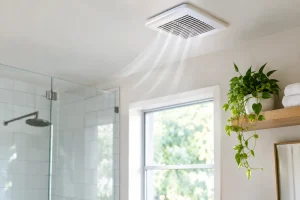

A steamed-up mirror may seem like a normal part of a morning shower, but moisture that lingers is a warning sign. Learning how to improve bathroom ventilation can protect your finishes, reduce mould risk and make the room far more comfortable to use. It is especially worthwhile before investing in new tiling, wall panels or fitted furniture, as poor airflow can shorten the life of even a beautifully finished bathroom.
The right solution depends on the room. A compact en-suite with no window needs a different approach to a family bathroom with a large opening window. The aim is the same in both cases: remove humid air quickly, bring in replacement air and prevent condensation from settling on cold surfaces.
Start by spotting the signs of poor ventilation
Condensation is not always obvious. Look beyond the mirror after a shower. Persistent droplets on windows, damp patches around the ceiling, peeling paint, musty smells and black marks in silicone or grout all suggest that moisture is staying in the room for too long.
Mould is not simply a cleaning issue. Regular cleaning matters, but if it returns quickly, the underlying airflow needs attention. Bathrooms naturally produce a great deal of moisture, particularly where several people shower or bathe in a short period. Without a reliable route out, that moisture will settle on walls, ceilings, cabinets and fabrics.
In older Cambridgeshire homes, bathroom layouts can also make matters more complicated. A small internal room, thick external walls or a window that only opens a little can all limit natural ventilation. This is where a well-planned mechanical extract system earns its place.
How to improve bathroom ventilation with an extractor fan
For most bathrooms, an extractor fan is the most effective improvement. It removes humid air at the source rather than relying on a window being opened at the right time. A fan should be sized for the room and installed with a suitable route to the outside, not simply vented into a loft or void where moisture can cause problems elsewhere.
The position matters too. Ideally, the fan should be close to the shower or bath area, where steam is created, while still meeting electrical safety requirements. A qualified installer will consider the bathroom zones, duct length and external vent position as part of the job.
A fan that is noisy, weak or only runs while the light is on may not give the room enough time to clear. These options are often more useful:
- Timer fans continue running for a set period after the light is switched off. This is a simple choice for busy family bathrooms.
- Humidity-sensing fans start automatically when moisture levels rise. They are helpful where people may forget to use the fan or shower at different times of day.
- Continuous-running fans use low-level extraction all day, increasing when humidity rises. They can work very well in internal bathrooms and rooms with recurring condensation.
- Quiet fans are worth considering for en-suites, particularly where noise could disturb someone sleeping nearby.
More extraction is not always better if the installation is poorly designed. Long, crushed or badly joined ducting restricts airflow and can make a powerful fan perform disappointingly. Short, smooth duct runs with minimal bends generally give better results. An external grille should also be kept clear of dirt, leaves and insect nests.
Do not forget replacement air
An extractor fan cannot remove air effectively unless fresh air can enter the bathroom. In a room with a window, opening it slightly after showering can help, even during colder months. You do not need to leave it wide open for hours, but a short burst of fresh air makes a genuine difference.
In windowless bathrooms, the gap beneath the door is often essential. If a new floor covering, threshold or draught excluder has sealed this gap completely, the fan may struggle. Door undercuts and discreet air transfer grilles can provide a route for replacement air without compromising the look of the room.
This is a common trade-off in bathroom design. Homeowners understandably want warmth and privacy, but a room sealed too tightly can trap moisture. The answer is not a draughty bathroom. It is controlled airflow, with the right fan and an intentional path for fresh air to enter.
Make everyday habits work harder
Good ventilation is partly about equipment and partly about timing. Switch on the fan before showering if it is manually operated, keep the bathroom door closed during the shower to stop steam travelling through the home, then allow the fan to run afterwards. If there is a window, open it once the shower is finished.
Wiping down the shower screen, tiles and bath surround takes less than a minute and removes a surprising amount of water before it can evaporate. Hang towels so they can dry properly rather than leaving them bunched on a radiator or hook. If you dry laundry indoors, avoid using the bathroom unless extraction is particularly good, as wet clothes add significantly to the humidity.
Heating also has a role. Cold walls and windows attract condensation because warm, damp air cools quickly when it reaches them. Keeping the bathroom at a steady, comfortable temperature can reduce this effect. However, turning up the heating alone will not solve a ventilation problem. Warm air still needs somewhere to go.
Choose bathroom finishes that cope with moisture
Ventilation should be part of the design conversation, not an afterthought once mould appears. In a bathroom that gets heavy use, practical materials make everyday maintenance easier. Quality wall panelling, properly fitted tiles, moisture-resistant paint and well-sealed shower enclosures all help create surfaces that are easier to wipe clean and less likely to suffer from repeated dampness.
Furniture selection matters as well. Cabinets should be suitable for bathroom conditions and positioned sensibly away from areas that receive regular splashing. A vanity unit can provide valuable storage, but it needs enough clearance from the bath or shower and must be installed carefully so water cannot track behind it.
For wet rooms and level-access showers, efficient extraction becomes even more important. Open shower areas create a spacious, accessible feel, but steam spreads more freely than it does in a fully enclosed cubicle. Thoughtful shower screen design, underfloor heating where appropriate and a correctly specified fan can keep the room practical without compromising its open appearance.
When a simple fix is not enough
Replacing an old fan can be a straightforward upgrade, but recurring mould, dripping windows or damage to ceilings may point to a larger issue. The problem could be inadequate ducting, an incorrectly vented fan, a leak, insulation gaps or a combination of factors. It is worth investigating before redecorating, otherwise the same symptoms can soon return.
A full bathroom renovation is an ideal time to plan ventilation properly. Access is easier before ceilings and walls are finished, and the fan, ducting, lighting and layout can be coordinated from the outset. This avoids the frustration of installing a lovely new bathroom only to discover that the mirror still streams with condensation every morning.
At The Bathroom Magician, ventilation is considered alongside the practical details that make a bathroom enjoyable long after installation day. The best solution should be quiet, effective and suited to the way your household actually uses the space.
A bathroom should feel fresh after a shower, not damp and closed in. Addressing airflow now protects the investment you make in your home and gives every finish, from grout to cabinetry, a better chance to look its best for years to come.