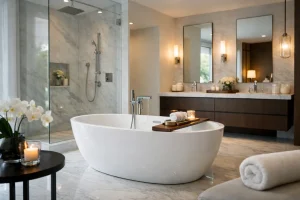

A luxury bathroom is rarely about spending the most money. It is usually about getting the details right – the layout, the lighting, the materials, and how the room feels when you use it every day. If you are wondering how to design luxury bathroom spaces that feel calm, practical and beautifully finished, the starting point is not the taps or tiles. It is how you want the room to work for your life.
That matters even more in real homes across St Neots and the wider Cambridgeshire area, where bathrooms often need to balance style with sensible use of space, family routines, storage demands or future mobility needs. A luxurious result should look impressive, but it should also feel easy to live with. No jargon. No stress.
Start with the feeling, not the product
The biggest mistake people make is choosing a freestanding bath or a designer brassware range before they have worked out the atmosphere they want to create. Luxury can mean different things. For one homeowner, it is a hotel-style ensuite with warm lighting and large-format tiles. For another, it is a walk-in shower, underfloor heating and enough storage to keep every surface clear.
Before you choose finishes, think about the mood of the room. Do you want it to feel restful and spa-like, crisp and contemporary, or classic and elegant? Once that direction is clear, every decision becomes easier. Colours, textures, sanitaryware and lighting can then support one joined-up look rather than competing for attention.
A luxury bathroom should also suit the property. A sleek minimalist scheme can work brilliantly in a modern extension, but it may feel out of place in a period home unless it is handled carefully. Good design makes the room feel as though it belongs there.
How to design a luxury bathroom around layout
If there is one feature that defines a high-end bathroom, it is space used well. That does not always mean having a large room. It means the layout feels balanced, comfortable and uncluttered.
The first question is how the room will be used. A family bathroom has different demands from an ensuite. A mobility bathroom needs generous access and safe movement. A wet room can feel especially luxurious, but only if the drainage, falls and waterproofing are right from the start.
Think carefully about what deserves the prime position. In some rooms, that will be a statement bath. In others, a large walk-in shower is the real luxury because it gets used every day. It depends on your habits. Plenty of homeowners imagine a bath as the centrepiece, only to realise they would value a spacious shower, built-in storage and better lighting far more.
Circulation matters too. If you have to squeeze past a vanity unit or dodge a shower screen, the room will never feel premium. A well-planned layout leaves enough space around each item, gives doors room to open properly, and keeps the room comfortable for years to come.
Choose materials that look good and last
Luxury should not be fragile. In a bathroom, the best materials combine visual appeal with durability and easy maintenance.
Porcelain tiles are a popular choice for good reason. They offer the look of natural stone, marble or concrete, but they are often easier to care for and more consistent in finish. Large-format tiles can make a room feel more expansive and refined because there are fewer grout lines interrupting the surface. In smaller bathrooms, that can make a real difference.
Natural materials can be beautiful, but they come with trade-offs. Real stone has character and depth, yet it usually needs more maintenance and careful sealing. Timber finishes add warmth, though they need to be suitable for humid conditions. Wall panelling can be a smart option if you want a clean, polished appearance with easier upkeep than some tiled schemes.
The most successful luxury bathrooms often use a restrained mix of materials rather than too many. Two or three complementary finishes will usually feel more expensive than a room trying to showcase every trend at once.
Lighting is where luxury often lives
Many bathrooms are let down by a single ceiling light and little else. That is one of the fastest ways to make an expensive renovation feel flat.
Layered lighting changes everything. Practical lighting around the mirror helps with shaving, make-up and daily routines. Softer ambient lighting creates atmosphere in the evening. Feature lighting can highlight a niche, a textured wall or a freestanding bath. If there is natural light, the design should make the most of it without sacrificing privacy.
Warm lighting usually feels more welcoming than cool, harsh tones, especially in a room intended for relaxation. Dimmers are worth considering because they let the bathroom shift from bright and functional in the morning to calm and restful at night.
This is also where professional planning pays off. Lighting in bathrooms must be both attractive and safe, and it needs to work alongside mirrors, ventilation and the layout of the room.
Storage is part of the luxury
Clutter and luxury do not sit comfortably together. A beautifully tiled bathroom loses its impact if bottles, towels and toiletries end up on every ledge.
That is why storage should be designed in from the outset. Vanity units are useful, but they are only one part of the picture. Recessed niches in showers, mirrored cabinets, built-in shelving and tall storage units can all help keep the room calm and organised.
The right answer depends on the household. A couple may want discreet storage for everyday essentials and a clean basin area. A family may need room for spare towels, bath toys and a surprising number of products. In an accessible bathroom, storage must also be easy to reach and simple to use.
When everything has a proper place, the room not only looks better, it works better. That is a big part of what makes a bathroom feel high-end.
Invest where you will notice it most
If you are working to a budget, luxury does not mean choosing the most expensive version of everything. It means spending wisely on the features that shape the daily experience.
Good brassware is often worth the investment because you use it constantly and poor-quality fittings can date quickly. A solid shower system, quality furniture, underfloor heating and well-fitted tiling usually offer more long-term value than chasing statement pieces for the sake of it.
This is where compromise can be sensible. You might choose a porcelain tile that gives you the look of natural stone, then put more of the budget into bespoke storage or a better shower enclosure. Or you may keep the room layout broadly as it is and focus on premium finishes and lighting. Luxury is not one formula. It is about choosing what matters most in your home.
Think beyond looks
A bathroom can be elegant and still be practical. In fact, the best ones are.
Ventilation is a good example. It is not the glamorous part of the design, but it protects paintwork, reduces condensation and helps the room stay fresh. Underfloor heating adds comfort, but it also frees up wall space that might otherwise be taken by a radiator. Slip-resistant flooring can be especially useful in family bathrooms, wet rooms and mobility-focused spaces, and it no longer means sacrificing style.
Accessibility should not be treated as separate from luxury either. A level-access shower, well-placed grab support, wider movement space and easy-clean surfaces can all be integrated beautifully. For many homeowners planning to stay in their property long term, that kind of thoughtful design is one of the smartest upgrades they can make.
How to design luxury bathroom details that feel finished
The final layer is where a bathroom moves from attractive to truly polished. These are the details that make the room feel complete rather than simply installed.
Consistency matters. Mixed metals can work, but only when done with intention. If every fitting is a different finish, the room can feel unsettled. The same goes for shapes. Soft curves and sharp square lines can clash unless there is a clear reason for the contrast.
Mirror size, grout colour, handle style, towel rail placement and even the height of a niche all influence the end result. None of these decisions seem dramatic on their own, but together they create the sense of quality people notice when they walk in.
This is often why a managed design-and-installation service feels less stressful than trying to piece a project together yourself. When one team is thinking about layout, products, fitting and finishing as a whole, the final room tends to feel more resolved. At The Bathroom Magician, that joined-up approach is what helps turn good ideas into bathrooms that look right and work brilliantly.
A luxury bathroom should feel like a pleasure to use on an ordinary Tuesday morning, not just something that looks good in a photo. If you start with the way you live, choose materials with care and pay attention to the details people often overlook, you will end up with a room that feels every bit as good as it looks.