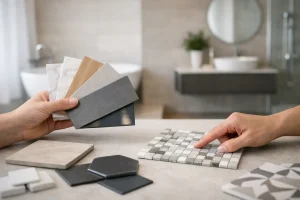

A tile that looks perfect under showroom lights can feel cold, slippery or simply too busy once it is covering every wall in your bathroom. That is why knowing how to choose bathroom tiles is not really about following trends. It is about making decisions that still feel right on a dark winter morning, in a family rush, or years down the line when you are cleaning the room for the hundredth time.
The best bathrooms get the balance right between appearance and everyday use. Tiles have a big job to do. They shape the look of the room, protect surfaces from moisture, and influence how spacious, calm or practical the space feels. If you are planning a renovation, it helps to start with how the bathroom needs to work, not just what catches your eye first.
How to choose bathroom tiles without regrets
The easiest way to make good tile choices is to begin with the room itself. A family bathroom, an en suite and a mobility bathroom all ask for slightly different things. In a busy household, you may want surfaces that are forgiving, easy to wipe down and unlikely to show every splash. In a smaller en suite, lighter tones and well-scaled tiles can help the room feel more open. In an accessible bathroom or wet room, slip resistance and layout matter just as much as the final look.
This is where many homeowners get stuck. They are choosing one product at a time instead of seeing the whole bathroom as a joined-up design. Floor tiles need to work with wall tiles. The finish needs to suit the amount of natural light. The grout colour can change the overall effect more than people expect. Even the shape of the room can make one tile size feel smart and another feel awkward.
A practical starting point is to decide what matters most to you. If low maintenance is high on the list, that should shape your choices early. If you want the bathroom to feel warm and restful, colour and texture will need careful thought. If safety is a key concern, especially for older homeowners or anyone planning for future needs, that should guide the flooring decision from the outset.
Start with where the tiles are going
Wall tiles and floor tiles are not interchangeable in every case, and that matters. Floor tiles need to cope with foot traffic, moisture and, in some bathrooms, underfloor heating. Wall tiles can often be lighter and more decorative. Some ranges are designed to do both, which can create a calm, coordinated finish, but you still need to check they are suitable for the job.
Think about how much of the room you actually want to tile. Full-height tiling can look sleek and give excellent protection around showers and baths, but it is not always necessary on every wall. In some bathrooms, half-height tiling or a tiled feature area creates a softer, less clinical feel. This can also help the budget stretch further without making the room look compromised.
If you are planning a wet room, shower enclosure or heavily used family space, your tile choices should be led by water exposure first and decoration second. That does not mean the room cannot be beautiful. It simply means the practical side deserves equal weight.
Tile size changes the feel of the room
One of the biggest surprises for homeowners is how much tile size affects the overall result. Large-format tiles can make a room look calmer because there are fewer grout lines breaking up the surfaces. They often suit contemporary bathrooms and can help a compact room feel less fussy. They are also popular for creating a more luxurious, hotel-inspired finish.
Smaller tiles, including mosaics, can add texture and detail, and they are especially useful on shower floors where extra grout lines can improve grip. They can also work well in awkward areas, alcoves or curved details. The trade-off is maintenance. More grout means more cleaning, and in a hard-working bathroom that is worth thinking about before you commit.
Room proportions matter too. A very small tile in a large bathroom can feel visually busy unless it is used in a controlled way. A very large tile in a tight room can look smart, but only if the layout is planned carefully so you do not end up with lots of thin cuts at the edges. Good design and installation make all the difference here.
Choose the finish as carefully as the colour
When people think about tiles, colour usually gets the most attention. Finish deserves just as much. Gloss tiles reflect light and can help a darker bathroom feel brighter. They are often a good choice for walls, especially in smaller rooms. Matt tiles create a softer, more understated look and tend to feel more contemporary, but they can show marks differently depending on the colour and texture.
For floors, slip resistance is a key consideration. A highly polished tile may look striking, but it is not always the right choice in a bathroom where surfaces regularly get wet. This is particularly important in homes with children, older adults or anyone with mobility concerns. A slightly textured or matt floor tile can offer a safer and more reassuring surface without sacrificing style.
The feel underfoot matters as well. Bathrooms should not only look good. They should feel comfortable to use every day. If you are including underfloor heating, that may influence the tile type and finish you choose, as well as the overall sense of comfort in the room.
Colour should suit the light and the property
The right tile colour is rarely about what is fashionable this year. It is about what works in your home. Bathrooms in Cambridgeshire homes vary enormously, from compact cloakrooms in newer builds to larger family bathrooms in older properties. Natural light, ceiling height and the style of the house all play a part.
Pale tiles can make a room feel brighter and more spacious, but they are not the only route to a successful scheme. Warmer neutrals often create a more welcoming feel than stark white, and they can sit more comfortably with natural materials, brassware and timber finishes. Darker tiles can look elegant and cocooning, particularly in larger bathrooms, but they need enough light and careful balancing so the space does not feel closed in.
Pattern is another area where restraint often pays off. A patterned floor or feature wall can bring personality, but if every surface is competing for attention the room may quickly feel tiring. Usually, one strong statement is enough. Let the rest of the scheme support it.
Do not overlook grout and layout
Grout seems like a small detail until the bathroom is finished. Then it becomes one of the first things you notice. Matching grout creates a softer, more blended appearance. Contrasting grout makes the tile shape stand out and can suit more graphic or traditional styles. Neither is right or wrong, but the choice changes the character of the room.
Practicality matters here too. Very light grout can need more upkeep, particularly on floors and in shower areas. Mid-toned grout is often a sensible middle ground for busy homes because it hides day-to-day wear better while still looking clean.
Layout is just as important as tile choice. Brick bond, stacked, herringbone and vertical patterns all create different effects. A vertical layout can help a low ceiling feel taller. A simple stacked pattern can feel neat and modern. More decorative layouts can be beautiful, but they need careful planning to avoid feeling overdone.
Think about maintenance now, not later
A bathroom should be straightforward to live with. If you already know you do not want high-maintenance surfaces, be honest about that from the start. Natural stone can be stunning, but it often needs more care than porcelain or ceramic. Textured tiles can add character, but some are harder to wipe down. Small mosaics can look lovely, but they bring more grout lines to clean.
Porcelain is often a strong all-round choice because it is durable, low maintenance and available in a wide range of finishes, including stone and wood effects. Ceramic can be a good option for walls. What matters most is choosing materials that suit both the design and the way you live.
This is also why seeing samples in person is so useful. Tiles can look very different once you view them against your own paint colours, cabinetry and lighting. A managed design process helps avoid expensive mistakes and gives you confidence that each element works together before installation begins.
At The Bathroom Magician, we often find that homeowners feel relieved once tile choices are narrowed down by lifestyle, layout and long-term practicality rather than by endless browsing. No jargon. No stress. Just decisions that make sense for the room and for the people using it.
A good tile choice should still feel right in five years
If you are wondering how to choose bathroom tiles, the simplest answer is this: choose for the life you actually live, not the photo you liked for five seconds on your phone. A well-designed bathroom should feel easy to use, easy to maintain and quietly right every time you walk into it.
That usually means looking past quick trends and focusing on proportion, safety, comfort and finish. When those pieces come together, the room does not just look smart on day one. It carries on working beautifully long after the renovation dust has settled.