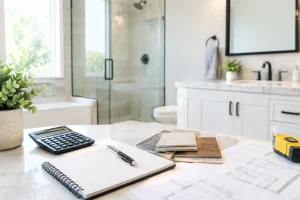

A bathroom may be one of the smaller rooms in your home, but it brings together more decisions than most people expect. Plumbing, electrics, waterproofing, ventilation, tiling, fittings and furniture all need to work together in a compact space. Knowing how to budget a bathroom project starts with looking beyond the price of a new bath or basin and planning for the complete room.
A well-planned budget is not about choosing the cheapest option at every turn. It is about spending confidently on the parts that protect your home, improve daily life and help the finished bathroom continue to look good for years. No jargon. No stress. Just clear priorities from the outset.
Start with the way you want to use the room
Before considering products, be clear about what the bathroom needs to do better. A busy family bathroom may need hard-wearing surfaces, generous storage and a bath. An en-suite might benefit most from a larger shower and better lighting. For someone planning to remain in their home long term, a level-access shower, easy-to-use controls and practical support features can be a very worthwhile investment.
Write down the issues with your current bathroom, then separate them into essentials and nice-to-haves. Poor ventilation, a leaking shower enclosure or inadequate lighting are essentials. A statement mirror or a freestanding bath may be desirable, but they should not push important practical work out of the budget.
This early step also helps prevent a common mistake: buying individual items before a complete layout has been agreed. A beautiful vanity unit is not a good purchase if it compromises door clearance, storage or access to the shower.
Build a complete bathroom budget, not a shopping list
The visible products are only one part of the overall cost. A realistic bathroom budget should allow for design, preparation, installation, the products themselves and finishing work. If your room needs more than a straightforward replacement, the preparation stage can be particularly significant.
Allow for the work behind the walls
Removing an old bathroom can reveal damaged floors, tired pipework, unsuitable electrics or walls that need levelling before tiles or panels can be fitted properly. These are not glamorous expenses, but addressing them is what makes a bathroom safe, watertight and built to last.
Moving a toilet, bath or shower can also change the budget considerably. Keeping sanitaryware in broadly the same position often reduces plumbing work. That does not mean you should never alter the layout. A better arrangement can transform a cramped or awkward bathroom, but it is sensible to understand the cost implications before making it a fixed part of the plan.
Waterproofing, ventilation and electrical work deserve proper attention too. A powerful shower without suitable extraction can create condensation problems. A stylish mirror needs the right electrical provision if it is illuminated or heated. These details are much easier and more cost-effective to plan before installation begins.
Separate product allowances from fitting costs
When comparing quotations, make sure you know what is included. Does the figure cover the bath, shower tray, enclosure, brassware, toilet, basin, taps, furniture, tiles, wall panels, lighting, extractor fan, flooring and accessories? Does it include removal of waste, delivery, installation, tiling, decorating and making good?
Comparing a product-only price with a fully managed installation can be misleading. A complete service may look different on paper, but it brings design, ordering, coordinated trades and accountability together. For many homeowners, especially where several elements need changing at once, that clarity is worth far more than chasing separate suppliers and tradespeople.
Decide where quality matters most
Every project has a limit, so prioritise the items that are difficult or disruptive to replace later. A quality shower valve, reliable toilet mechanism, properly fitted enclosure, durable flooring and effective extractor fan are usually stronger places to invest than purely decorative upgrades.
Tiles and wall panels need a balanced approach. Full-height tiling can create a polished finish, but it may require more labour and preparation. Wall panelling can be a practical alternative in shower areas because it is low-maintenance, quick to clean and has fewer grout lines. The right choice depends on the look you want, the condition of the room and how much ongoing maintenance suits your household.
Furniture is another area where the cheapest option is not always the best value. In a bathroom, units must cope with moisture, daily use and limited space. Well-designed storage can reduce clutter and make a modest-sized room feel calmer. If you need to save, choosing a simpler door style or standard-sized unit may make more sense than compromising on moisture-resistant materials and solid installation.
Keep a contingency that protects the project
Set aside a contingency of around 10 to 15 per cent of the total project budget, particularly in older properties or where the room is being stripped back fully. It is there for genuine discoveries, such as a rotten floor beneath a bath, unexpected pipework changes or remedial electrical work.
A contingency is not a pot for impulsive upgrades halfway through the project. If you decide to change from a standard shower to a more elaborate wet room after work has started, that is a scope change and should be costed separately. Keeping these two things distinct gives you better control and avoids the feeling that the project has run away from you.
If the contingency is not needed, you can use it towards finishing touches or keep it in reserve. Either outcome is better than having no room to respond when an essential issue appears.
Be realistic about timing and hidden choices
Bathroom renovations can involve several stages, from stripping out and first-fix plumbing to wall preparation, fitting, tiling, sealing and final testing. Some products also have longer lead times. Finalising the design and product selection before work begins helps avoid delays and makes the installation schedule easier to manage.
Small choices can affect costs too. Recessed shower niches, patterned tile layouts, large-format tiles, concealed valves and wall-hung furniture can all look excellent, but they may involve additional preparation or more precise fitting. There is nothing wrong with choosing them. The key is to make those decisions knowingly and balance them with the rest of the scheme.
A good design should also consider the future. It may be worth allowing space for a wider shower entrance, selecting easy-clean surfaces or choosing lever taps that are comfortable to use. These thoughtful choices can make the bathroom more adaptable without making it feel clinical.
Ask for clarity before you commit
A detailed, written proposal is one of the best budgeting tools you have. It should make clear what is included, the product specification, the assumptions behind the price and any elements that could vary once work begins. Ask how unforeseen issues will be discussed and approved, rather than assuming they are covered.
It is also helpful to see products in person where possible. Finishes can look quite different under bathroom lighting, and a vanity unit that seems generous online may offer less storage than expected. Visiting a showroom gives you the chance to compare materials, assess comfort and make choices with more confidence.
For homeowners in and around St Neots, The Bathroom Magician can help bring those decisions into one managed plan, from practical layout advice through to fitting and finishing. That means less time spent coordinating separate suppliers and more certainty about how the room will come together.
Give the budget a clear purpose
The best bathroom budgets are not necessarily the biggest. They are the ones that reflect how the household lives, account for the work that cannot be seen and leave enough flexibility for the unexpected. Choose the features that will make every day easier, protect the essentials behind the walls and let the finished room earn its place in your home for many years to come.