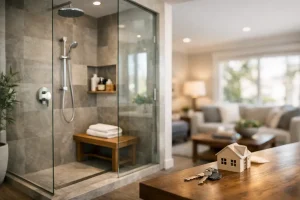

A dated shower-over-bath with tired tiles can make an otherwise well-kept home feel behind the times. But do walk-in showers add value in a way that genuinely improves your sale price, rather than simply making your bathroom nicer to use? Often, yes – provided the shower is the right choice for the property, is carefully designed and is fitted to a high standard.
For many homeowners, a walk-in shower delivers value long before a house goes on the market. It can make mornings easier, reduce cleaning time, improve accessibility and give the room a more spacious, considered feel. Those are all qualities buyers notice too. The key is balancing modern appeal with the practical needs of the household and the expectations of the local market.
Do Walk-In Showers Add Value? It Depends on the Bathroom
A well-designed walk-in shower can make a bathroom feel more premium, particularly where it replaces an awkward enclosure, a bulky bath or a poorly used corner of the room. The open appearance, large-format tiles and minimal framing create a cleaner visual line. In a small bathroom, that can make a surprisingly big difference to how the space feels.
However, a walk-in shower is not an automatic route to a higher valuation. Buyers do not pay more simply because a shower has no door. They respond to a bathroom that looks good, works well and feels ready to use without further expense or disruption.
The strongest results tend to come from renovations that improve the whole room: sensible storage, quality brassware, effective lighting, ventilation, durable wall finishes and neat tiling. A beautifully fitted shower in a bathroom with peeling paint, poor extraction and nowhere to put toiletries will not have the same impact.
Why Buyers Like a Walk-In Shower
It creates a modern, spacious impression
Walk-in showers are associated with contemporary hotel-style bathrooms, but their appeal is not only aesthetic. A clear screen instead of a fully enclosed cubicle lets the eye travel across the room, helping compact spaces feel less boxed in. A low-profile shower tray or level-access floor can enhance that effect further.
For homeowners updating a main bathroom or en-suite, this can help the property feel more current. Buyers comparing several homes may not remember every tap or tile, but they will remember a bathroom that feels bright, clean and carefully planned.
It supports everyday accessibility
Stepping over the side of a bath or lifting a leg into a high shower tray becomes less convenient for many people over time. A low-threshold or level-access walk-in shower can be easier and safer for older homeowners, people with reduced mobility and families helping a relative to remain independent at home.
This does not mean the bathroom needs to look clinical. Good mobility-focused design can include stylish wall panelling, attractive finishes, a discreet fold-down seat and well-positioned grab rails where needed. The result is a room that supports changing needs without sacrificing comfort or character.
It can be easier to maintain
There are fewer tracks, seals and tight corners than in many traditional shower enclosures. That can mean less build-up of soap residue and limescale, especially when the screen, tray and wall materials have been chosen for easy cleaning.
Maintenance still matters. A walk-in design needs enough glass protection to contain splashes, correct falls to the drain and suitable ventilation. When these details are addressed at the design stage, the bathroom is more likely to remain attractive for years rather than looking tired after a short time.
The Biggest Trade-Off: Keeping a Bath
The main question is rarely whether a walk-in shower looks better. It is whether removing a bath makes sense for your home.
If you have only one bathroom, taking out the only bath can narrow your appeal to some buyers. Young families, people with small children and buyers who enjoy a soak may see it as a drawback. In this situation, a shower-over-bath arrangement or a compact bath with a good-quality screen may offer the better balance.
If the property has more than one bathroom, the decision is usually easier. Keeping a bath in the family bathroom while fitting a generous walk-in shower in an en-suite, second bathroom or converted shower room can broaden appeal. It gives future buyers choice while allowing you to enjoy the practical benefits now.
Property type also matters. A smart, accessible shower room may be especially appropriate in a bungalow, a downsizer-friendly home or a property where the existing bath is rarely used. In a larger family home, retaining at least one bath is often the safer long-term decision.
Design Choices That Protect Your Investment
A walk-in shower should be tailored to the room rather than selected from a showroom display and squeezed into place. The most successful designs consider how people move through the space, where towels and toiletries will go, and how the room will be used every day.
Shower size is important. A cramped opening with a short screen may look minimalist but can leave the floor wet and make the shower feel less comfortable. Equally, an oversized shower can overwhelm a small room and take valuable space from a basin or WC. The right proportions make the layout feel effortless.
Drainage is equally crucial. Whether you choose a low-profile tray or a fully level-access wet room floor, water must flow reliably to the waste. This depends on the floor construction, pipework and the gradients beneath the visible surface. It is one of the reasons a professional survey and installation are worth having. The parts you cannot see are what prevent leaks, pooling water and expensive repairs later.
Materials should feel considered, not fashionable for the sake of it. Neutral tiles and wall panels generally have lasting appeal, while a feature area, coloured vanity unit or warmer metal finish can add personality without dominating the room. Quality shower valves, toughened safety glass and properly sealed surfaces help the bathroom retain its finish and reassure future buyers that the work has been done properly.
Quality Installation Makes the Difference
A walk-in shower is a wet area, so small shortcuts can create large problems. Uneven tiles, poorly aligned screens, silicone that has been hurried or inadequate waterproofing can quickly undermine the value of the renovation.
Before tiling or panelling begins, the walls and floor need suitable preparation and waterproofing. Pipework should be accessible where practical, and the shower controls should be positioned for comfortable use without standing under cold water. Extraction should be adequate for the room, particularly in bathrooms without windows.
A fully managed renovation also avoids the familiar headache of arranging separate trades. Design, product selection, plumbing, electrics, wall finishes and final fitting need to work together. At The Bathroom Magician, that joined-up approach helps homeowners make decisions with confidence and avoid the gaps between trades that can delay a project.
When a Walk-In Shower May Not Add Value
There are situations where the best decision is not a walk-in shower. If the room is exceptionally small, a conventional enclosure may contain water more effectively and leave more usable floor space. If your budget only stretches to a basic installation, it may be wiser to refresh the existing layout with reliable fittings and excellent finishes than to force a more ambitious design.
It is also worth considering the character and price point of the property. A high-end walk-in wet room may not produce a matching return in a modest home if the rest of the property needs attention. Bathroom improvements are most valuable when they are in keeping with the condition and standard of the house as a whole.
That does not make the project a poor investment. Enjoyment, safety and ease of living are real forms of value. A bathroom that lets you stay comfortably in the home you love can be more meaningful than a figure on a valuation report.
Plan for Your Home, Then for the Market
The best bathroom renovations do not chase every trend or treat resale as the only measure of success. They solve the problems you have now while avoiding choices that could limit the home later.
If you are considering a walk-in shower, start with the questions that matter: Do you need to retain a bath? Who will use the room over the next five to ten years? Is level access useful now or likely to be useful later? Can the layout provide comfortable showering, practical storage and easy cleaning?
With clear answers and a carefully fitted design, a walk-in shower can make your bathroom a more enjoyable place to start and end the day – and a feature that helps your home make the right impression when the time comes to sell.