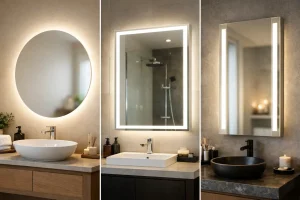

A bathroom mirror earns its place every morning. If the light casts shadows across your face, the glass steams up after every shower or the fitting feels out of proportion with the basin, even a beautifully renovated room can feel less practical. The best bathroom mirrors with lighting solve these small frustrations while becoming a considered part of the overall design.
For homeowners planning a new bathroom, an illuminated mirror is not simply an accessory to choose at the end. Its size, lighting style and features can influence the position of your basin, electrical points, wall finish and the mood of the finished room. Getting it right early makes the whole space work harder.
What makes the best bathroom mirrors with lighting?
The right choice depends on how you use the room. A compact cloakroom needs a mirror that makes the space feel brighter without overwhelming the wall. A busy family bathroom may benefit from a wide mirror and reliable demister pad. In an en-suite, softer lighting can create a calmer start and end to the day.
The best mirrors combine useful task lighting with a flattering, even glow. Light positioned around the edge of the glass, rather than only above it, reduces the shadows that make shaving, applying make-up or checking contact lenses more difficult. Look for a fitting that illuminates your face evenly without creating a harsh, clinical effect.
Build quality matters too. Bathrooms are humid spaces, so the mirror and its electrical components must be made for the job. A suitably rated bathroom light, professionally installed, is essential. In many bathroom settings, an IP44 rating is a sensible minimum, but the correct rating depends on exactly where the mirror will be fitted in relation to the bath, shower and basin.
Choose the right size before choosing the features
A mirror that is too narrow can make a basin area appear disconnected, while one that is much wider than the vanity can look unbalanced. As a starting point, many homeowners choose a mirror that is close to the width of the basin or vanity unit. A double-basin arrangement often suits either one generous landscape mirror or two matching mirrors, each centred over its basin.
Height is equally useful to consider. The bottom edge should sit high enough to avoid constant splashes, but low enough for everyone in the household to use comfortably. In homes shared by adults and children, the ideal placement may involve a little compromise. A taller portrait mirror can be more accommodating than a small round design.
Do not assume that a larger mirror is always better. In a narrow room, a wide landscape mirror can make the space feel open. In a compact en-suite with limited wall area, a vertical mirror may bring more visual height without crowding light switches, cabinets or wall-mounted taps.
LED mirror styles and where they work best
Backlit mirrors for a softer atmosphere
Backlit mirrors project light onto the wall behind the glass, creating a gentle halo effect. They are particularly effective against textured tiles, wall panelling or a well-finished painted surface, where the light can add depth rather than glare.
This style is ideal where atmosphere is the priority, perhaps in a principal en-suite or a bathroom designed as a place to unwind. However, backlighting alone may not provide enough direct illumination for detailed grooming. It works best alongside good ceiling lighting or a separate source of light around the mirror.
Front-lit mirrors for everyday clarity
A front-lit mirror has illuminated strips or panels built into the face of the mirror. It gives stronger, more direct light and is often the most practical choice for the main family bathroom. The clean lines also suit contemporary schemes, especially when paired with wall-hung furniture and a simple basin.
The trade-off is that some front-lit designs can feel more functional than decorative when switched off. Choosing a slim frame, a well-proportioned light band and a warm white setting helps retain a softer look.
Round and organic shapes for a gentler finish
Round, oval and softly shaped illuminated mirrors have become popular for good reason. They break up the straight lines of tiles, screens and vanity units, bringing a more relaxed feel to the room. They are a strong choice above a single basin and work especially well in smaller bathrooms where a hard-edged rectangle might feel dominant.
That said, shape should not come before usability. A small circular mirror may look attractive, but it gives less viewing area than a similarly sized rectangular option. If several people use the bathroom and practical routines are the priority, a wider mirror may serve the household better.
Mirrored cabinets for useful hidden storage
For bathrooms short on storage, an illuminated mirrored cabinet can be one of the smartest choices. Everyday items stay close at hand but out of sight, helping the room feel orderly. Recessed cabinets offer a particularly tidy finish where the wall construction allows it, while surface-mounted designs are often simpler to fit in an existing room.
Check the internal depth before committing. A cabinet designed for toothbrushes, skincare and medication may be perfect, but it will not necessarily accommodate taller bottles. Also consider whether opening doors will clash with a nearby shower screen or wall light.
Features worth paying for
A demister pad is one of the most genuinely useful mirror features. It gently warms a central area of the glass, clearing condensation after a shower so you do not need to wipe it with a towel. For a household where the bathroom is busy in the morning, it is a small addition that can make a noticeable difference.
Adjustable colour temperature is another worthwhile feature. Cooler white light is helpful for precise grooming, while warmer light feels more relaxing in the evening. If your mirror offers both, use it thoughtfully. Very cool light can make a bathroom feel stark, especially alongside grey tiles, whereas a warm setting may not give the clearest view for make-up or shaving.
Dimming is useful when the mirror is part of the room’s ambient lighting. It can provide a low-level light for night-time visits without switching on bright ceiling lights. Touch controls are neat, but sensor switches deserve a little thought. They are convenient with wet hands, yet they can occasionally be triggered accidentally by movement or reflections. A simple, reliable control is often the better long-term choice.
Bluetooth speakers, clocks and charging points can sound appealing, but they are not essential for most homes. These extras add cost and, in some cases, more components to maintain. Prioritise good lighting, a clear reflection, a demister and a quality installation first.
Light colour, placement and the rest of the room
Your mirror lighting should support, not replace, the room’s main lighting. Ceiling downlights provide general illumination, while an illuminated mirror improves visibility at the basin. In a larger bathroom, adding a separate decorative wall light or a low-level night light can create layers that make the room more comfortable at different times of day.
Pay attention to the colour temperature of all fittings. Mixing very warm and very cool lights can make tile colours look inconsistent and the room feel disjointed. A bathroom design should be assessed with the lights switched on, particularly if you have chosen natural stone, patterned tiles or painted panelling.
Consider reflections too. A mirror opposite a window can bring valuable daylight deeper into the room, but it may also create glare at certain times. A mirror directly facing a busy shower enclosure can make the room feel more crowded. These details are easy to overlook when selecting products individually, but they are central to a well-planned design.
Safety and installation should never be an afterthought
An illuminated mirror needs a safe electrical supply and the right protection for its location. This is not a job for improvised wiring or a last-minute decision once tiling is complete. Planning the cable route, fixing points and switch position before walls are finished gives a cleaner result and avoids unnecessary disruption.
A professional installer will assess the bathroom zones and select an appropriate product and fitting method. This is particularly important in wet rooms, mobility bathrooms and rooms with level-access showers, where splash areas may be broader than in a conventional layout. The mirror should be secure, accessible to operate and positioned so it supports daily independence rather than becoming a hazard.
Make the mirror part of the design conversation
The most successful bathroom mirrors feel as though they belong to the room from the start. Match the scale to the vanity, repeat finishes where appropriate and choose light that suits how your household actually lives. A statement mirror may be right for one home; a discreet illuminated cabinet may be the better answer for another.
At The Bathroom Magician, we help homeowners consider these decisions alongside layouts, furniture, tiling and lighting, rather than treating the mirror as an afterthought. That joined-up approach helps prevent awkward proportions, unsuitable fittings and costly changes later on.
A well-chosen illuminated mirror brings a little more ease to ordinary routines. When the light is clear, the glass stays usable and the design feels settled, the bathroom becomes a space that supports you every day.