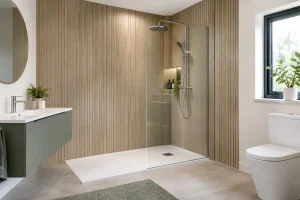

A shower wall should be the easiest part of a bathroom to live with, not the surface that constantly needs scrubbing, re-grouting or repairing. This bathroom wall panel review looks at whether waterproof wall panels are a worthwhile alternative to tiles for real homes, from busy family bathrooms to accessible shower rooms.
Wall panels have become far more refined than the plain plastic boards many homeowners remember. Today’s options can recreate marble, stone, concrete, timber and high-end tile effects, often with considerably fewer joins. But they are not automatically the right answer for every room. The best choice depends on the layout, the condition of the walls, how the bathroom is used and the finish you want to live with for years.
What are bathroom wall panels?
Bathroom wall panels are large, decorative boards designed for wet areas. They are commonly fitted over prepared plaster, existing tiles or a suitable backing board, with sealed joins and trims to stop water reaching the wall behind. In a shower enclosure, they form a waterproof surface that replaces traditional tiles and grout.
The core and surface vary by product. Some panels use a plywood-based core with a hard decorative laminate face, while others are made from composite materials, acrylic or PVC. This matters because a panel is only as reliable as its construction, sealing system and installation. A good-quality panel fitted properly can give a bathroom a clean, durable finish. A cheap board with poorly sealed edges can create problems that are not visible until moisture has already got behind it.
For homeowners who want less bathroom maintenance, the appeal is obvious. A large panel has only a few vertical joins, rather than hundreds of grout lines. That means fewer places for soap residue, mould and limescale to settle.
Bathroom wall panel review: the genuine benefits
The strongest reason to choose wall panels is practical rather than fashionable. They provide a smooth, non-porous surface that is quick to wipe down. In households where the shower is used every day, that reduction in cleaning can make a noticeable difference.
Panels can also be fitted faster than a fully tiled wall. Tiling involves preparing the surface, setting out the pattern, applying adhesive, cutting tiles, allowing time to set and then grouting. Panelling does not remove the need for careful preparation, but it can reduce the number of stages. This is particularly helpful when a bathroom is out of action and you want the project completed efficiently without compromising the finish.
There is a visual benefit too. Large-format panels create an uninterrupted look that can make a compact ensuite or family bathroom feel calmer and more spacious. Light stone-effect finishes work especially well where natural light is limited, while darker panels can create a confident, hotel-inspired shower area without the busy appearance of small tiles.
They are also a sensible option for many mobility bathrooms and wet room-style spaces. With fewer ridges and grout lines, the walls are easier to keep hygienic. Combined with a level-access shower, well-positioned grab rails and appropriate flooring, panels can support a bathroom that is safer and simpler to use without feeling clinical.
Where panels may not be the best choice
Wall panels have limitations, and a straightforward decision is not always possible. If you love the depth, texture and individual character of natural stone, handmade tiles or a carefully patterned tiled wall, panels may look too uniform. Modern designs are convincing from a normal viewing distance, but they do not have the same variation as natural materials.
Repair is another consideration. A chipped tile can often be replaced individually. If a panel is badly scratched, punctured or damaged by an impact, replacing the full board may be the neatest solution. Quality panels are hard-wearing, but no wall finish is indestructible.
The existing walls also need an honest assessment. Panels can cover sound tiles and minor imperfections, but they should not be used to disguise damp, loose plaster, a leaking pipe or an unstable substrate. Fixing the underlying issue first is essential. A professional installer will check this before fitting begins, rather than simply covering it up.
Finally, panels have defined sizes. In awkward rooms, around unusual windows or with multiple angles and boxed-in pipes, more cutting and joining may be required. A tiled finish can sometimes offer greater flexibility in those detailed areas. This is where a considered design, rather than a product-only decision, pays off.
How durable are bathroom wall panels?
A well-made panel system should cope comfortably with normal bathroom humidity, shower spray and regular cleaning. Its lifespan depends on three things: the panel material, the quality of the seals and how carefully it has been fitted. The edge of a panel is particularly important, as exposed or poorly sealed edges are vulnerable to water ingress.
In practice, the weakest point is rarely the face of the panel. It is more often a rushed corner, an uneven wall, an incorrect adhesive or silicone that has not been applied properly around the shower tray, bath or fittings. This is why fitting should be treated as part of the product, not an afterthought.
To care for panels, use a soft cloth or non-abrasive sponge with a suitable bathroom cleaner. Avoid scouring pads, harsh powders and aggressive solvents, which can dull the surface over time. Drying the walls after showering is not essential, but it helps reduce water marks in hard-water areas and keeps any bathroom looking fresher.
Cost: are wall panels cheaper than tiles?
The answer is usually: it depends on what you are comparing. Entry-level panels can cost less than premium tiles, particularly once you include tiling labour and grout. High-quality decorative panels, however, can be a significant investment. They are not always the cheapest route, especially when a bathroom has lots of corners, niches or bespoke details.
The fairest comparison includes the full installed cost. Consider wall preparation, waterproofing, adhesive, trims, seals, labour, waste removal and the time involved. A basic tile may look inexpensive in a showroom, but the finished cost can rise with complicated laying patterns, multiple cuts and extensive grouting.
Wall panels often offer value through speed, easy maintenance and a long-lasting waterproof finish. For a straightforward shower enclosure, they can be an efficient and attractive choice. For a feature wall outside the wet area, tiles, painted surfaces or a combination of materials may better suit the budget and design.
Choosing the right finish for your bathroom
Start with the room itself. A small bathroom often benefits from pale panels with a subtle pattern, which reflect light without making the space feel overdesigned. In a larger room, a deep slate, dark marble or warm timber effect can add definition behind a walk-in shower or freestanding bath.
Think about the fittings alongside the panel. Brushed brass and warm metallic finishes sit beautifully with soft stone effects. Chrome suits almost anything and can give a crisp, timeless result. Matt black fittings can be striking against pale marble or concrete-look panels, although they show water marks more readily than chrome.
Samples are invaluable here. Colours shift between a bright showroom and a north-facing bathroom, and a pattern that looks understated on a small sample may feel much stronger across a full wall. Seeing the panel next to flooring, furniture and paint choices helps prevent expensive surprises.
Why professional installation matters
Bathroom panelling looks simple once complete, which is usually the mark of careful installation. Behind that clean surface is precise measuring, sound wall preparation, accurate cuts around shower valves and pipework, correct adhesive coverage, and meticulous sealing.
This is particularly important around shower trays, baths, windows and recessed storage. These are the areas where water naturally gathers and where small gaps can cause larger problems. If panels are part of a full renovation, it also makes sense to plan them alongside the shower screen, brassware, lighting and ventilation, rather than treating each choice separately.
At The Bathroom Magician, wall panelling can be considered as part of the wider bathroom design and installation process, so the finish works with the way you use the room. No jargon. No stress. Just a clear plan for a bathroom that looks good and performs properly.
The right wall finish should make daily life easier, whether that means a fast-clean shower enclosure for a busy household or a comfortable, accessible space for the long term. Take time to compare samples, ask how the system will be sealed and choose an installer who will address the details behind the panels as carefully as the surface you see.