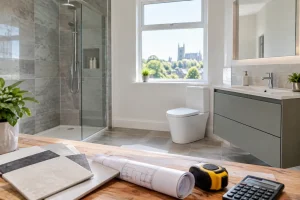

A bathroom can look like a modest room on a floorplan, yet it brings together some of the most important systems in the house: plumbing, electrics, ventilation, waterproofing and daily-use storage. That is why the bathroom renovation cost Cambridgeshire homeowners pay can vary so widely. The right figure is not simply the price of a new bath or shower. It reflects the condition of the room, the quality of the products, the amount of work behind the walls and the level of finish you want to enjoy for years.
For a straightforward refresh, a realistic budget may begin at around £6,000 to £9,000. A fully fitted family bathroom with quality sanitaryware, tiling and professional installation commonly sits between £10,000 and £18,000. Larger rooms, premium finishes, wet rooms, bespoke furniture or significant layout changes can take the investment beyond £20,000.
These are useful starting points, not fixed quotes. Every home and every brief is different. A clear survey and considered design are the best way to turn a broad budget into a reliable plan.
What affects bathroom renovation cost in Cambridgeshire?
The biggest difference between one project and another is usually not the size of the bathroom. It is the work required to make the room safe, practical and properly finished.
The existing room and any hidden work
Removing an old suite can reveal tired pipework, uneven walls, damaged flooring or signs of moisture. Older properties around Cambridgeshire may also have layouts that have evolved over time, with plumbing that is not ideally positioned for a modern bathroom.
It can be tempting to price a renovation around visible products alone. However, waterproofing a shower area correctly, preparing surfaces for tiles and ensuring electrics meet current requirements are not optional extras. They are the foundations of a bathroom that stays looking good.
Keeping the toilet, basin and bath in their current positions can help control costs. Moving them may involve lifting floors, altering pipe runs and adding labour. Sometimes it is worthwhile, particularly where a cramped room can be made easier to use, but it should be a conscious design choice rather than an unexpected expense.
Your choice of shower, bath and sanitaryware
There is a wide price range for baths, shower enclosures, taps, toilets and basins. Entry-level products can be perfectly suitable for some projects, while premium ranges often offer better materials, smoother operation, longer-lasting finishes and more considered design.
A walk-in shower with a fixed glass screen may cost more than a standard enclosure, for example, but it can make a compact room feel more open and be easier to access and clean. A concealed shower valve creates a clean, pared-back look, although it needs careful installation within the wall. Freestanding baths make a statement but need enough surrounding space to work well in everyday life.
The most valuable choice is rarely the most expensive one. It is the product that suits the household, the room and the way it will be used.
Tiles, wall panels and finishing details
Wall and floor finishes make a substantial difference to both the budget and the character of the room. Large-format porcelain tiles, natural stone, patterned designs and intricate layouts can increase material and fitting costs. Smaller tiles or herringbone patterns require more cuts and more time to install.
Wall panelling can be a smart alternative in shower spaces and family bathrooms. Quality panels are easy to wipe clean, reduce grout lines and can offer a polished finish without the labour involved in tiling every wall. The best option depends on your preferred look, maintenance expectations and where the material will be used.
It is also worth allowing for the details that complete the room: illuminated mirrors, towel rails, niches, shelving, extractor fans, flooring, lighting and accessories. Individually, they can seem small. Together, they determine whether the finished bathroom feels carefully planned or merely fitted.
Typical bathroom budgets at a glance
A £6,000 to £9,000 budget may suit a compact bathroom where the layout remains largely unchanged. This could include a good-quality suite, a practical shower or bath, straightforward wall finishes and professional fitting. It is often the right route when the room is sound and the aim is a meaningful update rather than a complete redesign.
At approximately £10,000 to £18,000, there is usually greater scope for a complete renovation. Homeowners can expect more choice in sanitaryware and furniture, improved storage, better lighting, quality tiling or wall panelling, and work to improve the overall layout. This is a common range for a long-term family bathroom designed to balance style, durability and easy maintenance.
Projects from £20,000 upwards tend to involve higher-specification products or more complex work. This may include a luxury walk-in shower, a wet room floor, bespoke vanity furniture, extensive tiling, underfloor heating, a large freestanding bath or structural and plumbing alterations. A mobility bathroom can also require specialist solutions, such as level access, supportive fittings and carefully positioned controls, all tailored to the person using the space.
Why a managed installation can offer better value
A bathroom project involves several trades, and timing matters. Plumbing needs to align with the layout. Electrics must be planned before walls are closed. Waterproofing must be in place before tiling. The final fittings need to be installed without damaging the finishes around them.
Co-ordinating separate suppliers and tradespeople can appear cheaper at first, but it can leave homeowners managing deliveries, decisions and gaps between jobs. If an issue arises, it is not always clear who is responsible for putting it right.
A fully managed service brings design, product selection and installation together. At The Bathroom Magician, this approach is designed to make the process simpler: one team can guide the choices, schedule the work and keep the practical details moving. No jargon. No stress. It also means the design is developed with installation in mind, rather than being a collection of products chosen in isolation.
That does not mean every project needs the highest specification. It means spending should be directed where it will make a genuine difference, whether that is a more reliable shower valve, better ventilation, safer access or storage that finally keeps the family bathroom tidy.
How to set a sensible budget before you start
Begin with the outcome you want, rather than a list of individual products. Do you need a second shower for busy mornings? Is the existing bath rarely used? Would a level-access shower make life safer now or in the future? Is the problem poor storage, difficult cleaning or a room that simply feels dated?
Next, decide where you are happy to compromise and where you are not. Many homeowners choose to invest in the items used every day, such as showers, taps, furniture and waterproof finishes, while selecting simpler tiles or accessories to keep the overall spend in balance.
It is sensible to keep a contingency within the budget, particularly in older homes. Around 10 per cent is a helpful allowance for unforeseen work, though a detailed survey reduces the likelihood of surprises. Asking for an itemised quotation also helps you understand what is included, from removal and waste disposal to preparation, installation and final finishing.
Choosing value that lasts
The lowest quote is not always the least expensive bathroom in the long run. Poor preparation can lead to cracked grout, water damage or fittings that need replacing far sooner than expected. Equally, spending heavily on a fashionable feature that does not suit your routine is not good value either.
A well-planned bathroom should feel good on an ordinary Tuesday morning, not only when it is newly finished. Give yourself time to consider the layout, see materials in person and ask how each choice will perform in daily use. That is how a bathroom budget becomes an investment in a more comfortable, practical home.