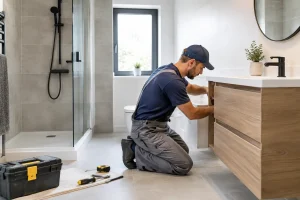

A new bathroom can look deceptively straightforward once it is finished. Behind the clean lines, warm flooring and perfectly fitted shower is a carefully sequenced project involving several skilled trades. Bathroom installation duration is therefore about more than the number of days someone is working in the room. It also includes decisions made before work begins, product lead times and allowing each stage to be completed properly.
For most complete bathroom renovations, homeowners should allow around two to three weeks for on-site installation. A smaller like-for-like update may take less time, while a wet room, layout change or mobility bathroom can take longer. The right timetable is one that protects the quality of the finish, rather than one that rushes the work.
Typical Bathroom Installation Duration
A straightforward bathroom replacement, where the bath, basin, toilet and shower remain broadly in the same places, often takes around 10 working days. This usually covers removing the old suite, preparing the room, installing the new fittings, tiling or wall panelling, and completing the finishing touches.
A more involved renovation is commonly closer to 15 working days or more. Moving plumbing, replacing a floor, building a shower enclosure, fitting a concealed cistern or creating a level-access shower all add time. That is not a sign that anything has gone wrong. It reflects the work needed to create a bathroom that functions reliably for years to come.
It also helps to separate the installation itself from the full project journey. Design, product selection and ordering happen before the fitting date. Some products, particularly specialist furniture, bespoke shower screens or particular tile ranges, may have longer lead times. A well-managed project accounts for this before stripping out the existing bathroom, so the room is not left unfinished while parts are awaited.
What Happens During a Bathroom Renovation?
Every bathroom is different, but the order of work is usually similar. Understanding it makes the timeline feel much less uncertain.
Preparation and removal
The first stage is protecting access routes, isolating services and removing the existing bathroom. Old tiles, sanitaryware, flooring and damaged boards may all need to come out. This can reveal issues that were hidden behind the old finish, such as water damage, uneven walls or ageing pipework.
A good installer will address these properly rather than cover them up. It can add a little time, but it prevents the new bathroom from being built on an unreliable base.
Plumbing, electrics and room preparation
Once the room is back to its structure, plumbing and electrical work can be completed. If the layout is changing, this is when pipes and wastes are moved. Extractor fans, illuminated mirrors, shaver sockets and underfloor heating also need to be planned and installed at the correct point.
Walls and floors are then prepared for their final finish. This might include boarding, waterproofing a shower area, levelling the floor or strengthening a wall for a wall-hung vanity unit. These details are rarely the glamorous part of a renovation, but they are what make the finished space durable and easy to live with.
Tiling, panelling and fitting
Tiling can take several days, particularly where there are detailed cuts around windows, niches, pipes and shower fittings. Large-format tiles may reduce the number of grout lines, but they still need careful setting-out for a balanced appearance. Adhesives and grout also require appropriate drying time.
Wall panels can sometimes be fitted more quickly than tiles and offer a low-maintenance alternative, especially in shower areas. The best choice depends on the look you want, the condition of the walls and how the bathroom will be used.
Once surfaces are ready, the bath, shower tray, toilet, basin, taps, furniture and screen can be fitted. Final sealing, testing, adjustments and cleaning come last. It is tempting to see these as minor jobs, but careful finishing is what gives a bathroom its polished, watertight result.
Factors That Can Extend the Timescale
The biggest influence on bathroom installation duration is the scope of the work. Keeping the same layout is normally quicker and can help control costs. Changing the position of a toilet or shower may deliver a far better room, especially in an awkward space, but it requires more plumbing work and planning.
The condition of the property matters too. Older homes across Cambridgeshire can have uneven floors, solid walls, unusual pipe routes or evidence of previous alterations. None of these automatically creates a problem, but they may need practical solutions once work starts.
Product choices also affect the schedule. Standard items may be readily available, while particular finishes, made-to-order furniture or specialist accessibility equipment can require more notice. Choosing all key products before the installation date is one of the simplest ways to avoid unnecessary delays.
Finally, a bathroom needs time to dry and cure. Waterproofing systems, tile adhesive, grout, sealant and flooring products all have manufacturer guidance. Skipping that waiting time may save a day on paper, but it risks leaks, movement or a poor finish later on.
Planning for Life Without Your Main Bathroom
If the room being renovated is your only bathroom, the practical side deserves as much thought as the design. There will usually be periods when the toilet, shower or basin cannot be used. Your installer should explain this clearly before work begins, including when water may need to be turned off.
Some households arrange to use a second bathroom, stay with family for a short time or plan showers around the working day. For families with young children, or anyone with mobility needs, these arrangements are particularly important. A clear programme lets you prepare without last-minute disruption.
It is also worth allowing a small amount of flexibility in your own diary. The trades may need access early in the day, and decisions on tile placement, mirror height or accessory positioning are easier to make promptly while the team is on site.
Why a Managed Installation Helps Keep Work Moving
A bathroom renovation involves more coordination than many homeowners expect. Plumbers, electricians, tilers, fitters and decorators all need to work in the right order. Products must arrive complete and undamaged, while the design must account for pipework, clearances, storage and everyday use.
With a fully managed service, one team oversees the sequence from design through to completion. That means fewer handovers for you to chase and a clearer route for resolving any site-specific issue. It also allows the design to be checked against the practical realities of the room before installation starts.
At The Bathroom Magician, this approach is designed to make the process feel straightforward: considered choices before work begins, skilled installation on site, and one point of contact throughout. No jargon. No stress.
How to Help Your Project Stay on Schedule
The most useful thing a homeowner can do is make key decisions early. Confirming the layout, tiles, brassware, furniture, lighting and accessories before the start date prevents pauses during fitting. It is far easier to adjust a plan than to change direction once walls have been prepared or tiles are being laid.
Clear the room and nearby access areas before work begins, and let the installation team know about parking, pets, alarms or any household requirements. If you are keeping an existing item, such as a mirror or a radiator, mention it during the design stage so measurements and compatibility can be checked.
Most importantly, leave room for sensible workmanship. A bathroom is used every day, often for many years. Giving the project the time it needs is a worthwhile investment in comfort, safety and a finish you will still enjoy long after the installation team has left.