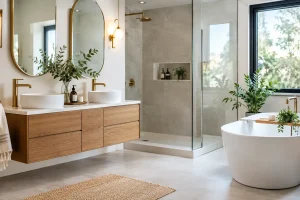

A bathroom can look impressive in a showroom and still be frustrating to use at 7am. The bathroom design trends gaining real traction in 2026 are not simply about statement tiles or fashionable taps. They are about creating calm, practical spaces that suit the people using them, whether that means a busy family bathroom, a compact en-suite or a safer bathroom for later life.
For homeowners planning a renovation, the best approach is to borrow ideas from current design while choosing finishes, layouts and fittings that will still feel right in years to come. A well-designed bathroom should make everyday routines easier, be straightforward to clean and feel like a genuine improvement to the home.
Bathroom design trends with lasting appeal
The move away from stark, all-white bathrooms continues. Bright white sanitaryware remains a classic choice, but it is now commonly paired with warmer materials, softer colours and more texture. The result is a room that feels considered rather than clinical.
This does not mean every bathroom needs to be dark, dramatic or filled with colour. In a smaller Cambridgeshire bathroom, pale stone-effect finishes, warm off-whites and natural timber tones can make the room feel lighter while avoiding the coldness of a pure white scheme. In larger rooms, deeper greens, clay shades and rich blue-greys can bring welcome depth, particularly when balanced with good lighting.
The key is proportion. A bold wall tile may work beautifully behind a basin or within a shower area, while using it on every wall can make a compact space feel enclosed. One feature, used well, usually has more impact than several competing finishes.
Natural texture without difficult upkeep
Stone, timber and handmade-look surfaces are influencing bathroom design, but practicality still matters. Real timber needs careful protection in a humid room, and highly textured tiles may take more effort to keep clean. This is why high-quality porcelain tiles, wall panels and furniture finishes that recreate natural materials are proving so popular.
They offer the warmth of oak, the character of stone or the variation of handmade tiles with less ongoing maintenance. Large-format stone-effect porcelain is particularly useful because it has fewer grout lines than smaller tiles, creating a calmer look and reducing cleaning time.
Wall panelling is another strong option for shower areas and family bathrooms. It provides a clean, continuous surface and can be an excellent alternative where homeowners want the look of marble or stone without the maintenance associated with natural materials. The right product and professional fitting are essential, especially around showers and baths, where waterproofing cannot be compromised for appearance.
Walk-in showers designed for everyday comfort
Walk-in showers remain one of the most requested upgrades, and it is easy to see why. A generously sized shower tray, fixed glass screen and easy-to-reach controls create a smart, open look while making the room simpler to use.
The trend is moving towards designs that feel less like a separate enclosure. Frameless or slim-framed glass, recessed shelving and tiled shower zones help the whole room feel more spacious. A wall-mounted shower valve keeps controls tidy, while a handheld shower attachment adds flexibility for rinsing hair, cleaning the enclosure or assisting children.
A true level-access wet room can be an excellent choice, especially where accessibility is a priority. It removes the step into a shower and can give a small bathroom a more open feel. However, it needs proper planning. The floor must be correctly prepared and waterproofed, with suitable falls to the drain. It is not a feature to add as an afterthought.
For some homes, a low-profile shower tray provides much of the same visual benefit with a more straightforward installation. The best solution depends on the existing floor structure, the room layout and who will use the bathroom now and in the future.
Make storage part of the design, not an add-on
The minimal, uncluttered bathroom is still a popular look, but it only works when there is somewhere to put everyday essentials. Vanity units with deep drawers, mirrored cabinets and recessed niches are becoming standard parts of a well-planned scheme rather than optional extras.
Drawers are often more practical than cupboard doors because everything is visible and easier to reach. A wall-hung vanity also leaves more floor on show, which can make a smaller room feel less crowded and makes cleaning underneath easier. For family bathrooms, choose a unit with enough internal space for toiletries, spare toilet rolls and the inevitable collection of bath-time items.
Within the shower, a recessed niche avoids bottles sitting on the tray or balancing on a windowsill. It should be positioned at a comfortable height and sized around what the household actually uses. These small decisions are what make a finished bathroom feel organised from day one.
Lighting that changes how the room feels
Good bathroom lighting is no longer limited to one ceiling fitting and a mirror light. Layered lighting is now a defining part of a comfortable design: bright enough for shaving, skincare and cleaning, but softer when the day is winding down.
Lighting around the mirror is particularly useful because it reduces shadows on the face. Backlit mirrors can create an attractive glow, while illuminated cabinets combine task lighting with valuable storage. Dimmable ceiling lights let the room adapt from a practical morning space to a more relaxing evening one.
Every fitting must be suitable for its location in a bathroom. Water and electrics require careful consideration, so lighting should be selected and installed with the room’s safety zones in mind. This is one area where professional advice prevents costly mistakes and helps the finished room feel polished rather than pieced together.
Accessible features that look at home
One of the most positive bathroom design trends is the growing focus on inclusive design. Features that support comfort, safety and independence no longer need to look clinical. They can be built naturally into a stylish bathroom from the start.
A low-threshold shower, wider access, a comfort-height WC and easy-grip controls can make a significant difference without changing the character of the room. Well-positioned grab rails are available in finishes that coordinate with taps and shower fittings, while fold-down shower seats can be discreet and practical where needed.
Planning ahead is especially valuable for homeowners who intend to stay in their property long term. Even if mobility is not an immediate concern, choosing a shower over a bath, allowing clear circulation space and avoiding unnecessary steps can make the room more adaptable later. It is sensible design, not a compromise.
Colour, brassware and the details that date quickest
Chrome is still a safe and versatile choice, but brushed brass, brushed nickel and matt black fittings remain popular. Warmer metallic finishes work well with natural stone tones, green tiles and timber-effect furniture. Matt black can provide crisp contrast in a contemporary scheme, although it may show water marks more readily in hard-water areas.
Consistency matters more than following one finish. Matching the shower controls, basin tap, flush plate and accessories creates a deliberate look. Mixing metals can work, but it needs restraint. In most bathrooms, one main finish and one subtle secondary accent is enough.
For tiles, a simple foundation tends to age best. Use a neutral floor or wall tile as the long-term backdrop, then introduce personality through paint, mirrors, lighting or a smaller feature area. Those are easier to refresh than an entire tiled room if tastes change.
Choose trends around how you live
A trend is worth adopting when it solves a real problem in your home. A floating vanity can create more visual space. Wall panels can reduce cleaning. A wet room can improve access. A bold tile can give a plain room a sense of character. If it only photographs well but makes the room harder to maintain, it may not be the right choice.
At The Bathroom Magician, the starting point is always the home and the household, not a one-size-fits-all look. A complete design considers layout, storage, ventilation, lighting, product quality and installation together, so there is no need to coordinate separate trades or guess whether chosen products will work in the space.
The most successful bathroom will not feel like a collection of trends. It will feel easy to use, reassuringly well made and personal to the people who live with it every day.